- Safety: Phosphatidylserine (PS) is a phospholipid that can thin the blood slightly. If you take Warfarin or Heparin, consult your doctor. Unlike prescription sleep aids, it does not cause sedation or dependency.
- Effectiveness: Clinical studies show that 400-800mg of PS significantly blunts the release of ACTH (the hormone that triggers cortisol) following stress, effectively stopping the “fight or flight” response.
- Key Benefit: It prevents the “3 AM jolt”—that sudden waking moment where your mind starts racing—by capping the nocturnal cortisol spike.
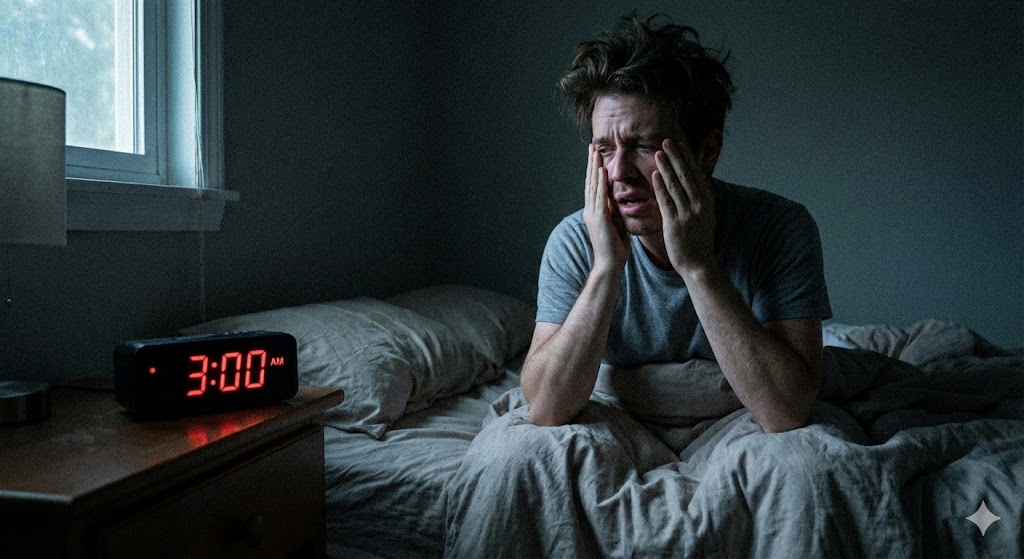
You fall asleep fine. But at 3 AM, your eyes snap open. Your heart is pounding. Your mind is racing with a to-do list for next Tuesday. You are not “anxious” in the traditional sense; you are chemically wired. This is the hallmark of dysregulated cortisol.
Cortisol is your “get up and go” hormone. It is supposed to rise at 6 AM to wake you up. But for the chronically stressed, it spikes in the middle of the night, hijacking your sleep cycle. Most people treat this with melatonin (which adds a hormone) or sedatives (which knock you out).
A closer look at the HPA axis (Hypothalamic-Pituitary-Adrenal) reveals that you don’t need sedation; you need a signal blocker. The data suggests that for the Skeptical Optimizer, the best cortisol blocker for sleep anxiety is a phospholipid that naturally dampens the brain’s distress signal: Phosphatidylserine.
Decoding The HPA Axis Brake
When you are stressed, your hypothalamus screams “Danger!” It tells the pituitary gland to release ACTH (Adrenocorticotropic Hormone). This ACTH travels to your adrenal glands and shouts “Release Cortisol!”
According to a landmark study published by the National Institutes of Health (NIH), Phosphatidylserine (PS) acts as a unique biological brake on this process. It blunts the release of ACTH and cortisol in response to physical and mental stress. It doesn’t sedate the brain; it simply tells the hypothalamus, “We are safe. Cancel the alarm.”
Comparing this to Ashwagandha reveals a timing difference. Ashwagandha is an “adaptogen”—it lowers your baseline stress over weeks. PS is an “acute blocker”—it works quickly to cap the immediate spike. For the specific problem of midnight waking, PS is the tactical choice.
| Feature | Phosphatidylserine (The Blocker) | Ashwagandha (The Adaptogen) |
|---|---|---|
| Primary Mechanism | Blunts ACTH release to stop cortisol spikes. | Modulates the overall HPA axis tone. |
| Direct Benefit | Prevents “wired and tired” night waking. | Lowers general daily anxiety over 8 weeks. |
| The Practical Catch | Requires high dose (400mg+) for sleep. | Can cause “anhedonia” (emotional numbness) if overused. |
5 Strategic Ways To Protect Your Sleep
1. The “Dinner Stacking” Rule
Cortisol naturally drops in the evening. If yours stays high, you need to force it down. Take 300-400mg of Phosphatidylserine with dinner. This ensures the molecule is active in your bloodstream when the nocturnal spike usually hits (around 2-3 AM).
Pro-Tip: Do not take it in the morning if your goal is sleep; you might blunt the healthy “wake up” cortisol you need.
2. The “Serine” Source Code
Most PS is derived from soy or sunflower. Sunflower (Sharp-PS) is cleaner and non-GMO. Avoid generic “Phospholipid Complexes” that hide low PS levels behind cheap lecithin fillers.
Pro-Tip: Look for “Sunflower Phosphatidylserine” explicitly on the label.
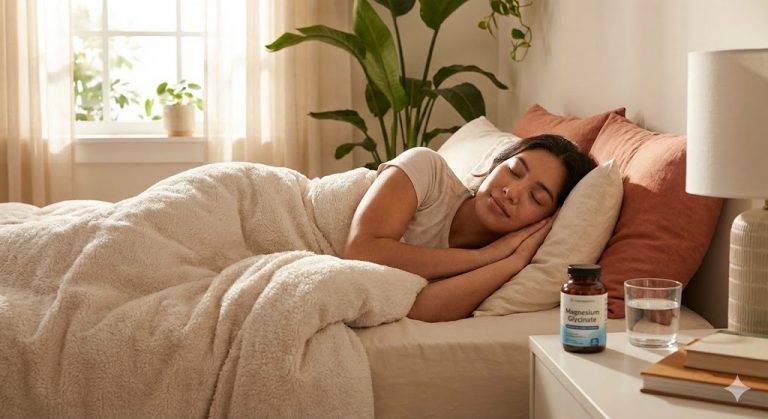
3. The Magnesium Synergist
PS stops the alarm signal. Magnesium cleans up the adrenaline. High cortisol depletes magnesium rapidly. By taking them together, you block the new stress and flush out the old tension.
Pro-Tip: 400mg of Magnesium Glycinate is the perfect partner for PS.
4. Fasting Sensitivity
Low blood sugar triggers a cortisol spike (to mobilize glucose). If you practice Intermittent Fasting and wake up alert at 3 AM, your cortisol is spiking to save you from hypoglycemia. PS helps, but eating a small amount of fat (like almond butter) before bed works better to stabilize glucose.
Pro-Tip: Stop fasting at dinner if sleep is your priority.
5. The “Cool Down” Protocol
Your body temperature must drop to stay in deep sleep. High cortisol keeps your core temp high. PS helps lower body temperature by reducing the metabolic stress rate.
Pro-Tip: Keep your bedroom at 65°F (18°C) to assist the chemical cool-down.
Stacking Your Strategy For Maximum Deep Sleep
To make this work 20% better, stack your Phosphatidylserine with L-Theanine. While PS blocks the cortisol, L-Theanine boosts Alpha Brain Waves.
This is the “Relaxed Focus” state. It is not sedation; it is the feeling of meditation. By combining a cortisol blocker (PS) with a brain wave smoother (L-Theanine 200mg), you create a biochemical environment where anxiety simply cannot exist. You drift off, and you stay under.
Safety & Precautions
1. Blood Thinning
PS has mild anti-platelet effects. Combining it with high-dose Aspirin or Gingko can increase bruising risk.
Safety Note: Stop 2 weeks before surgery.
2. The “Too Relaxed” Effect
For some, PS works too well and can cause grogginess if taken too late at night (e.g., 11 PM).
Caution: Take it with dinner (6-7 PM) to allow the peak to align with sleep onset.
3. Soy Allergies
Many cheap forms are soy-based.
Heads Up: Check the label for “Soy Free” if you have sensitivities.
4. Interaction with Anticholinergics
PS increases acetylcholine (a memory chemical). This opposes drugs like Benadryl or some antidepressants that work by blocking acetylcholine.
Doctor’s Note: Ask your pharmacist if you take tricyclic antidepressants.
5. Dosage Ceiling
More is not always better. Doses above 600mg can sometimes cause nausea or vivid dreams.
Warning: Start with 300mg and assess.
5 Common Myths vs. Facts
Myth 1: Melatonin lowers cortisol.
Fact: Melatonin signals “it is dark.” It opposes cortisol, but it does not chemically block its release like PS does.
Myth 2: You feel it instantly.
Fact: While acute effects exist, it typically takes 10-14 days of consistent dosing to reset the HPA axis rhythm.
Myth 3: Ashwagandha is better for sleep.
Fact: Ashwagandha is better for all-day stress. PS is superior for the specific timing of sleep-disrupting cortisol spikes.
Myth 4: It sedates you like a drug.
Fact: You will not feel “sleepy.” You will simply feel “quiet.” The lack of noise allows sleep to happen naturally.
Myth 5: All stress is bad.
Fact: You need morning cortisol. Taking PS in the morning can actually make you feel groggy by blunting your natural wake-up signal.
The Bottom Line
You cannot sleep if your body thinks it is being hunted.
Based on the research, I believe that for the Skeptical Optimizer, Phosphatidylserine (Sunflower Source) is the most targeted tool for sleep anxiety driven by high cortisol. It gets to the root cause—the HPA axis alarm—rather than just masking the symptom with sedation.
While drinking chamomile tea is a nice ritual, the practical gap is that it cannot stop a chemical adrenaline surge. For a clinical-strength result that keeps you asleep past 3 AM, I recommend pivoting to a 300mg Phosphatidylserine supplement taken with dinner. Pair it with Magnesium Glycinate to physically relax the body while the PS quiets the mind.
Get Your FREE Ultimate Vitamin Guide!
Join the VitaminProGuide community to receive science-backed supplement reviews, nutritional insights, and absorption tips, delivered straight to your inbox.