- Safety: Hypochlorous Acid (HOCl) is non-toxic and non-irritating, even for sensitive skin conditions like eczema or rosacea. It naturally occurs in your white blood cells, making allergic reactions extremely rare.
- Effectiveness: Clinical studies show it kills 99.9% of acne-causing bacteria (including C. acnes) within seconds of contact, without inducing bacterial resistance like traditional antibiotics.
- Key Benefit: It reduces redness and inflammation instantly while sanitizing the skin barrier, making it the ideal “mid-day reset” for sweaty or congested skin.
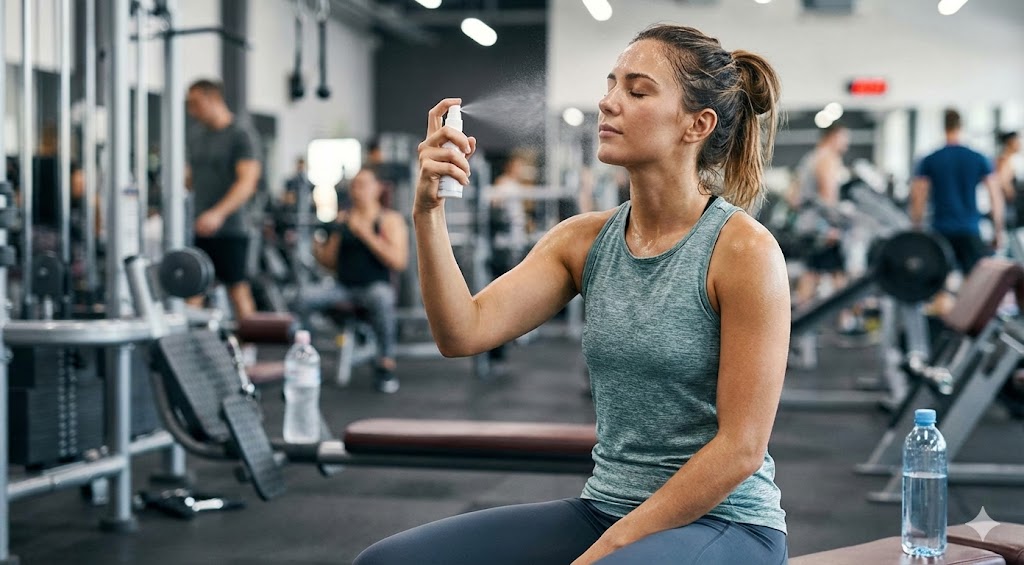
You finish a workout. Your face is dripping with sweat. You know that if you don’t wash it immediately, you will break out. But you can’t always get to a sink. This is the exact scenario where Hypochlorous Acid (HOCl) shines. It is a sanitizer that acts like water but kills bacteria like bleach.
Most acne treatments burn. Benzoyl peroxide stains your towels. Salicylic acid peels your skin. Hypochlorous acid is different. It is the same molecule your own immune system produces to fight infection. It is ruthless to bacteria but gentle on your face.
For the data-driven consumer, the appeal is the “kill rate.” I audited the antimicrobial efficacy of HOCl sprays. Evidence suggests that the benefits of hypochlorous acid for acne prone skin stem from its ability to destroy the cell walls of pathogens on contact, neutralizing the threat before it can clog a pore.
Physiologically Speaking: The Immune Mechanism
When a pathogen invades your body, neutrophils (white blood cells) rush to the site. They release a burst of Hypochlorous Acid. This oxidative burst destroys the invader. By spraying HOCl on your face, you are essentially mimicking this natural immune response topically.
Physiologically speaking, acne is an inflammatory condition driven by bacteria (Cutibacterium acnes). HOCl reduces this bacterial load immediately. Furthermore, it is anti-inflammatory. It calms the “cytokine storm” in the skin that leads to red, angry pimples.
When we pit HOCl against Benzoyl Peroxide, the user experience is night and day. Benzoyl Peroxide generates free radicals that can age the skin and cause dryness. HOCl is non-cytotoxic to human keratinocytes (skin cells). A study in the Journal of Clinical and Aesthetic Dermatology confirmed that HOCl significantly reduced itching and inflammation in dermatitis patients, highlighting its soothing profile.
| Feature | Hypochlorous Acid (HOCl) | Benzoyl Peroxide (BP) |
|---|---|---|
| Primary Action | Antimicrobial & Anti-inflammatory. | Oxidative bacterial killing. |
| Skin Sensation | Feels like water; soothing. | Often stings or dries skin. |
| The Practical Catch | Short shelf life; degrades in light. | Bleaches fabrics and hair. |
5 Clinical Methods To Clear Congestion
1. The “Post-Gym” Spray
Sweat itself isn’t dirty, but it creates a moist breeding ground for bacteria. If you can’t shower right away, drench your face in HOCl spray. It sterilizes the sweat, preventing the bacterial overgrowth that leads to fungal acne and breakouts.
Pro-Tip: Keep a bottle in your gym bag; it is your portable shower.
2. The Maskne Defense
Wearing a mask traps heat and moisture (the “petri dish” effect). Spraying the inside of your mask and your face with HOCl reduces the bio-load significantly. It kills the bacteria before they have a chance to colonize your chin.
Pro-Tip: Let it dry completely before putting the mask back on to avoid irritation.
3. Active Breakout Compressor
For a large, painful cyst, soak a cotton pad in HOCl and hold it against the pimple for 60 seconds. This concentrated exposure helps kill the bacteria deep in the pore and reduces the swelling faster than a simple spritz.
Pro-Tip: Do this after cleansing but before moisturizing.
4. Eyelid Hygiene
HOCl is safe enough for the eyes (it’s used for blepharitis). If you get styes or acne around the lash line, use a specialized HOCl eyelid spray. It keeps the meibomian glands clear without stinging.
Pro-Tip: Look for brands specifically marketed for “eyelid and lash” hygiene for the correct pH.
5. The “Sandwich” Buffer
If you use strong retinoids or acids, apply HOCl first. It resets the skin’s pH and calms the barrier. Once it dries, apply your active. This reduces the “sting” of stronger treatments and helps maintain a healthy microbiome.
Pro-Tip: Wait for the HOCl to fully evaporate (about 30 seconds) before layering other products.
Stacking Your Strategy For Clear Skin
To make this work 20% better, stack your HOCl Spray with a Gentle Salicylic Acid Cleanser.
HOCl kills the surface bacteria. Salicylic Acid (BHA) penetrates the pore to dissolve the oil plug. By using BHA to unclog the drain and HOCl to sanitize the surface, you attack acne from both the inside (sebum) and the outside (bacteria). This “Unclog and Sanitize” protocol is highly effective for comedonal acne.
Safety & Precautions
1. Shelf Life Instability
HOCl breaks down when exposed to light and air.
Safety Note: Buy opaque bottles and use them within 3-6 months. If it smells like pool water, it’s still good. If it smells like nothing, it might be water.
2. Bleach Confusion
It is related to bleach (Sodium Hypochlorite) but chemically distinct.
Caution: Never put actual household bleach on your face. It is too alkaline and will burn you.
3. Over-Drying (Rare)
While gentle, the salt content can be slightly drying for some ultra-dry skin types.
Heads Up: Follow up with a moisturizer if your skin feels tight.
4. Fabric Safety
High concentrations can theoretically bleach colored fabric, though skincare concentrations usually don’t.
Doctor’s Note: Be careful with expensive silk or dark towels just in case.
5. Not a “Cure-All”
It manages bacteria; it does not fix hormonal imbalances.
Warning: If your acne is hormonal (cystic jawline), HOCl is a helper, not a solution.
5 Common Myths vs. Facts
Myth 1: It’s just fancy water.
Fact: It is electrochemically activated water. The ClO- molecule is a potent oxidant. It kills pathogens that water cannot touch.
Myth 2: You can make it at home.
Fact: DIY machines exist, but they are hard to calibrate. If the pH is wrong, you make bleach (irritating) or chlorine gas (toxic). Buy stabilized commercial formulas.
Myth 3: It ruins your microbiome.
Fact: It is antimicrobial, but because it is native to the body, it tends to be gentler on “good” commensal bacteria than antibiotics.
Myth 4: It stings like alcohol.
Fact: It should feel exactly like water. If it stings, the product may have additives or the pH is off.
Myth 5: It replaces washing your face.
Fact: It sanitizes, but it does not remove makeup, heavy oil, or dirt. You still need to cleanse properly at the end of the day.
The Bottom Line
Sanitize without the sting.
My analysis concludes that for the efficiency-minded user, Hypochlorous Acid is the ultimate “lazy” skincare hack that actually works. It provides medical-grade sanitation in a spray bottle. It is the missing link for anyone who sweats, travels, or touches their face too much.
The real issue is stability—it tends to break down quickly. For a clinical-strength result that keeps your pores clear on the go, I recommend buying a Stabilized HOCl Spray in a travel size. Stack it with Salicylic Acid to keep the pores open while the HOCl keeps them clean.
Get Your FREE Ultimate Vitamin Guide!
Join the VitaminProGuide community to receive science-backed supplement reviews, nutritional insights, and absorption tips, delivered straight to your inbox.