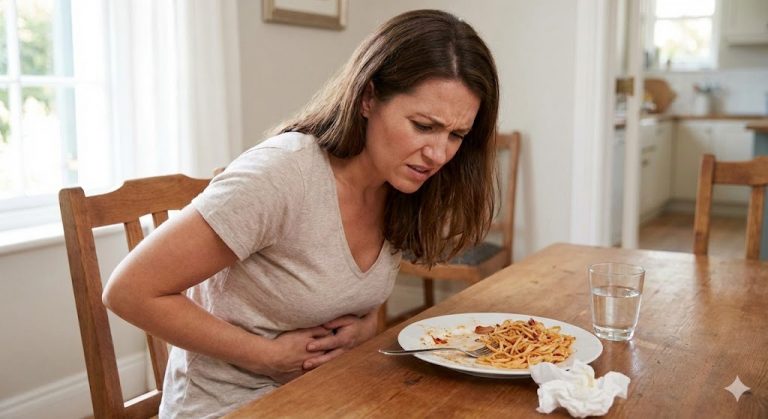
- Safety: Chronic steatorrhea (oily stool) is a hallmark of Exocrine Pancreatic Insufficiency (EPI). If left untreated, it leads to severe malnutrition and brittle bones due to the inability to absorb Vitamin D and Calcium. This is not just a bathroom issue; it is a systemic health risk.
- Effectiveness: Pancreatic Enzyme Replacement Therapy (PERT) is the gold standard. Taking prescription-strength lipase with every meal effectively mimics the natural pancreatic function, restoring normal digestion and nutrient absorption.
- Key Benefit: Correctly diagnosing EPI allows you to stop restrictive “low fat” diets and return to eating healthy fats without fear of digestive distress.
You eat a healthy meal with avocado or salmon. An hour later, you are running to the bathroom. The toilet bowl looks like an oil slick. It smells rancid. You feel bloated and tired. You suspect IBS, but IBS doesn’t cause oil slicks. The pancreas does.
The pancreas has two jobs: regulating sugar (insulin) and digesting food (enzymes). Most people know about the sugar job (diabetes). Fewer know about the digestion job. When the pancreas fails to produce enough enzymes, fat passes through you undigested. This is Exocrine Pancreatic Insufficiency (EPI).
I synthesized the pathophysiology of lipase deficiency. Evidence suggests that oily stool and pancreas problem are directly linked by a failure of the acinar cells to secrete the specific enzyme needed to break down triglycerides into absorbable fatty acids.
Physiologically Speaking: The Lipase Deficit
Digesting fat is hard work. Unlike carbs, which start breaking down in your mouth, fat requires heavy machinery. The pancreas must pump out massive amounts of Lipase into the small intestine. Lipase is the “scissor” that cuts fat molecules into pieces small enough to enter the bloodstream.
Physiologically speaking, in EPI, the pancreas output drops below 10% of normal. The scissors are gone. You eat fat, it stays whole, and it slides right through the gut. Bacteria in the colon try to eat it, producing gas and foul odors. The oil separates from the water in the toilet because it was never emulsified or digested.
A direct comparison reveals the difference between EPI and other gut issues. In Celiac disease, the gut lining is damaged. In EPI, the gut lining is fine, but the “digestive juice” is missing. A study in the Journal of the Pancreas found that EPI is frequently misdiagnosed as IBS-D (Diarrhea), leading to years of unnecessary suffering and nutrient loss.
| Feature | Exocrine Pancreatic Insufficiency (EPI) | Irritable Bowel Syndrome (IBS) |
|---|---|---|
| Stool Characteristic | Greasy, floating, foul-smelling (Steatorrhea). | Loose, watery, or mucus-filled. |
| Response to Fat | Immediate urgency/oil leakage. | Variable trigger foods (FODMAPs). |
| The Practical Catch | Requires enzyme replacement. | Requires diet/stress management. |
5 Clinical Signs Your Pancreas Is Struggling
1. The “Flush” Test
Does your stool float stubbornly? Does it leave a greasy ring or “skid marks” that are hard to clean? This is the classic sign of undigested fat. Normal stool should sink and flush easily. If you need the toilet brush every time, check your pancreas.
Pro-Tip: The oil may look like droplets of olive oil on the water surface.
2. Post-Meal Bloating
In EPI, the bloating happens in the lower abdomen and is accompanied by intense gas. This is because undigested food is fermenting. The gas is often incredibly foul-smelling due to putrefying proteins and fats.
Pro-Tip: If gas is your main symptom, it’s likely a mix of EPI and SIBO.
3. Weight Loss Without Trying
You are eating, but you are losing weight. This is “starvation in the midst of plenty.” You are consuming calories but not absorbing them. Your body starts burning muscle for fuel.
Pro-Tip: Weigh yourself weekly; a 5% drop in 6 months is a red flag.
4. Vitamin Deficiency Symptoms
You can’t see the pancreas, but you can see the deficiency. Night blindness (Vitamin A), easy bruising (Vitamin K), or dry, flaky skin (Vitamin E) are external signs that you aren’t absorbing fat-soluble vitamins.
Pro-Tip: Ask for a blood panel for Vitamins A, D, E, and K specifically.
5. History of Damage
Have you had pancreatitis? Do you drink alcohol heavily? Are you diabetic? These are the three biggest risk factors. Chronic inflammation scars the pancreas, slowly killing the enzyme-producing cells.
Pro-Tip: Even one acute attack of pancreatitis can cause long-term EPI.
Stacking Your Strategy For Digestion
To make this work 20% better, stack your Pancreatic Enzymes with MCT Oil.
Prescription enzymes (PERT) replace what your pancreas lacks. However, they take time to mix with food. MCT Oil (Medium Chain Triglycerides) does not require lipase or bile for digestion. It absorbs directly into the portal vein. By swapping some long-chain fats (like steak fat) for MCTs, you give your digestive system a break while still getting energy.
Safety & Precautions
1. Enzyme Timing
Taking enzymes after a meal is useless.
Safety Note: You must take them with the first bite of food so they mix thoroughly in the stomach.
2. Acid Suppression
Stomach acid can destroy enzyme supplements before they work.
Caution: Doctors often prescribe a PPI (acid blocker) alongside enzymes to protect them. Do not stop the PPI without asking.
3. Fiber Interference
Very high fiber diets can bind to enzymes, making them less effective.
Heads Up: Cook your vegetables well to make them easier to break down.
4. Dosage Anxiety
Patients often under-dose. You cannot overdose on enzymes easily.
Doctor’s Note: You typically need 40,000 to 50,000 units of lipase per main meal.
5. Alcohol Ban
Alcohol is toxic to the acinar cells.
Warning: Continuing to drink with EPI will accelerate the destruction of the pancreas.
5 Common Myths vs. Facts
Myth 1: You would be in pain.
Fact: Chronic EPI can be painless (“Silent Pancreatitis”). The only symptom might be the toilet bowl issues and weight loss.
Myth 2: Over-the-counter enzymes are enough.
Fact: Health food store enzymes usually contain 2,000-5,000 units of lipase. You need 40,000. You would have to take 10-20 pills per meal to match a prescription.
Myth 3: A low-fat diet cures it.
Fact: A low-fat diet masks the symptoms but causes malnutrition. You need fat for hormones and brain health. The cure is replacing the enzymes so you can eat fat.
Myth 4: It only affects alcoholics.
Fact: It affects people with Cystic Fibrosis, Celiac disease, autoimmune conditions, and sometimes just aging (pancreatic atrophy).
Myth 5: It goes away on its own.
Fact: Once the acinar cells are dead, they do not regenerate. EPI is usually a lifelong condition requiring lifelong management.
The Bottom Line
Replace what is missing.
My take is that for the efficiency-minded patient, oily stool is the pancreas throwing in the towel. It can’t keep up on its own anymore, and ignoring it sets you on a slow, wasting decline.
You must demand the right test. For a clinical-strength result that restores your quality of life, I recommend asking your doctor for a Fecal Elastase-1 Test immediately. Stack it with a trial of High-Dose Lipase to see if symptoms resolve; often, the response to treatment is the best diagnosis.
Get Your FREE Ultimate Vitamin Guide!
Join the VitaminProGuide community to receive science-backed supplement reviews, nutritional insights, and absorption tips, delivered straight to your inbox.