- Safety: Sudden hearing loss in one ear accompanied by fullness is a medical emergency (SSNHL), not just allergies. If you cannot hear a phone conversation, go to an ENT or ER within 24 hours to save your hearing.
- Effectiveness: Natural drainage techniques like the Valsalva maneuver and steam inhalation physically open the Eustachian tube, equalizing pressure instantly. Anti-inflammatory supplements reduce the mucosal swelling that blocks the tube in the first place.
- Key Benefit: Clearing the fluid prevents secondary bacterial infections (otitis media) and resolves the dizzy, “underwater” feeling without relying on drying antihistamines.
Your head feels like a balloon. Sounds are muffled. You pop your ears, but the pressure returns instantly. It is not an infection; it is a traffic jam. Your Eustachian tubes are swollen shut.
Allergies trigger an immune response that inflames the mucous membranes of the nose and throat. Since the Eustachian tube connects the middle ear to the throat, this inflammation clamps the tube shut. Fluid gets trapped behind the eardrum, creating that maddening sensation of fullness.
The solution is hydraulic, and I’ve worked out the mechanics behind Eustachian Tube Dysfunction (ETD). Evidence suggests that how to reduce ear fullness from allergies naturally involves a two-pronged attack: reducing the mucosal swelling (inflammation) and manually forcing the tube open (mechanical drainage).
Physiologically Speaking: The Vacuum Effect
The middle ear needs air to vibrate. The Eustachian tube provides this air. When allergies swell the tube shut, the air inside the middle ear gets absorbed by the blood vessels. This creates a vacuum (negative pressure).
Physiologically speaking, this vacuum sucks fluid from the surrounding tissue into the ear space. This fluid is thick and sticky (glue ear). It dampens the vibration of the eardrum, causing conductive hearing loss. To fix it, you must break the vacuum seal.
A direct comparison reveals the strategy. Decongestants (pseudoephedrine) constrict blood vessels to shrink swelling, but they can raise blood pressure and cause anxiety. Natural methods focus on thinning the fluid (mucolytics) and using gravity/pressure to clear the blockage. A study in the Journal of Laryngology & Otology supports the use of auto-inflation devices (mechanical pressure) as a viable first-line treatment for ETD.
| Feature | Healthy Eustachian Tube | Allergic Blockage (ETD) |
|---|---|---|
| Function | Opens when swallowing/yawning. | Remains closed due to swelling. |
| Middle Ear State | Air-filled (Ideal). | Fluid-filled (Muffled). |
| The Practical Catch | Pressure equalizes instantly. | Pressure builds; pain/dizziness. |
5 Clinical Methods To Drain The Fluid
1. The Modified Valsalva
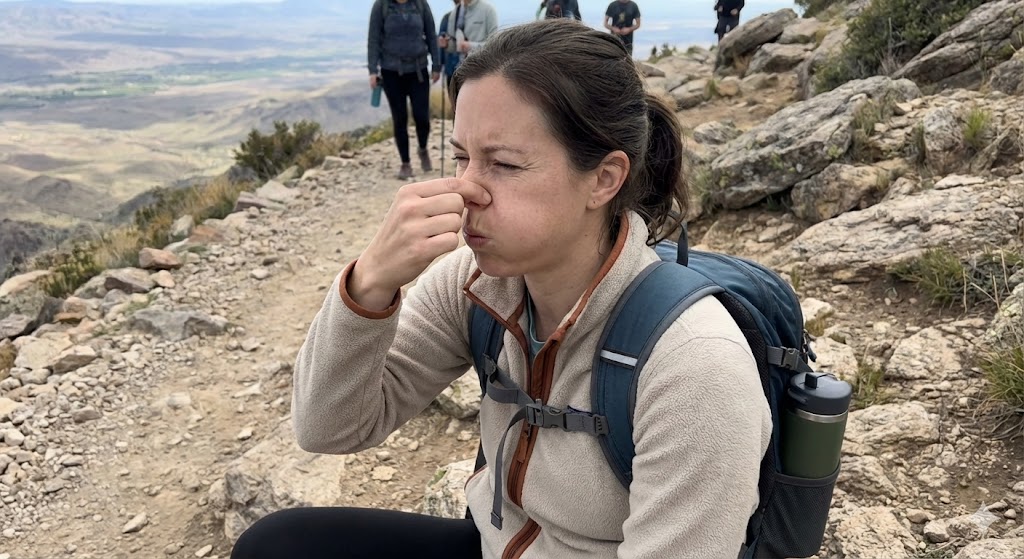
Pinch your nose, close your mouth, and blow gently. You should feel a “pop.” This forces air up the tube. Do not blow hard, or you risk damaging the eardrum. Repeat this 5-10 times a day to manually aerate the middle ear.
Pro-Tip: Try the “Toynbee Maneuver”: Pinch your nose and swallow. This pulls the tube open using muscle action.
2. Steam with Eucalyptus
Steam rehydrates the thick mucus, making it thinner. Eucalyptus oil (containing cineole) acts as a natural mucolytic and anti-inflammatory. Boil water, add 3 drops of oil, drape a towel over your head, and breathe for 10 minutes. This physically loosens the “glue.”
Pro-Tip: Keep your eyes closed; eucalyptus vapor stings.
3. Quercetin + Bromelain Stack
Quercetin stabilizes mast cells (stopping histamine release). Bromelain (pineapple enzyme) reduces swelling and thins mucus. Together, they attack the root cause of the allergic inflammation without the drowsiness of Benadryl.
Pro-Tip: Take on an empty stomach for systemic anti-inflammatory effects.
4. Lymphatic Drainage Massage
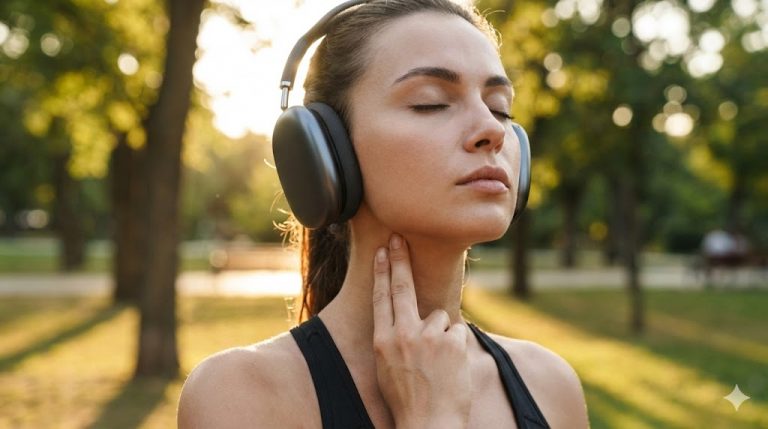
Fluid drains down the neck. If your neck lymph nodes are congested, the ear cannot drain. Gently massage from behind the earlobe down the side of the neck to the collarbone. Use light, rhythmic strokes to encourage the fluid to move south.
Pro-Tip: Do this in the shower with warm water hitting your neck.
5. Nasal Saline Irrigation (Neti Pot)
Flushing the sinuses removes the allergens (pollen/dust) that are triggering the reaction. It also physically removes the mucus plug at the opening of the Eustachian tube in the nasopharynx.
Pro-Tip: Use distilled water only; tap water can contain brain-eating amoebas.
Stacking Your Strategy For Relief
To make this work 20% better, stack your Steam Inhalation with NAC (N-Acetyl Cysteine).
Steam wets the mucus. NAC breaks the sulfur bonds in the mucus, turning it from “glue” into “water.” This makes it infinitely easier for the Eustachian tube to drain the fluid naturally. NAC is the same compound used in hospitals to clear lungs; it works just as well for ears.
Safety & Precautions
1. Rupture Risk
Blowing too hard during Valsalva can perforate the eardrum.
Safety Note: If it hurts, stop immediately. Gentle pressure only.
2. Infection Signs
If the fluid turns into pus (green discharge, severe pain, fever), it is an ear infection.
Caution: Natural drainage won’t kill bacteria; you may need antibiotics.
3. Vertigo Danger
Fluid imbalance can cause severe dizziness.
Heads Up: Do not drive if the room is spinning. Treat the ear first.
4. Neti Pot Hygiene
Dirty Neti pots breed bacteria.
Doctor’s Note: Wash the pot with soap and hot water after every single use.
5. Chronic Blockage
If fullness lasts more than 2 weeks, you may have a polyp or structural issue.
Warning: See an ENT to rule out nasopharyngeal tumors if it is only one ear and persistent.
5 Common Myths vs. Facts
Myth 1: Ear candles remove wax and pressure.
Fact: Ear candles are dangerous scams. They do not create a vacuum. The “wax” you see is just melted candle wax. They can burn your eardrum.
Myth 2: You should put oil in your ear.
Fact: Oil helps with wax, but the problem is behind the eardrum. Putting oil in the canal does nothing for the middle ear fluid and can trap bacteria.
Myth 3: Antihistamines drain the fluid.
Fact: Antihistamines dry you out. This can make the fluid thicker and harder to drain. Mucolytics (like NAC/Bromelain) are often better for drainage.
Myth 4: Peroxide clears it.
Fact: Peroxide fizzes out wax. It cannot penetrate the eardrum to reach the allergic fluid. It is useless for ETD.
Myth 5: It’s just wax.
Fact: Ear fullness is often mistaken for wax. If you clean your ears and still feel full, the problem is internal (Eustachian tube), not external.
The Bottom Line
Thin the fluid, open the door.
My analysis concludes that for the efficiency-minded user, fixing Ear Fullness is a plumbing job. You must reduce the viscosity of the fluid and mechanically encourage the pipe to open. Waiting for it to pass usually leads to infection.
The real challenge is staying consistent. You have to massage and steam multiple times a day. For a clinical-strength result that pops your ears safely, I recommend pivoting to a Quercetin + NAC supplement regimen. Stack it with the Toynbee Maneuver every hour to manually pump the fluid out and restore your hearing clarity.
Get Your FREE Ultimate Vitamin Guide!
Join the VitaminProGuide community to receive science-backed supplement reviews, nutritional insights, and absorption tips, delivered straight to your inbox.