- Safety: If your anxiety is accompanied by chest pain, shortness of breath while lying flat, or a feeling of impending doom, this could be a cardiac event or a panic attack requiring medical assessment. Do not dismiss physical symptoms as just “nerves”.
- Effectiveness: You cannot “force” sleep. The harder you try, the more awake you become (psychophysiological insomnia). The most effective methods distract the brain’s “threat detection” center, allowing the parasympathetic nervous system to take over.
- Key Benefit: shifting the nervous system from “Fight or Flight” to “Rest and Digest” lowers heart rate and cortisol, chemically permitting the brain to initiate the sleep sequence.
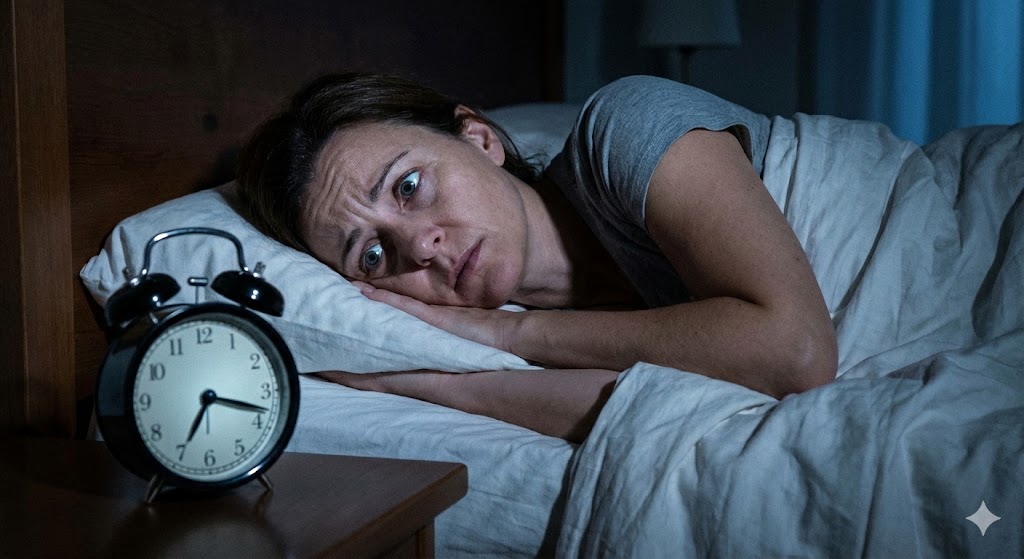
You stare at the ceiling. The room is dark. Your body is exhausted. But your brain is running a marathon. You replay a conversation from 2018. You worry about a meeting that is three days away. The clock reads 2:00 AM.
This is “tired but wired.” It is a biological paradox where physical fatigue clashes with hyperarousal. Your brain perceives the act of lying awake as a threat. It releases cortisol and adrenaline to keep you alert for the “danger.” You are fighting your own survival instinct.
The solution isn’t about “relaxing”; it’s more about mechanical downregulation. After reviewing the neurobiology of sleep onset latency, evidence points to the idea that falling asleep quickly when anxious involves manually activating the Vagus nerve to override stress signals.
Physiologically Speaking: The Cortisol Blockade
Sleep requires a drop in core body temperature and a drop in cortisol. Anxiety spikes both. When you are anxious, your brain generates Beta waves (alertness). To sleep, you need Alpha and Theta waves (relaxation). High cortisol physically blocks this transition.
Physiologically speaking, the amygdala (fear center) hijacks the prefrontal cortex (logic). You cannot “think” your way to sleep because the logic center is offline. You must use physiological hacks to signal safety to the amygdala. This engages the GABAergic system, the brain’s braking mechanism.
A direct comparison reveals the chemical difference. A calm sleeper has high GABA and low Glutamate. An anxious sleeper has high Glutamate (excitatory) and low GABA. A study in the Journal of Evidence-Based Integrative Medicine confirms that interventions like the 4-7-8 breathing technique significantly reduce anxiety scores by manually adjusting this neurotransmitter balance.
| Feature | Anxious Brain (Hyperarousal) | Sleepy Brain (Homeostatic) |
|---|---|---|
| Dominant Hormone | Cortisol / Adrenaline. | Melatonin / Adenosine. |
| Brain Waves | High Beta (Fast, chaotic). | Alpha / Theta (Slow, rhythmic). |
| The Practical Catch | Cannot initiate sleep cycle. | Transitions smoothly to NREM. |
5 Clinical Methods For Vagal Tone Activation
1. The “Cognitive Shuffle” (Serial Diverse Imaging)
Anxiety loops on one topic. Break the loop by forcing the brain to visualize random, unrelated objects. Think of a word (e.g., “BED”). Visualize a Ball. Then an Elephant. Then a Door. This scrambles the threat detection radar and mimics the fragmented thinking that occurs naturally before sleep.
Pro-Tip: Do not create a story; the images must be random and disconnected.
2. The Physiological Sigh
This is the fastest way to offload carbon dioxide and lower heart rate. Inhale deeply through your nose. Then, without exhaling, take a second, shorter inhale to fully inflate the alveoli. Then exhale slowly through your mouth. Repeat 3 times.
Pro-Tip: The exhale must be longer than the inhale to trigger sedation.
3. Thermal Dump (The Ice Trick)
Anxiety raises body temperature. Sleep requires it to drop. If you are spiraling, get out of bed and splash ice-cold water on your face for 30 seconds. This triggers the “Mammalian Dive Reflex,” which instantly lowers heart rate and resets the nervous system.
Pro-Tip: Holding an ice pack to the chest (vagus nerve location) also works.
4. Progressive Muscle Relaxation (PMR)
Anxiety causes micro-tension you don’t notice. Squeeze your toes as hard as you can for 5 seconds. Release. Move to your calves. Squeeze. Release. Work your way up to your face. The physical release of tension sends a feedback signal to the brain that the “threat” has passed.
Pro-Tip: Focus entirely on the sensation of the release, not the squeeze.
5. 4-7-8 Breathing
Inhale through the nose for 4 seconds. Hold the breath for 7 seconds. Exhale forcefully through the mouth (making a whoosh sound) for 8 seconds. The long hold allows oxygen to saturate the blood, while the long exhale engages the parasympathetic brake.
Pro-Tip: Keep the tip of your tongue against the ridge of tissue behind your upper front teeth.
Stacking Your Strategy For Neural Sedation
To make this work 20% better, stack your Breathing Protocol with L-Theanine.
Breathing tells the body to relax. L-Theanine (an amino acid found in tea) forces the brain into Alpha wave production. It does not sedate you; it relaxes the mind without drowsiness. By combining a physical brake (breathing) with a chemical brake (L-Theanine), you create a “pincer maneuver” that shuts down the anxiety loop from both ends.
Safety & Precautions
1. Sleep Apnea Warning
If you wake up gasping with a racing heart, it might be apnea, not anxiety.
Safety Note: See a sleep specialist. Sedatives make apnea worse.
2. Alcohol Trap
Alcohol knocks you out but causes “rebound anxiety” at 3 AM.
Caution: Avoid alcohol within 3 hours of bed if you have anxiety issues.
3. Benzo Dependence
Prescription anxiety meds (Xanax/Valium) destroy sleep architecture long-term.
Heads Up: Use these only for acute crises under strict doctor supervision, not nightly.
4. Chronotype Mismatch
Fighting your natural rhythm causes anxiety. If you are a night owl, sleeping at 9 PM won’t work.
Doctor’s Note: Adjust your sleep window to match your tiredness cues.
5. Orthopnea
Breathlessness when lying flat can indicate heart failure.
Warning: If you need 3 pillows to breathe comfortably, seek medical attention.
5 Common Myths vs. Facts
Myth 1: Just try to relax.
Fact: Trying implies effort. Effort alerts the brain. You must distract the brain (Cognitive Shuffle) rather than trying to force it to shut off.
Myth 2: Warm milk helps.
Fact: The tryptophan in milk is too low to impact the brain. It is a placebo. A magnesium drink is biologically superior.
Myth 3: Stay in bed until you sleep.
Fact: If you are awake for 20 minutes, get up. Staying in bed trains your brain that the bed is a place for worrying. Break the association.
Myth 4: Look at your phone to distract yourself.
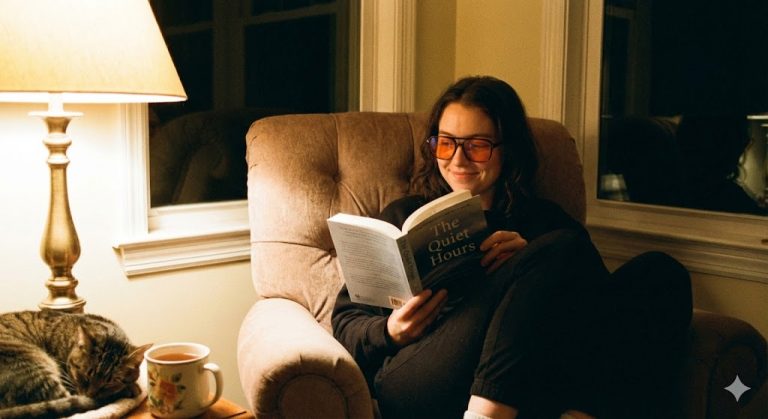
Fact: Blue light and dopamine hits from the phone keep the cortisol high. Read a physical book with a dim amber light instead.
Myth 5: Melatonin cures anxiety insomnia.
Fact: Melatonin sets the clock; it is not a sedative. If cortisol is high, it overrides melatonin completely.
The Bottom Line
Distract the guard dog.
My analysis suggests that for the efficiency-focused individual, sleep anxiety is essentially a mechanical problem. The threat detection system is stuck in the “on” mode, and reasoning with it won’t work. It needs to be physically switched off.
If you’re worried about not sleeping, try switching to the Cognitive Shuffle as soon as you lie down for a powerful, cycle-breaking effect. Pair it with 400mg of Magnesium Glycinate about an hour before bed to help calm your nervous system and lower its firing threshold.
Get Your FREE Ultimate Vitamin Guide!
Join the VitaminProGuide community to receive science-backed supplement reviews, nutritional insights, and absorption tips, delivered straight to your inbox.