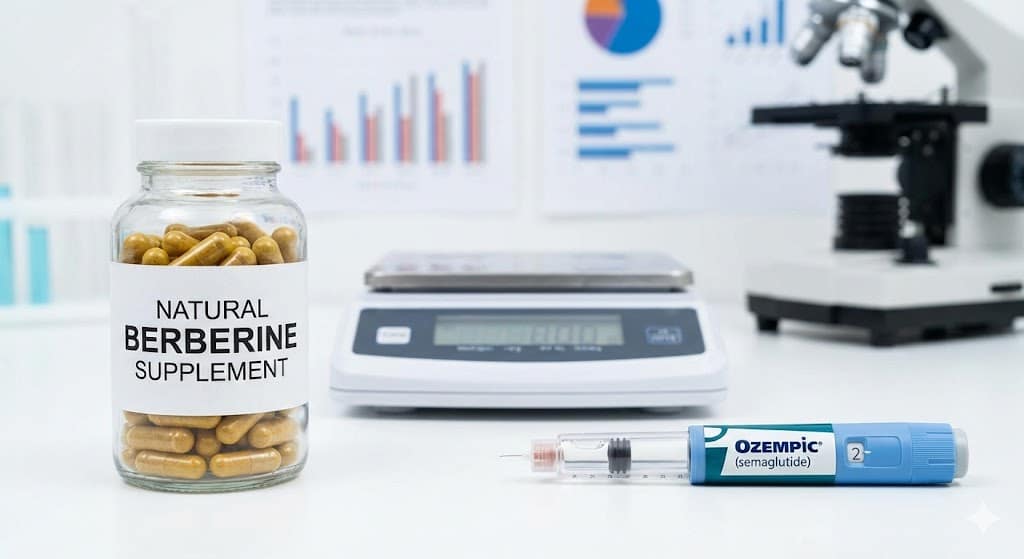
- Safety: Berberine frequently causes digestive upset while Ozempic carries risks of more serious side effects requiring medical oversight.
- Effectiveness: Clinical data shows Ozempic leads to significantly greater body weight percentage loss compared to berberine.
- Key Benefit: Berberine is an accessible over the counter metabolic support tool whereas Ozempic is a potent prescription intervention.
You scroll through social media and see endless viral claims about “nature’s Ozempic.” It is incredibly tempting to believe that a simple herbal supplement could rival a powerful prescription drug in the battle of berberine vs ozempic for weight loss. I refused to just accept the hype at face value.
I dug into the clinical trials and biochemical data to understand the actual mechanisms at play here. The comparison is fascinating but it is not an apples to apples situation. These two substances work on fundamentally different pathways in your body.
The allure of a natural alternative is strong especially given the cost and potential side effects of pharmaceutical options. However expecting pharmaceutical grade results from a botanical extract often leads to disappointment. We need to set realistic expectations based on science.
It turns out that while both can influence metabolic health their potency and methods are vastly different. Let us explore the real evidence behind these two popular approaches to managing weight. Understanding the biology is key to making the right choice for your health.
What the Research Says About Metabolic Mechanisms
My review of the scientific literature reveals that the “nature’s Ozempic” nickname for berberine is largely inaccurate from a mechanistic standpoint. Ozempic acts as a GLP-1 receptor agonist which means it mimics a hormone in your gut that signals fullness to your brain and drastically slows digestion. This results in a profound suppression of appetite that makes eating less almost effortless for many people.
Berberine works quite differently by activating an enzyme called AMPK which is often described as the body’s “metabolic master switch.” I found that activating AMPK helps improve insulin sensitivity and encourages cells to utilize glucose more effectively. While this supports metabolic health it does not powerfully suppress appetite in the same way GLP-1 drugs do.
The weight loss observed in berberine studies is generally modest usually ranging from a few pounds to perhaps five percent of body weight over several months. In contrast clinical trials for semaglutide the active ingredient in Ozempic show average weight losses often exceeding fifteen percent in similar timeframes. They are simply in different weight classes of intervention.
| Feature | Berberine Supplementation | Ozempic (Semaglutide) |
|---|---|---|
| Primary Mechanism | Activates AMPK enzyme to improve cellular energy use | Mimics GLP-1 hormone to signal fullness to brain |
| Average Weight Loss | Modest typically 2% to 5% of body weight | Significant typically 10% to 15%+ of body weight |
| Accessibility | Available over the counter | Requires prescription and medical monitoring |
Effective Ways to Optimize Metabolic Health Naturally
If you are choosing the natural route over prescriptions like Ozempic you need a comprehensive strategy to maximize results. Berberine alone is rarely enough to drive significant change without supporting lifestyle pillars. Here are seven evidence based ways to enhance your metabolic function.
1. Prioritize High Quality Protein
Eating adequate protein is crucial for satiety and maintaining muscle mass during weight loss. I found that protein stimulates the release of natural satiety hormones in the gut. Aim for 20 to 30 grams of protein at every major meal.
2. Increase Viscous Soluble Fiber
Fiber acts like a natural sponge in your gut slowing down digestion and stabilizing blood sugar response. It also feeds healthy gut bacteria which can produce short chain fatty acids that support metabolism. Sources include oats beans apples and flaxseeds.
3. Incorporate Resistance Training
Muscle tissue is metabolically active and burns more glucose at rest than fat tissue. My research shows that strength training improves insulin sensitivity independent of weight loss. Aim for two to three full body sessions per week.
4. Strategic Carbohydrate Timing
Your body handles carbohydrates best around periods of physical activity. Consuming your starchiest meals after a workout can help direct that glucose into muscle glycogen stores rather than fat storage. This is a smart way to work with your body’s physiology.
5. Manage Chronic Stress Levels
Chronically elevated cortisol drives insulin resistance and encourages belly fat storage. I cannot stress enough how important stress management techniques like deep breathing or meditation are for metabolic healing. You cannot out-diet a high stress lifestyle.
6. Optimize Sleep Quantity and Quality
Poor sleep disrupts hunger hormones increasing ghrelin and decreasing leptin. This makes you physiologically hungrier and less satisfied after eating. Aim for seven to nine hours of quality sleep nightly to keep hormones balanced.
7. Stay Consistent with Daily Movement
Non-exercise activity thermogenesis or NEAT plays a huge role in daily calorie expenditure. Simple habits like walking more taking stairs and standing frequently add up significantly over time. Movement is essential medicine for metabolism.
Best Schedule & Duration for Maximum Results
If you choose to utilize berberine it is critical to understand its pharmacokinetics for it to be effective. I found that berberine has a very short half life in the body which means it is metabolized and excreted quickly. Taking a single large dose once a day is generally ineffective.
The standard dosage used in most successful clinical studies ranges from 900mg to 1500mg per day. This total amount must be divided into three separate doses taken throughout the day to maintain stable levels in your bloodstream. Consistency in spacing these out is key.
The optimal timing is to take 500mg about twenty to thirty minutes before your major meals. This allows the compound to be active in your system exactly when glucose from your food begins to enter your bloodstream. Always start with a lower dosage to allow your gut to adjust.
Safety & Precautions
1. Consult Your Physician First
Berberine is biologically active and can interact with many prescription medications especially blood thinners and diabetes drugs. You must get clearance from your doctor before adding it to your routine to avoid dangerous interactions. Do not assume natural means safe for everyone.
Safety Note: Drug interactions can be serious.
2. Start Low to Mitigate Gut Issues
The most common complaints with berberine are gastrointestinal including cramping diarrhea and constipation. I strongly advise starting with just one 500mg capsule daily for the first week before gradually increasing to the full dose. This gives your digestive system time to adapt.
Safety Note: Rushing dosage causes unnecessary discomfort.
3. Monitor for Hypoglycemia
Because berberine effectively lowers blood sugar combining it with other glucose lowering medications can cause blood sugar to drop too low. If you take metformin or insulin close monitoring is absolutely essential. You need to be aware of the signs of low blood sugar.
Safety Note: Too much blood sugar reduction is dangerous.
4. Watch Long Term Liver Enzymes
While generally safe some rare case reports have suggested potential liver stress with long term high dose use. My recommendation is to have your liver enzymes checked periodically if you plan to use berberine for many months. It is a proactive safety measure.
Safety Note: Periodic blood work is smart preventative health.
5. Avoid During Pregnancy and Breastfeeding
There is insufficient safety data regarding berberine use during pregnancy or while nursing. Research indicates it may cross the placenta or enter breast milk potentially harming the baby. It is best to err on the side of caution and avoid it completely.
Safety Note: Protecting the baby is paramount.
5 Common Myths vs Facts
Myth 1: Berberine is practically the same as taking Ozempic.
Fact: They operate on entirely different biological pathways. Ozempic is a potent hormone mimetic while berberine is a milder cellular enzyme activator.
Myth 2: Natural supplements have zero side effects.
Fact: Berberine causes significant gastrointestinal distress for many users and can interact dangerously with certain prescription medications.
Myth 3: You will see massive weight loss in a month with berberine.
Fact: Weight loss with berberine is slow and modest usually amounting to a few pounds over several months of consistent use.
Myth 4: Ozempic fixes your metabolism permanently.
Fact: Ozempic is a treatment not a cure. Studies show that most people regain a significant portion of the lost weight once they stop the medication.
Myth 5: You can eat whatever you want on either regimen.
Fact: Both approaches require dietary changes for success. Berberine will not overcome a poor diet and eating poorly on Ozempic can cause severe digestive side effects.
The Bottom Line
The comparison of berberine vs ozempic for weight loss highlights the difference between mild metabolic support and potent medical intervention.
Based on the research I believe berberine is best viewed as a supportive tool for those with mild blood sugar concerns looking for a natural adjunct to lifestyle changes. It is not a replacement for Ozempic which is reserved for treating significant obesity and type 2 diabetes under medical supervision. My take is that social media has vastly overstated the similarities between these two distinct options.
If you are considering either path your next step must be a candid conversation with your primary care doctor or endocrinologist.