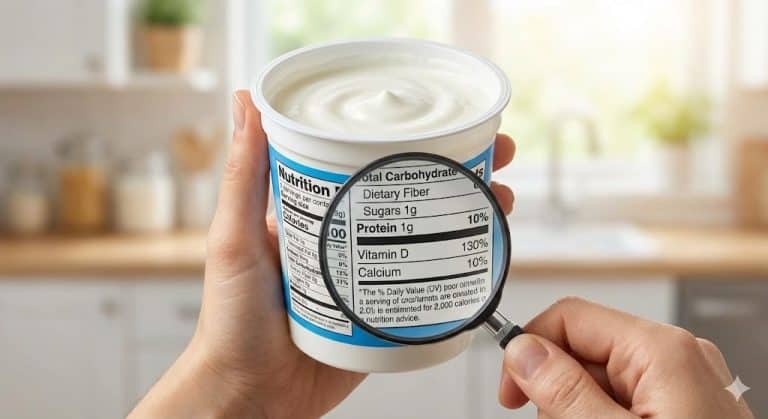
- Safety: Focus on physiological doses, not mega-dosing.
- Effectiveness: Aim to fill dietary gaps rather than treat acute illness.
- Key Benefit: Sustainable energy, immune resilience, and cognitive clarity.
The Confusion in the Supplement Aisle
Walking into a pharmacy often feels like navigating a minefield of marketing claims. You ask yourself, what vitamins and supplements should i take daily, but the answer is usually buried under hype and conflicting advice.
I dug into the trials to separate the essential nutrients from the “expensive pee.” My research shows that most people do not need a 20-pill regimen to stay healthy. Instead, the goal is to target specific nutrient gaps that modern diets fail to fill.
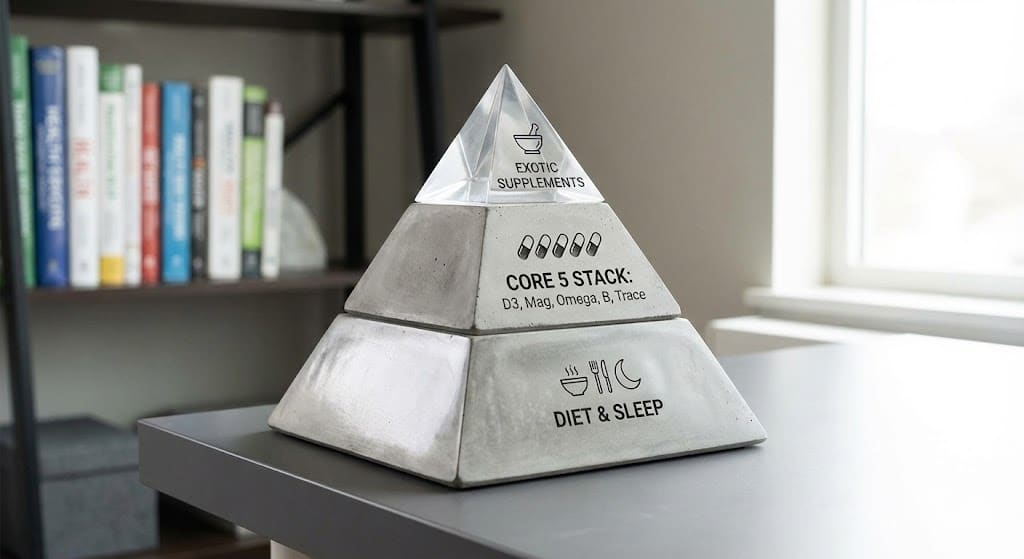
The solution is not to take everything, but to take the right things in the right forms. By focusing on five core nutrients, you can build a foundation for long-term health without wasting money on fluff.
What the Research Says About Nutritional Gaps
Modern agriculture and processed diets have significantly reduced the nutrient density of our food. Even if you eat “clean,” you might still be missing critical minerals due to soil depletion.
Data from the National Institutes of Health (NIH) suggests that a large percentage of the population falls short on key micronutrients like Vitamin D and Magnesium. This isn’t about treating a disease; it’s about giving your cellular machinery the fuel it needs to run without sputtering.
But be careful. Randomly grabbing a generic multivitamin often leads to poor absorption. You need to understand the difference between a targeted approach and a “shotgun” approach.
Targeted Stacking vs. Generic Multis
| Feature | Targeted Daily Stack | Generic Multivitamin |
|---|---|---|
| Absorption | High (Specific forms like Glycinate) | Low (Cheap oxides) |
| Dosage | Optimized for clinical effect | “Dusting” (Too low to work) |
| Flexibility | Adjustable based on needs | Fixed ratio (All or nothing) |
Effective Ways to Build Your Core Stack
If you want to know what vitamins and supplements should i take daily, I have narrowed it down to these five essentials. This list focuses on high-impact nutrients that are difficult to get from food alone.
1. Vitamin D3 + K2 (The Hormone Helper)
Vitamin D is actually a hormone precursor, not just a vitamin. It regulates thousands of genes. But taking D3 alone can be risky for calcium regulation, so I always pair it with K2 to direct calcium into the bones, not the arteries.
2. Magnesium Glycinate (The Relaxer)
Magnesium is involved in over 300 enzymatic processes. Most people are deficient because stress burns through magnesium stores rapidly. Glycinate is the preferred form because it absorbs well and doesn’t upset the stomach.
3. Omega-3 Fatty Acids (The Brain Fuel)
Your brain is mostly fat. To support cognitive function and lower inflammation, you need EPA and DHA found in fish oil. Unless you eat wild-caught salmon three times a week, supplementation is usually necessary.
4. Methylated B-Complex (The Energy Spark)
B vitamins drive your energy production. However, many people have a genetic variation (MTHFR) that makes it hard to process cheap B vitamins (folic acid). A methylated B-complex provides the active forms your body can use immediately.
5. Trace Minerals / Zinc (The Immune Shield)
Our soil is stripped of trace elements. Zinc is crucial for immune signaling and gut health. Adding a broad-spectrum trace mineral drop or a low-dose zinc supplement helps cover these microscopic bases.
How to Optimize Your Results
Taking these supplements at the wrong time can reduce their effectiveness. Timing is everything when it comes to bioavailability.
Fat-soluble vitamins like D3 and K2 need dietary fat to be absorbed. So, take these with your largest meal of the day, usually lunch or dinner. If you take them with black coffee in the morning, you are wasting them.
Conversely, Magnesium Glycinate has a calming effect. I recommend taking it about an hour before bed. This aligns with your body’s natural wind-down rhythm and can support deeper sleep.
Safety & Precautions
Before starting any new regimen, follow these safety steps to protect your health.
1. Consult Your Physician
Safety Note: Always check with your doctor, especially if you are on blood thinners or other medication.
2. Check for Interactions
Safety Note: Some minerals compete for absorption. For example, don’t take high-dose Zinc and Iron at the exact same second.
3. Start Slowly
Safety Note: Introduce one new supplement at a time to monitor how your body reacts.
4. Verify Quality
Safety Note: Look for third-party testing (NSF or USP) to ensure the bottle contains what it claims.
5. Watch for Toxicity
Safety Note: More is not always better. Vitamin A and D can accumulate in the body, so stick to recommended dosages.
5 Common Myths vs. Facts
Myth 1: You get everything from food.
Fact: Soil depletion and storage times mean even fresh veggies have fewer nutrients than they did 50 years ago.
Myth 2: All multivitamins are the same.
Fact: Cheap multis often use “minerals” that are basically ground-up rocks (oxides) which your body cannot absorb.
Myth 3: Supplements cure diseases.
Fact: Supplements are for “supplementing” a healthy lifestyle, not fixing a bad diet or curing acute illness.
Myth 4: If a little is good, a lot is better.
Fact: Your body has a saturation point. High doses just stress your kidneys and liver.
Myth 5: Natural means safe.
Fact: Cyanide is natural. Always treat supplements with the same respect as medication.
The Bottom Line
You don’t need a cabinet full of pills to see results; you just need the right biological drivers.
Based on the research, I believe the best strategy for the “Skeptical Optimizer” is to avoid cheap grocery store multivitamins. They are often low-dose and poorly absorbed. Instead, focus on a high-quality Liposomal Multivitamin or a specific “Core Stack” of D3, Magnesium, and Omega-3.
To make this easy and ensure you actually absorb what you pay for, look for liposomal forms that bypass the digestive gauntlet.
Get Your FREE Ultimate Vitamin Guide!
Join the VitaminProGuide community to receive science-backed supplement reviews, nutritional insights, and absorption tips, delivered straight to your inbox.