Contents
- Safety: Alpha Lipoic Acid is a potent glucose disposal agent. If you take insulin or Metformin, it can drive your blood sugar dangerously low (hypoglycemia). Monitor levels closely.
- Effectiveness: Clinical trials confirm that only the “R” form of Lipoic Acid is biologically active in humans. The synthetic “S” form found in cheap supplements is largely useless and may inhibit the good form.
- Key Benefit: R-ALA improves blood flow to the nerves and replenishes Glutathione to stop the oxidative burning sensation.
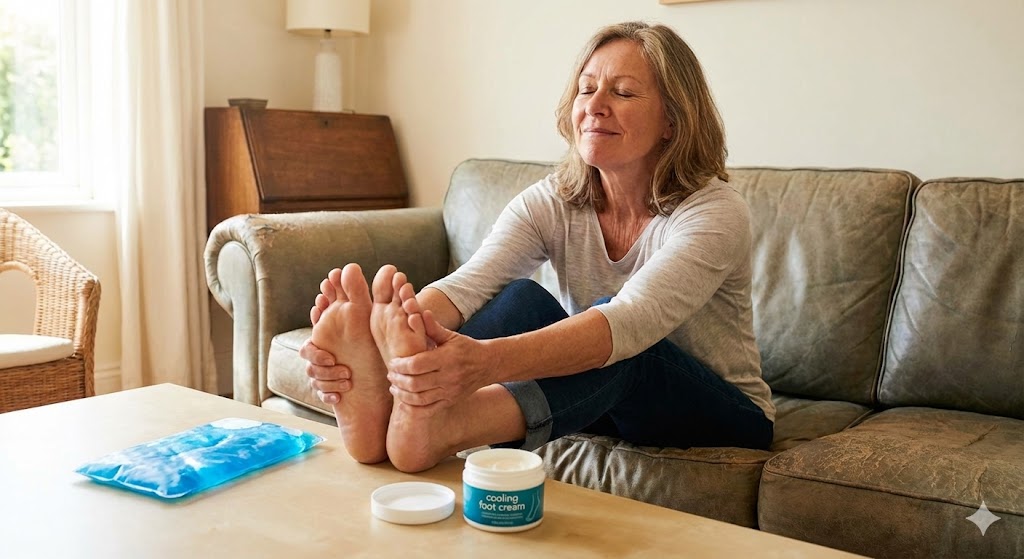
Your feet feel like they are wrapped in wool, yet they burn like they are on fire. You take the Gabapentin, but the fog is unbearable. You read about Alpha Lipoic Acid (ALA) on every forum. You buy the biggest bottle at the pharmacy. You take it faithfully. Nothing happens.
This is not because ALA doesn’t work. It is because you likely bought the wrong molecule. In the supplement world, geometry matters. Most ALA supplements are a 50/50 mixture of two mirror images. One is natural. The other is a synthetic byproduct that your body struggles to recognize.
A closer look at the chirality (molecular shape) reveals why most trials fail. One key fits the lock. The other jams it. The data suggests that for the Skeptical Optimizer, finding the best Alpha Lipoic Acid for neuropathy burning requires ignoring the dosage on the front and reading the fine print on the back.
Decoding The Mirror Image: R vs S
Molecules can exist in two forms that are mirror images of each other. In chemistry, these are labeled “R” (Right/Rectus) and “S” (Sinister). Nature only produces the R-form. This is what your mitochondria use to generate energy. It is the form that fights oxidative stress.
According to the National Institutes of Health (NIH), chemical synthesis creates a “racemic” mixture. This means it is 50% R-ALA and 50% S-ALA. The S-ALA is not just inactive; studies suggest it may actually compete with the R-ALA for absorption. It blocks the good stuff from getting in.
When you buy a generic 600mg bottle, you are effectively getting only 300mg of the active ingredient, mixed with 300mg of chemical filler. Bioavailability studies show that the “Stabilized R-Lipoic Acid” (often bound to sodium) achieves plasma levels up to 40 times higher than the standard mixture.
| Feature | Stabilized R-Lipoic Acid (Na-R-ALA) | Standard Alpha Lipoic Acid (Racemic) |
|---|---|---|
| Primary Mechanism | Biologically identical to human ALA. | 50% active / 50% synthetic byproduct. |
| Direct Benefit | Rapidly absorbed; supports nerve mitochondria. | Cheap antioxidant support. |
| The Practical Catch | Costs 3x more than generic. | Poor stability and low absorption. |
5 Strategic Ways To Extinguish The Fire
1. The Sodium Bond Solution
R-ALA is notoriously unstable. It turns into a sticky plastic-like polymer if exposed to heat. To fix this, scientists bond it to sodium (Na-R-ALA). This makes it heat stable and water-soluble. Always look for “Na-R-ALA” on the label for maximum potency.
Pro-Tip: If the label just says “Alpha Lipoic Acid,” it is the cheap synthetic mix.
2. The Empty Stomach Mandate
ALA competes with proteins for transport carriers in the gut. If you take it with a steak, you lose. You must take it on a completely empty stomach, at least 30 minutes before eating.
Pro-Tip: Take your daily dose first thing in the morning with water only.
3. The “Acid Reflux” Mitigation
Lipoic Acid is, by definition, an acid. It can cause severe heartburn (GERD) in high doses. If you have a sensitive stomach, split the 600mg dose into two 300mg doses taken morning and afternoon.
Pro-Tip: Drink a full glass of water to dilute the acidity.
4. Heavy Metal Chelation
ALA is a chelator. It grabs onto heavy metals like mercury and iron. While good, it can also redistribute them if you have high toxic loads. It is wise to ensure your mineral status (Zinc, Copper) is balanced before starting high doses.
Pro-Tip: Take a multi-mineral supplement at lunch to replace what might be chelated out.
5. The “Biotin” Thief
High dose ALA competes with Biotin (Vitamin B7) for uptake. Long-term use can lead to a Biotin deficiency, causing hair loss or rashes.
Pro-Tip: Supplement with 5,000mcg of Biotin separately if you take ALA for more than 3 months.
Stacking Your Strategy For Maximum Relief
To make this work 20% better, stack your Na-R-ALA with Acetyl-L-Carnitine (ALCAR). These two are the “Mitochondrial Power Couple.”
ALA repairs the nerve membrane. ALCAR increases the energy output of the nerve cell itself. Clinical studies have shown that using them together results in significantly better pain reduction and nerve conduction velocity than using either alone. It gives the nerve the fuel and the protection it needs to heal.
Safety & Precautions
1. Thyroid Interaction
ALA can lower thyroid hormone levels (T3). If you are on Levothyroxine, this can alter your TSH scores.
Safety Note: Test your thyroid levels 4 weeks after starting.
2. Thiamine Deficiency
ALA burns through Thiamine (Vitamin B1). If you are diabetic or drink alcohol, you are already low in B1. Taking ALA without B1 can worsen neuropathy.
Caution: Always take a B-Complex or Benfotiamine alongside ALA.
3. Hypoglycemia
It mimics insulin. It drives sugar into cells. This is great for A1c but dangerous if you are fasting.
Heads Up: Carry a snack if you feel dizzy or shaky.
4. Skin Rash
Some people develop a histamine reaction to ALA, resulting in itchy hives.
Doctor’s Note: Discontinue immediately if a rash appears.
5. Urine Odor
ALA contains sulfur. Your urine may smell like asparagus. This is harmless but surprising.
Warning: Do not be alarmed; it means your kidneys are working.
5 Common Myths vs. Facts
Myth 1: Higher dose is always better.
Fact: 1200mg of generic ALA is less effective than 300mg of Stabilized R-ALA. Bioavailability trumps quantity.
Myth 2: It cures neuropathy in a week.
Fact: Nerves heal slowly. Clinical benefits typically peak at the 5-week mark. Patience is required.
Myth 3: You can take it with food.
Fact: Food reduces absorption by up to 30%. It must be taken fasting for therapeutic results.
Myth 4: It is just an antioxidant.
Fact: It is also a gene regulator that switches off inflammatory cytokines (NF-kB).
Myth 5: All R-ALA is stable.
Fact: Unless it is bound to a salt (Sodium/Potassium), R-ALA degrades quickly in the bottle. Look for the “Na” (Sodium) prefix.
The Bottom Line
You cannot fix a biological short-circuit with the wrong parts.
Based on the research, I believe that for the Skeptical Optimizer, the only logical choice is Stabilized Na-R-ALA. The generic 50/50 mixtures are false economy. They force your body to filter out the synthetic junk just to get to the active medicine.
While soaking your feet in Epsom salts offers temporary relief, the practical gap is that it doesn’t repair the nerve sheath. For a clinical-strength result that targets the root cause of the burning, I recommend pivoting to a 300mg Na-R-ALA supplement taken twice daily. Pair it with Benfotiamine to ensure you aren’t depleting other critical nerve vitamins in the process.
Get Your FREE Ultimate Vitamin Guide!
Join the VitaminProGuide community to receive science-backed supplement reviews, nutritional insights, and absorption tips, delivered straight to your inbox.