Contents
- Safety: Cranberry supplements can contain high levels of oxalates, which may increase kidney stone risk in susceptible people. D-Mannose is a simple sugar but can cause bloating or loose stools at high doses.
- Effectiveness: Clinical trials show that D-Mannose is as effective as antibiotics (Nitrofurantoin) for preventing recurrent UTIs, while Cranberry is only effective if it contains at least 36mg of PACs (Proanthocyanidins).
- Key Benefit: D-Mannose acts like a “magnet” for E. coli, flushing them out. Cranberry creates a “Teflon coating” on the bladder wall to stop them from sticking.
You feel that familiar twinge. The urgency. The subtle burning that signals your bladder is unhappy. You rush to the store and stare at the shelf. Cranberry juice? Cranberry pills? Or that white powder called D-Mannose? Choosing the wrong one often means days of discomfort while the bacteria multiply.
Bladder irritation is usually caused by E. coli bacteria latching onto the walls of your urinary tract. Once attached, they are incredibly difficult to wash away with just water. You need a “de-bonding” agent. But not all agents work the same way.
A closer look at the molecular mechanism reveals a distinct difference. One is a decoy sugar that tricks bacteria into letting go. The other is a structural blocker that prevents them from landing in the first place. The data suggests that for the Skeptical Optimizer, the battle of D-Mannose vs Cranberry for recurrent bladder irritation is about matching the remedy to the specific bacteria.
Decoding The Adhesion Mechanism
E. coli bacteria have tiny finger-like projections called “fimbriae.” They use these to grip the lining of your bladder like velcro. If they can’t stick, they can’t infect. They simply float out when you pee.
According to research published by the National Institutes of Health (NIH), D-Mannose works by saturating the urine with a specific sugar molecule that fits perfectly into the bacteria’s grippers. The bacteria grab the D-Mannose instead of your bladder wall. It effectively “caps” their hands so they can’t hold on.
Cranberry works differently. Its active compounds, Type-A Proanthocyanidins (PACs), change the shape of the bacteria and the bladder surface. It creates an anti-adhesive barrier. However, this only works if the concentration of PACs is high enough. Most juices and generic pills are too diluted to form this barrier.
| Feature | D-Mannose (The Decoy) | Cranberry Extract (The Barrier) |
|---|---|---|
| Primary Mechanism | Binds directly to E. coli “grippers” (FimH). | Modifies bacterial surface to prevent sticking. |
| Direct Benefit | Rapidly flushes active bacteria. | Long-term prevention of adhesion. |
| The Practical Catch | Only works on E. coli (90% of cases). | Must have 36mg PACs to work. |
5 Strategic Ways To Flush The Bacteria
1. The “PAC” Check
If you choose Cranberry, you must flip the bottle. Look for the amount of “Proanthocyanidins” or “PACs.” You need at least 36mg per dose. If it just says “Cranberry Fruit Equivalent,” it is likely useless fruit dust.
Pro-Tip: Soluble PACs (from juice extract) are often more bioavailable than whole fruit powder.
2. The D-Mannose Loading Phase
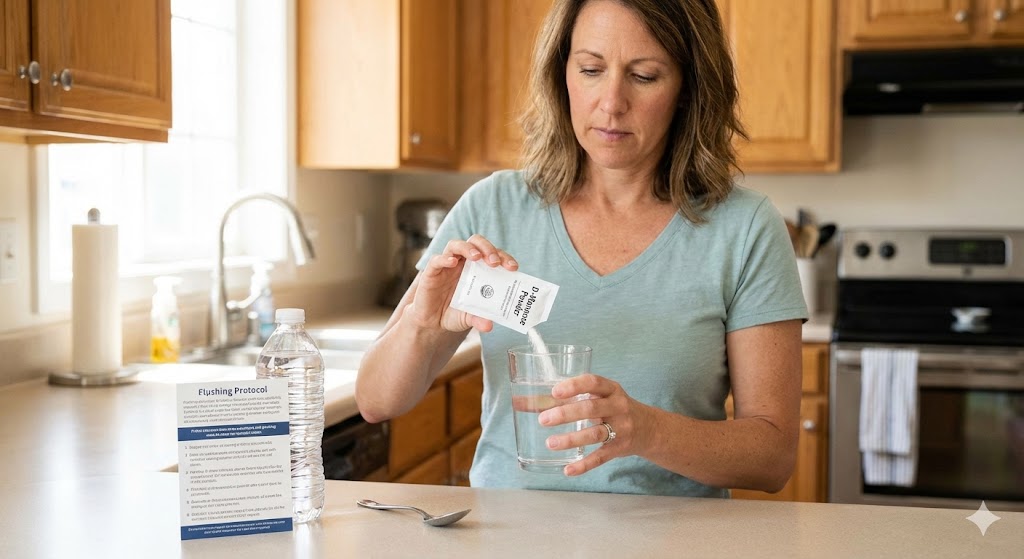
For acute irritation, a small daily dose won’t cut it. You need to flood the bladder. Protocols suggest 2 grams (2,000mg) every 3-4 hours for the first 2 days to keep the urine saturated with the “decoy” sugar.
Pro-Tip: Set an alarm. If the level drops, the bacteria can re-attach.
3. Hydration Is The Vehicle
Neither supplement works if you aren’t peeing. They need a “flow” to wash the bacteria out. You must drink at least 2-3 liters of water when taking these. Without the mechanical flushing, the “un-stuck” bacteria will just sit there.
Pro-Tip: Add a pinch of electrolytes to retain some water so you aren’t just flushing clear fluids.
4. Post-Activity Prophylaxis
“Honeymoon Cystitis” is real. Friction pushes bacteria into the urethra. Taking 2 grams of D-Mannose immediately after intimacy acts as an immediate safety net to catch any bacteria before they settle.
Pro-Tip: Keep a single-serve powder packet on your nightstand.
5. Alkalize The Environment
Some studies suggest D-Mannose works better in neutral urine. If your urine is highly acidic (which cranberry can cause), it might irritate the bladder lining further. Consider avoiding caffeine and spicy foods during a flare-up.
Pro-Tip: A teaspoon of baking soda in water can temporarily neutralize burning urine.
Stacking Your Strategy For Maximum Protection
To make this work 20% better, try the “Dual-Block” stack. Take D-Mannose (2g) with a High-PAC Cranberry Extract.
Clinical studies show that this combination is superior to either alone. One study found that the combination significantly reduced recurrence rates compared to cranberry alone. The D-Mannose grabs the free-floating bacteria, while the Cranberry PACs stop the stubborn ones from hiding in the bladder lining. It is a pincer maneuver.
Safety & Precautions
1. Kidney Stone Risk
Cranberries are high in oxalates. If you have a history of calcium-oxalate stones, high-dose cranberry supplements can trigger a stone formation.
Safety Note: Stick to D-Mannose if you are a “stone former.”
D-Mannose is a sugar. While mostly excreted, small amounts are absorbed. Diabetics might see a minor rise in blood glucose.
Caution: Monitor your glucose if taking high therapeutic doses (above 5g/day).
3. Warfarin Interaction
Cranberry contains salicylic acid and enzymes that can interact with blood thinners like Warfarin, increasing bleeding risk.
Doctor’s Note: Consult your cardiologist before starting daily cranberry.
4. “Die-Off” Symptoms
Rapidly flushing bacteria can sometimes release endotoxins, causing mild flu-like symptoms or fatigue.
Heads Up: This usually passes within 24 hours.
5. Bacteria Type
D-Mannose only works for E. coli. It does not work for Klebsiella or Enterococcus.
Warning: If symptoms persist for 24 hours, get a urine culture. You might have the wrong bacteria.
5 Common Myths vs. Facts
Myth 1: Cranberry juice cures UTIs.
Fact: Juice is mostly water and sugar. The sugar feeds the bacteria. You need the concentrated extract to get the anti-adhesion benefit.
Myth 2: D-Mannose kills bacteria.
Fact: It is not an antibiotic. It is a “bacterial magnet.” It physically removes them; it does not kill them.
Myth 3: You can take them anytime.
Fact: They work best when your bladder is filling. Taking them right before you pee wastes the dose.
Myth 4: More D-Mannose is always better.
Fact: High doses (>5g) often cause bloating and osmotic diarrhea. There is a ceiling to effectiveness.
Myth 5: It replaces antibiotics.
Fact: If the infection has reached the kidneys (fever, back pain), supplements are dangerous. You need medical treatment.
The Bottom Line
Prevention is about changing the “stickiness” of your bladder.
Based on the research, I believe that for the Skeptical Optimizer, D-Mannose is the superior “acute” tool for flushing an active threat, provided it is E. coli. Cranberry (Standardized PACs) is the better “maintenance” tool for strengthening the bladder wall long-term.
While drinking cranberry juice is the popular remedy, the practical gap is the massive sugar load (often 30g per glass) which breeds inflammation. For a clinical-strength result that actually prevents adhesion, I recommend pivoting to a Pure D-Mannose Powder for flare-ups, and a Standardized Cranberry Extract (36mg PACs) for daily insurance.
Get Your FREE Ultimate Vitamin Guide!
Join the VitaminProGuide community to receive science-backed supplement reviews, nutritional insights, and absorption tips, delivered straight to your inbox.