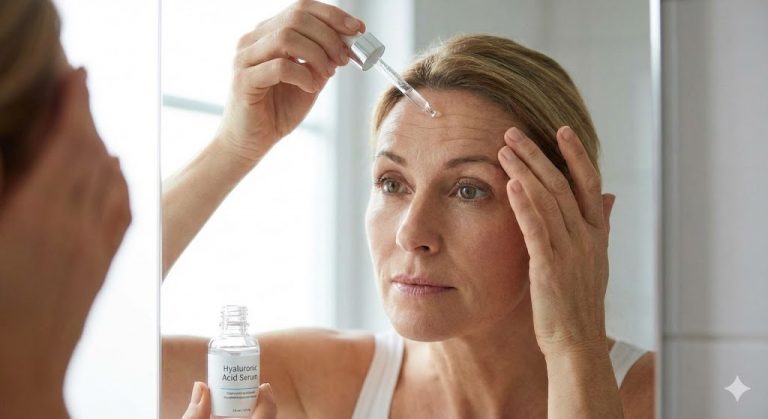
- Safety: Topical application is generally safe for most skin types when used at appropriate concentrations.
- Effectiveness: Clinical studies show it can significantly reduce the appearance of fine lines over time.
- Key Benefit: Its primary mechanism is stimulating collagen production and protecting against sun damage.
You look in the mirror and notice those fine lines around your eyes seem a little deeper today. It is a common moment of frustration that leads many to ask, does vitamin c help with wrinkles? With so many serums on the market promising eternal youth it is hard to separate the science from the marketing.
I refused to just take the beauty industry’s word for it. I dug into the dermatological trials to see if this popular antioxidant actually makes a difference in skin aging. The short answer is yes but it is not a magic eraser that works overnight.
The truth is that Vitamin C is a powerhouse ingredient but its effectiveness depends heavily on the formulation. It is unstable and hard to deliver into the skin where it is needed most. Understanding how it works is the key to setting realistic expectations.
Let us look at the science behind this skincare staple. Here is what you need to know before you buy your next bottle.
What the Research Says About Topical Antioxidants
My investigation into the research reveals that Vitamin C is essential for the synthesis of collagen which is the protein that gives skin its firmness. As we age collagen production naturally slows down leading to sagging and wrinkles. Applying Vitamin C topically can help kickstart this process back into action.
I found that it also acts as a potent antioxidant that neutralizes free radicals caused by UV exposure and pollution. These free radicals damage skin cells and accelerate the aging process. According to the National Institutes of Health topical vitamin C is highly effective at protecting against photoaging.
The challenge is that pure Vitamin C (L-ascorbic acid) oxidizes quickly when exposed to air and light. This is why you often see it combined with other antioxidants like Vitamin E and ferulic acid which stabilize it and boost its effectiveness. The delivery system is just as important as the ingredient itself.
| Feature | Topical Vitamin C | Retinol (Vitamin A) |
|---|---|---|
| Primary Action | Protects and builds collagen | Increases cell turnover |
| Best For | Brightening and prevention | Deep wrinkles and acne |
| Time to See Results | 6 to 12 weeks | 12 to 24 weeks |
Effective Ways to Fight Skin Aging
1. Choose L-Ascorbic Acid
This is the most potent and biologically active form of Vitamin C. My research shows it has the most clinical data supporting its ability to penetrate the skin and stimulate collagen. Look for a concentration between 10% and 20% for optimal results.
2. Look for Supporting Ingredients
As mentioned Vitamin C works better with friends. A serum that includes Vitamin E and ferulic acid can double the photoprotection of Vitamin C alone. This combination is the gold standard in dermatology.
3. Use Correct Packaging
Because it degrades rapidly upon exposure to light and air packaging is crucial. Always choose serums that come in dark opaque or amber bottles with an airtight pump or dropper. Clear bottles are a red flag that the product may be useless before you even open it.
4. Apply it in the Morning
Since its primary role is antioxidant protection it makes the most sense to use it before you face the day’s environmental stressors. Think of it as an extra layer of defense under your sunscreen. It helps neutralize the free radicals that sneak past your SPF.
5. Be Consistent
This is not a quick fix that you use only when your skin looks tired. You need to apply it daily to build up levels in your skin and see long-term changes. Consistency is the only way to see real results.
6. Pair with Sunscreen
This is non-negotiable. Using a brightening agent like Vitamin C without protecting your skin from the sun is counterproductive. The sun is the primary cause of the wrinkles you are trying to treat.
7. Store it Properly
Keep your serum in a cool dark place away from direct sunlight and heat. Some people even keep theirs in a skincare fridge to prolong its shelf life. If the color changes to brown it has oxidized and should be tossed.
Best Time & Dosage for Maximum Results
The optimal time to apply your Vitamin C serum is in the morning after cleansing and before moisturizing. This allows the active ingredients to absorb directly into the skin. I found that applying it to damp skin can sometimes increase penetration but also irritation so start with dry skin first.
Regarding dosage a few drops are usually enough to cover your entire face and neck. More is not always better here. Using too much product can leave a sticky residue and will not make it work any faster.
You do not need to use it twice a day. Once in the morning is sufficient to provide antioxidant protection and stimulate collagen production. Save your evenings for other active ingredients like retinoids or peptides.
Safety & Precautions
1. Patch Test First
Before applying a new serum to your entire face test a small amount on your inner arm or behind your ear. Wait 24 hours to see if any redness or itching develops. This is a crucial step to avoid a full-face reaction.
Safety Note: Sensitive skin types are more prone to irritation.
2. Start with a Low Concentration
If you are new to Vitamin C start with a 10% concentration and gradually work your way up. Jumping straight to 20% can cause stinging redness and dryness. Give your skin time to adjust.
Safety Note: Higher percentages increase the risk of irritation.
3. Watch for Oxidation
Pay close attention to the color of your serum. A fresh product should be clear or pale pale yellow. If it turns dark yellow or orange it has oxidized and is no longer effective.
Safety Note: Using oxidized Vitamin C can actually cause more free radical damage.
4. Be Careful with Combinations
Avoid using Vitamin C at the same time as other strong actives like benzoyl peroxide or alpha hydroxy acids (AHAs). These can destabilize the Vitamin C or cause excessive irritation. It is best to use them at different times of the day.
Safety Note: Mixing too many acids can compromise your skin barrier.
5. Do Not Skip Sunscreen
I cannot stress this enough. While Vitamin C offers some photo-protection it is not a substitute for sunscreen. You must wear a broad-spectrum SPF 30 or higher every single day.
Safety Note: Sun damage will undo all the benefits of your serum.
5 Common Myths vs Facts
Myth 1: It makes your skin sun-sensitive.
Fact: Unlike some other acids Vitamin C actually helps protect against sun damage it does not increase sensitivity.
Myth 2: You will see results in a week.
Fact: Skin cell turnover takes about a month. You need to use it consistently for at least 6 to 12 weeks to see visible changes.
Myth 3: All Vitamin C serums are the same.
Fact: Formulations vary wildly. The type of Vitamin C concentration pH level and packaging all significantly impact effectiveness.
Myth 4: It is only for older people.
Fact: It is a great preventative measure for people in their 20s and 30s to delay the signs of aging.
Myth 5: You can just use lemon juice.
Fact: Applying lemon juice to your face is dangerous. It is too acidic can cause blistering and makes your skin extremely sensitive to the sun.
The Bottom Line
The science is clear that topical antioxidants are a vital part of any anti-aging routine.
Based on the research I believe that the answer to the question does vitamin c help with wrinkles is a definitive yes. My take is that it is one of the most well-proven ingredients available for brightening skin tone and stimulating collagen. It is a long-term investment in your skin’s health not a quick fix.
The next step is to find a high-quality serum with L-ascorbic acid and commit to using it every morning. Your skin will thank you in a few months.
Get Your FREE Ultimate Vitamin Guide!
Join the VitaminProGuide community to receive science-backed supplement reviews, nutritional insights, and absorption tips, delivered straight to your inbox.