- Safety: Aggressively lowering blood sugar to combat insulin resistance can lead to hypoglycemia (low blood sugar) if you are already taking medication like Metformin or insulin. Monitor your levels closely.
- Effectiveness: Research shows that high circulating insulin levels biologically inhibit lipolysis (fat breakdown). You cannot burn fat while insulin is elevated, regardless of calorie intake.
- Key Benefit: Reversing insulin resistance restores “metabolic flexibility,” allowing the body to switch from burning sugar to burning stored body fat for fuel.
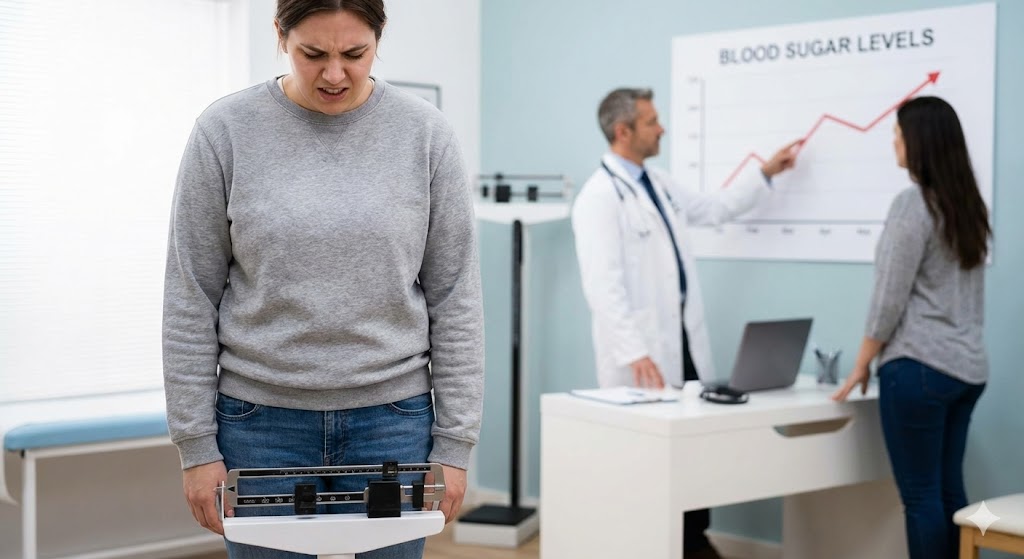
You stick to 1,200 calories a day and hit the treadmill, yet the scale refuses to budge. Your doctor just says to “try harder.” This sums up the flaw in modern weight loss advice—it overlooks the hormonal reality of your body.
Weight loss is not just a math problem. It is a hormonal problem. If you have insulin resistance, your body is essentially in “lockdown mode.” Insulin is a storage hormone. Its job is to hoard energy. When it is chronically high, it physically prevents your fat cells from releasing energy.
For the data-driven individual, the mechanism is clear. You are not lazy. You are biochemically blocked. I synthesized the metabolic pathways involved in adipocyte regulation. Evidence suggests that how does insulin resistance prevent weight loss comes down to a single enzyme switch that gets turned off, trapping fat inside the cell regardless of your effort.
Physiologically Speaking: The HSL Blockade
Fat cells do not just leak energy randomly. They require a specific enzyme called Hormone-Sensitive Lipase (HSL) to break down stored triglycerides into fatty acids. HSL is the key to the exit door.
Physiologically speaking, insulin is the most potent inhibitor of HSL. Even a small rise in insulin completely shuts down this enzyme. In a healthy person, insulin drops between meals, allowing HSL to turn on and burn fat. In an insulin-resistant person, insulin stays high 24/7. HSL never turns on. The exit door stays locked.
The biological difference is clear. A healthy metabolism cycles between “Fed” (Storage) and “Fasted” (Burning). An insulin-resistant metabolism is stuck in “Fed.” Your cells are starving for energy because they cannot access the pantry (body fat), so they scream for more sugar (cravings). This creates a vicious cycle of high insulin, high hunger, and zero fat loss.
| Feature | Insulin Sensitive (Healthy) | Insulin Resistant (Stuck) |
|---|---|---|
| Basal Insulin Level | Low. | Chronically Elevated (Hyperinsulinemia). |
| Fat Burning (Lipolysis) | Active between meals. | Blocked by HSL inhibition. |
| The Practical Catch | Easy to lose weight. | Impossible to lose without lowering insulin. |
5 Clinical Methods To Lower Insulin
1. The “Zero Snacking” Rule
Every time you eat, you spike insulin. If you snack between meals, insulin never has a chance to drop to the baseline required for fat burning. Eat 2-3 distinct meals. Close the kitchen in between. This gap is where the magic happens.
Pro-Tip: Use black coffee or tea to blunt hunger during the fasting windows.
2. Berberine Implementation
This plant alkaloid is often called “Nature’s Metformin.” Clinical trials indicate it activates AMPK, a metabolic master switch that improves insulin sensitivity and glucose uptake. It helps force the cells to listen to the insulin signal, lowering the total amount needed.
Pro-Tip: Take 500mg roughly 15 minutes before your largest carbohydrate meal.
3. Post-Prandial Walking
Muscles can absorb glucose without insulin when they are contracting. This is a non-insulin-mediated pathway. Walking for 10 minutes immediately after eating blunts the glucose spike, which in turn blunts the insulin response. You are manually disposing of the sugar.
Pro-Tip: It must be immediately after the meal, not 2 hours later.
4. Apple Cider Vinegar (ACV)
Acetic acid in vinegar inhibits the enzyme that digests starch. This slows the release of sugar into the bloodstream. Metabolic analysis confirms that 1 tablespoon of ACV in water before a meal can reduce the insulin response by up to 34%.
Pro-Tip: Drink it through a straw to protect your tooth enamel.
5. Prioritize Protein First
Eating protein and fiber before carbohydrates (food sequencing) reduces the speed of sugar absorption. Never eat “naked carbs” (e.g., just toast). Always anchor them with protein. This keeps the insulin curve flat rather than a sharp spike.
Pro-Tip: Eat the chicken and broccoli before you touch the rice.
Stacking Your Strategy For Metabolic Repair
To make this work 20% better, stack your Berberine with Myo-Inositol.
Berberine helps the cell open the door. Inositol helps the insulin signal get transmitted effectively once inside. It acts as a secondary messenger. This combination addresses resistance at both the receptor level and the intracellular level. It is particularly effective for women with PCOS-driven insulin resistance.
Safety & Precautions
1. The “Crash” Risk
As your insulin sensitivity improves, your blood sugar might drop faster than you expect.
Safety Note: Keep glucose tabs or juice handy if you feel shaky or dizzy.
2. Medication Interaction
Berberine and Inositol potentiate prescription drugs.
Caution: If you take Metformin or Glyburide, consult your doctor to adjust dosages to prevent hypoglycemia.
3. Electrolyte Imbalance
When insulin drops, the kidneys dump water and sodium. This is the “Keto Flu.”
Heads Up: Increase your salt intake and stay hydrated to prevent headaches.
4. Digestive Adjustment
Berberine can cause stomach upset initially.
Doctor’s Note: Start with one dose per day and titrate up.
5. Not a Quick Fix
Reversing resistance takes months.
Warning: Do not quit if the scale doesn’t move in week one. You are healing cellular machinery.
5 Common Myths vs. Facts
Myth 1: Eat small frequent meals to boost metabolism.
Fact: This keeps insulin chronically high. It is the worst advice for insulin resistance. Intermittent fasting is superior.
Myth 2: Fruit is free food.
Fact: Modern fruit is bred to be high in fructose. Fructose goes straight to the liver and can worsen insulin resistance if consumed in excess.
Myth 3: You just need to exercise more.
Fact: You cannot out-run your hormones. Exercise helps, but diet controls the insulin signal.
Myth 4: Carbs are the enemy.
Fact: Processed carbs are the enemy. Complex carbs with fiber are tolerated in moderation, but timing and sequencing matter.
Myth 5: Being skinny means you are insulin sensitive.
Fact: “Skinny fat” people (TOFI – Thin Outside Fat Inside) can be severely insulin resistant due to visceral fat around the organs.
The Bottom Line
Hormones dictate fuel source.
Simply put, if you want results without the fluff, you must accept that Insulin Resistance is the gatekeeper of fat loss. Until you lower your basal insulin levels, no amount of calorie restriction will unlock your fat stores. You are fighting biology.
The hard part is managing hunger, as high insulin levels can make you feel starving. To break the cycle, try a 16:8 fasting routine combined with Berberine supplements. Taking a walk after meals can also help lower your glucose load and set you on the path to losing body fat.
Get Your FREE Ultimate Vitamin Guide!
Join the VitaminProGuide community to receive science-backed supplement reviews, nutritional insights, and absorption tips, delivered straight to your inbox.