Contents
- Safety: A compromised barrier is an open door for bacteria. If your skin is oozing, yellow-crusted, or extremely hot to the touch, you may have developed a secondary staph infection (impetigo). See a dermatologist immediately.
- Effectiveness: Skin cells take roughly 28 days to turnover. While stinging may stop in 3 days, true structural repair of the stratum corneum takes a full month of “active fasting”.
- Key Benefit: Restoring the lipid matrix stops the cycle of breakout-dryness-breakout, resulting in resilient, plump skin that can actually tolerate anti-aging ingredients later.
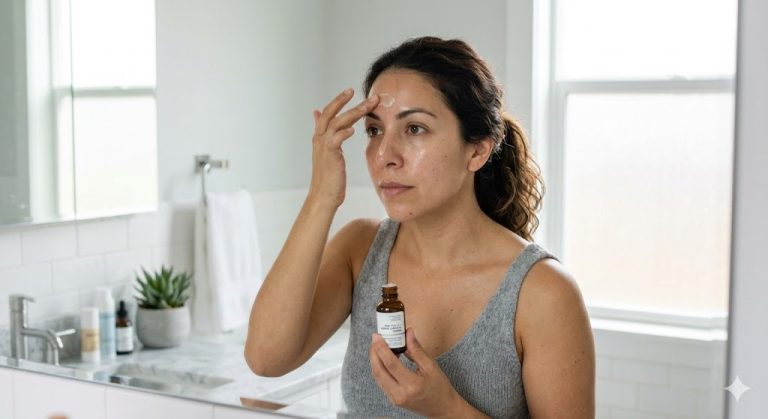
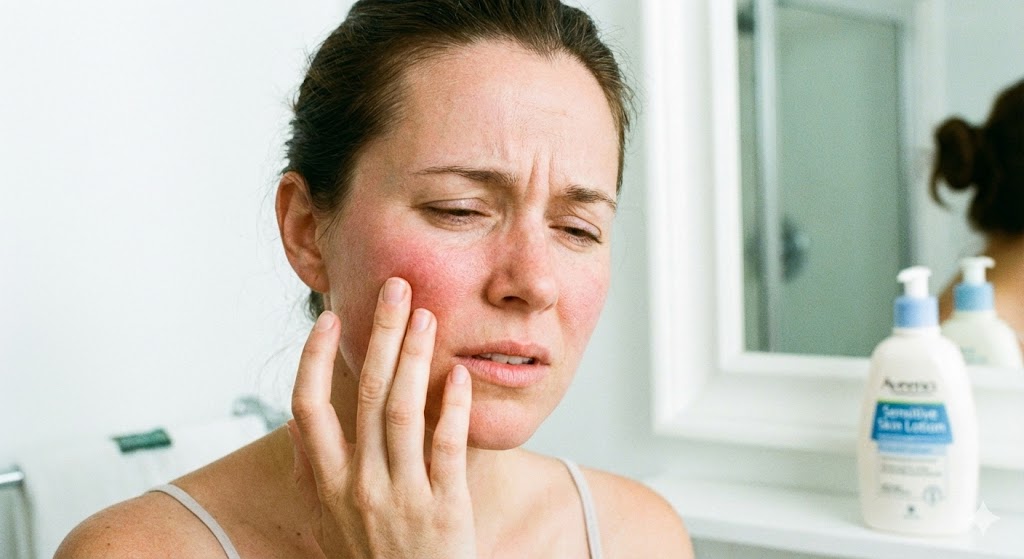
Your face looks like plastic wrap. It is shiny, tight, and stings when you apply moisturizer. You wanted a “glow,” so you used a scrub, a peel, and a retinol in the same week. Now you have a chemical burn.
Over-exfoliation is the most common self-inflicted skin injury. By aggressively stripping dead cells, you have dissolved the “mortar” that holds your skin cells together. You have destroyed the acid mantle. The result is Trans-Epidermal Water Loss (TEWL). Your skin is leaking water and letting in irritants.
For the consumer who relies on data, the fix is not “more products.” It is a strategic withdrawal. I audited the physiology of keratinocyte repair. Evidence suggests that how to repair moisture barrier after over-exfoliation requires a strict cessation of all actives and a manual replacement of the lipid barrier until your body can rebuild its own.
Physiologically Speaking: The Brick and Mortar Collapse
The outer layer of your skin (Stratum Corneum) is built like a brick wall. The bricks are skin cells (corneocytes). The mortar is a mixture of lipids: 50% ceramides, 25% cholesterol, and 15% fatty acids. This ratio is critical.
Physiologically speaking, acids (AHAs/BHAs) and scrubs dissolve the mortar. When you overdo it, the bricks fall apart. Nerve endings are exposed to the air. This causes the characteristic “tightness” and redness. Your skin is essentially an open wound without the blood.
A direct comparison reveals the error. Healthy skin has a pH of 5.5 (slightly acidic). Over-scrubbed skin is alkaline. Bacteria (like C. acnes) thrive in an alkaline environment. This is why you break out more when you scrub harder. You are destroying your acid mantle defense system. A study in the Journal of Investigative Dermatology confirms that barrier disruption immediately triggers a cytokine cascade, leading to chronic inflammation.
| Feature | Healthy Barrier | Damaged Barrier |
|---|---|---|
| Texture | Soft, pliable, dull/matte finish. | Tight, “saran wrap” shine, rough patches. |
| Sensation | Neutral. | Stinging, itching, burning. |
| The Practical Catch | Absorbs products well. | Products sit on top or sting. |
5 Clinical Steps To Rebuild The Wall
1. The “Zero Actives” Mandate
Stop. Everything. No Retinol. No Vitamin C. No Glycolic Acid. No Salicylic Acid. No Scrubs. Put them in a box and hide them. You cannot heal a wound if you keep picking the scab. You must commit to a bland routine for a minimum of 2 weeks.
Pro-Tip: Even “gentle” acids like Lactic Acid are forbidden during the acute phase.
2. The 3:1:1 Lipid Rule
You need to manually replace the mortar. Look for a moisturizer that specifically lists Ceramides, Cholesterol, and Fatty Acids. The “Golden Ratio” (3:1:1) mimics human skin oil exactly. Generic lotions are mostly water and glycerin; they hydrate but do not repair.
Pro-Tip: Look for products containing “Phytosphingosine” (a ceramide precursor).
3. The “Slug” Life (Occlusion)
At night, your skin loses the most water. After applying your lipid moisturizer, seal it in with a thin layer of 100% Petrolatum (Vaseline) or Healing Ointment. This creates a physical seal that stops water loss instantly, forcing hydration back into the tissue.
Pro-Tip: Change your pillowcase daily to prevent breakouts while slugging.
4. Cleansing Without Stripping
Foaming cleansers use surfactants (SLS) that strip oil. You have no oil left to strip. Switch to a non-foaming “milk” or “cream” cleanser. If it bubbles, it’s banned. Ideally, wash with cool water only in the morning.
Pro-Tip: If your face feels tight after washing, your cleanser is too strong.
5. Physical UV Protection
Chemical sunscreens convert UV rays into heat. Heat inflames damaged skin. Switch to a mineral sunscreen (Zinc Oxide). Zinc is anti-inflammatory and acts as a physical shield, soothing the burn while protecting from UV damage.
Pro-Tip: Zinc can be drying, so apply it over your heavy moisturizer.
Stacking Your Strategy For Speed
To make this work 20% better, stack your Ceramide Cream with Panthenol (Vitamin B5).
Ceramides fix the wall. Panthenol tells the cells to heal. Panthenol is a humectant that also stimulates fibroblast proliferation (healing). By applying a B5 serum (like Great Barrier Relief) before your ceramide cream, you hydrate the deep layers while the cream seals the top. This “Hydrate and Seal” technique accelerates the timeline significantly.
Safety & Precautions
1. Infection Risk
Damaged skin gets infected easily.
Safety Note: Do not touch your face with unwashed hands. If you see honey-colored crusts, go to a doctor.
2. Oil Sensitivity
Some oils (Coconut) clog pores.
Caution: Stick to non-comedogenic oils like Squalane or Jojoba if you are acne-prone.
3. The “Purge” Myth
If you break out while repairing, it is not a purge.
Heads Up: A purge only happens with actives (retinoids/acids). Breakouts now mean your moisturizer is too heavy or clogging.
4. Water Temperature
Hot water melts lipids.
Doctor’s Note: Wash with lukewarm or cool water only. Hot showers destroy progress.
5. Product Stinging
If a “soothing” product stings, your barrier is severely compromised.
Warning: Stop using it. Switch to pure Vaseline until the stinging stops.
5 Common Myths vs. Facts
Myth 1: You need to exfoliate the flakes.
Fact: No. Those flakes are your skin trying to protect itself. Scrubbing them off exposes raw, immature skin, restarting the damage cycle. Paste them down with moisturizer.
Myth 2: Drinking water hydrates the skin.
Fact: Drinking water is healthy, but it goes to your organs first. It will not fix a stripped lipid barrier on your face. You need topical lipids.
Myth 3: Natural is better.
Fact: Lemon juice, baking soda, and essential oils are “natural” and will destroy your barrier. Clinical-grade ceramides are superior.
Myth 4: Oily skin doesn’t need moisturizer.
Fact: Oily skin produces more oil when dehydrated (reactive seborrhea). Moisturizing actually helps control oil production.
Myth 5: It heals overnight.
Fact: The stinging stops in 3 days. The redness fades in 7. The barrier is fully restored in 28 days (one full cell cycle). Do not rush back to acids.
The Bottom Line
Treat your face like a baby’s.
My analysis concludes that for the efficiency-minded user, Repairing the Barrier is not about doing more; it is about doing less. You have abused your skin. Now you must nurse it back to health. The secret ingredient is time.
The real downside is the boredom. You will miss your serums. For a clinical-strength result that returns your glow without the burn, I recommend pivoting to a simple routine: Cream Cleanser -> Panthenol Serum -> Ceramide Moisturizer -> Vaseline (Night). Stack it with 28 Days of Patience, and your skin will thank you.
Get Your FREE Ultimate Vitamin Guide!
Join the VitaminProGuide community to receive science-backed supplement reviews, nutritional insights, and absorption tips, delivered straight to your inbox.