- Safety: Rapid weight loss with insulin-sensitizing drugs (like semaglutide) can cause muscle wasting (sarcopenia) if protein intake isn’t prioritized. Focus on slow, steady loss with resistance training to protect lean mass.
- Effectiveness: Research confirms that fixing insulin sensitivity must precede weight loss. If insulin remains high, the body cannot access stored fat for fuel, making calorie restriction metabolically futile.
- Key Benefit: By lowering basal insulin, you unlock the “fat-burning mode” (lipolysis), allowing weight to drop without the extreme hunger associated with traditional dieting.
You eat salads, you run, you even go hungry, but the scale refuses to move. Your doctor says, “calories in, calories out,” but that’s not the whole story. With insulin resistance, the metabolic equation is off. You’re not battling physics you’re battling hormones.
Insulin is the storage hormone. When it is high, fat cells are in “lockdown.” They can accept energy, but they cannot release it. Until you lower your fasting insulin, your body is biologically incapable of burning its own fat reserves.
The key isn’t to eat less, but to change the way you eat to influence this hormonal signal. I’ve put together the most effective protocols for improving insulin sensitivity. Evidence suggests that insulin resistance weight loss solutions require a multi-modal approach: timing, fiber architecture, and specific nutrient co-factors.
Physiologically Speaking: The “Lock and Key” Failure
Normally, insulin acts as a key, opening cells to let glucose in for energy. In insulin resistance, the lock is jammed. The pancreas responds by shouting, pumping out more insulin to force the door open. This results in hyperinsulinemia (chronically high insulin).
Physiologically speaking, high insulin inhibits an enzyme called Hormone-Sensitive Lipase (HSL). HSL is responsible for breaking down fat. If insulin is present, HSL is turned off. You cannot burn fat in the presence of high insulin. It is a biochemical impossibility. This is why you can be calorie-deficient and still not lose weight; your body slows your metabolism rather than burning fat.
A direct comparison reveals the strategy shift. Traditional dieting focuses on the calorie deficit. Insulin-focused weight loss focuses on the insulin deficit. By creating periods of low insulin (via fasting or low-carb), you allow HSL to turn back on. A study in BMJ Open Diabetes Research found that intermittent fasting was superior to calorie restriction for reducing insulin resistance and visceral fat.
| Feature | Calorie Restriction (Standard) | Insulin Sensitization (Targeted) |
|---|---|---|
| Primary Goal | Create energy deficit. | Lower basal insulin levels. |
| Fat Access | Often blocked by high insulin. | Unlocked by low insulin. |
| The Practical Catch | High hunger; metabolism slows. | Slower initial drop; sustainable. |
5 Clinical Methods To Unlock Fat Stores
1. The “Fiber First” Sequencing
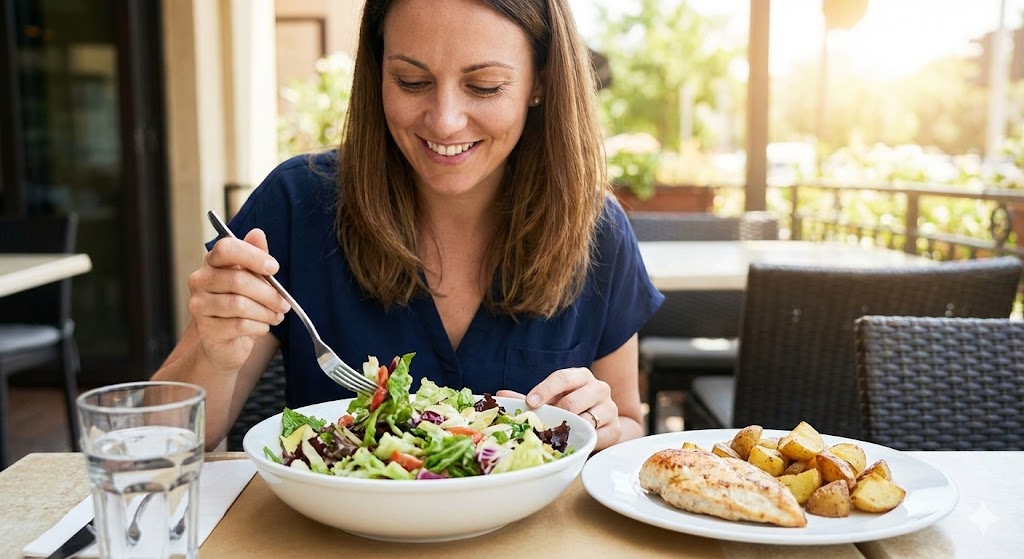
Do not eat naked carbs. Always start your meal with fiber (vegetables) and protein. This creates a physical mesh in the intestine that slows down the absorption of glucose from the subsequent carbohydrates. It flattens the glucose curve, which flattens the insulin spike.
Pro-Tip: Eat a small green salad with vinegar dressing before every dinner.
2. Time-Restricted Feeding (TRF)
Eating frequently keeps insulin elevated all day. Compress your eating window to 8-10 hours (e.g., 10 AM to 6 PM). This gives your body 14-16 hours of “insulin silence,” allowing HSL to activate and burn fat while you sleep.
Pro-Tip: Stop eating 3 hours before bed to maximize overnight fat oxidation.
3. Berberine: The Natural Metformin
Berberine activates AMPK, the “metabolic master switch.” It improves insulin sensitivity by increasing glucose uptake in muscles, independent of insulin. It helps clear sugar from the blood without requiring the pancreas to overwork.
Pro-Tip: 500mg taken 15 minutes before carbohydrate-heavy meals is the standard clinical dose.
4. Zone 2 Cardio
High-intensity cardio (HIIT) spikes cortisol, which can spike glucose. Zone 2 cardio (steady, conversational pace) specifically targets mitochondrial efficiency and fat oxidation without the stress response. It trains your cells to burn fat effectively.
Pro-Tip: Aim for 45 minutes of brisk walking or slow cycling where you can still talk but only in short sentences.
5. Apple Cider Vinegar (ACV)
Acetic acid in vinegar inhibits disaccharidase enzymes, meaning you digest less starch from your food. Taking 1 tablespoon of ACV in water before a meal can reduce the post-meal insulin response by up to 34%.
Pro-Tip: Drink it through a straw to protect tooth enamel.
Stacking Your Strategy For Sensitization
To make this work 20% better, stack your Intermittent Fasting with Myo-Inositol.
Fasting lowers the insulin load. Inositol improves the message. It acts as a secondary messenger inside the cell, helping the insulin receptor work properly. This combination attacks resistance from both the outside (less insulin needed) and the inside (better signal reception), drastically accelerating the reversal of resistance.
Safety & Precautions
1. Hypoglycemia Risk
If you are on medication (insulin, sulfonylureas), lowering carbs can cause dangerous low blood sugar.
Safety Note: You must work with your doctor to de-prescribe or adjust doses as you change your diet.
2. Electrolyte Dump
When insulin drops, kidneys excrete sodium and water. You will lose “water weight” fast, but you might feel dizzy.
Caution: Salt your food liberally and drink electrolytes (sodium/potassium/magnesium) during fasting.
3. “Keto Flu”
Switching fuel sources (sugar to fat) causes temporary fatigue and brain fog.
Heads Up: This lasts 3-5 days. Push through with hydration and sleep.
4. Over-Fasting
Starving yourself spikes cortisol. High cortisol raises blood sugar (gluconeogenesis), defeating the purpose.
Doctor’s Note: Do not fast if you are highly stressed; focus on food quality instead.
5. Muscle Loss
Weight loss without protein signals the body to eat muscle.
Warning: Prioritize 30g of protein at every meal to protect lean mass.
5 Common Myths vs. Facts
Myth 1: Eat 6 small meals a day.
Fact: This keeps insulin chronically elevated. It is the worst advice for insulin resistance. Fewer meals allow insulin to baseline.
Myth 2: Fruit sugar is fine.
Fact: Fructose (in fruit) goes straight to the liver. Excess fructose causes fatty liver, which is the root of insulin resistance. Limit high-sugar tropical fruits.
Myth 3: You need carbs for energy.
Fact: Your body can run efficiently on fat (ketones). You need essential fats and proteins; there is no essential carbohydrate.
Myth 4: If you exercise, you can eat anything.
Fact: You cannot outrun a bad diet. Exercise improves sensitivity, but it cannot overcome a constant influx of processed sugar.
Myth 5: It’s genetic, so I can’t fix it.
Fact: Genetics load the gun; lifestyle pulls the trigger. You can silence these genes with diet and lifestyle changes.
The Bottom Line
Fix the hormone, fix the weight.
From my perspective, if you’re focused on efficiency, addressing insulin resistance is the first step toward weight loss. You can’t make a locked body burn fat you have to find the key first.
The toughest part is the adjustment phase. Your body craves sugar, and to achieve a strong, lasting effect that restores metabolic flexibility, I recommend pivoting to a 16:8 Eating Window combined with “Clothing” Your Carbs (fiber/protein first). Stack it with Berberine to manually open the cellular doors, and the weight will follow the chemistry.
Get Your FREE Ultimate Vitamin Guide!
Join the VitaminProGuide community to receive science-backed supplement reviews, nutritional insights, and absorption tips, delivered straight to your inbox.