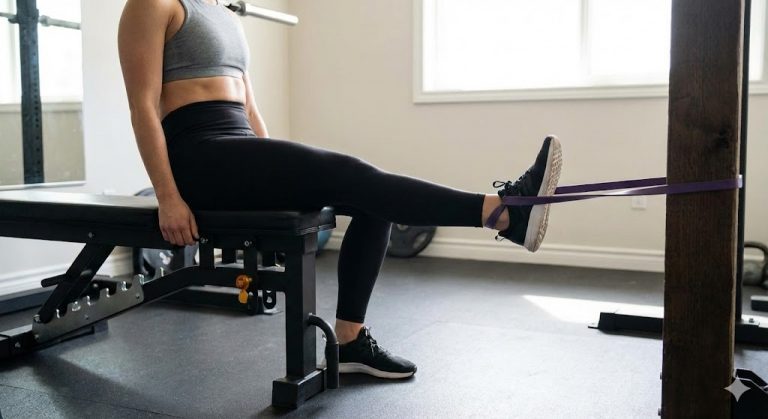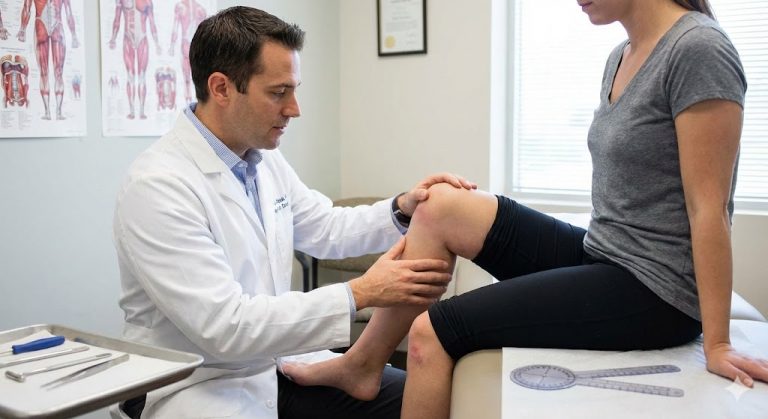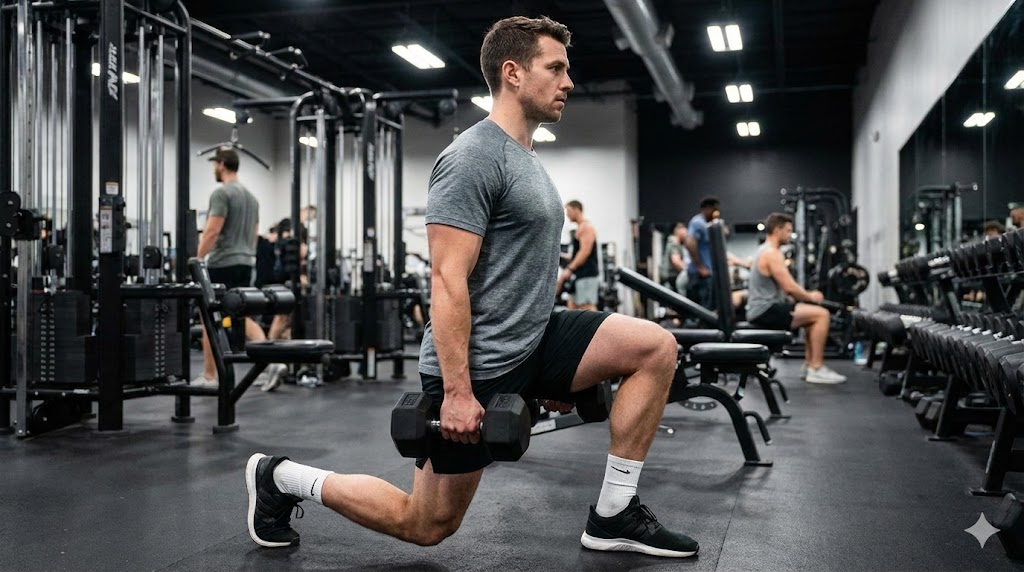
- Safety: “Pain-Free” is the golden rule. Never push through sharp pain in the knee joint. Regress the movement until it can be performed with zero discomfort to avoid aggravating existing tendinopathy.
- Effectiveness: Loading the knee at full flexion (end-range) stimulates collagen synthesis in the tendons and ligaments, which does not happen during partial range-of-motion exercises.
- Key Benefit: Strengthening the Vastus Medialis Oblique (VMO) muscle stabilizes the patella and prevents the grinding sensation associated with osteoarthritis.
For decades, fitness dogma screamed one rule: “Never let your knees go past your toes.” Personal trainers warned it would destroy your joints. Doctors prescribed rest for knee pain. Yet, knee replacement surgeries are at an all-time high. The traditional “protective” advice has failed to protect us.
The human knee is designed to bend fully. When you walk down stairs, your knee goes over your toe. When you squat to pick up a child, it happens naturally. Avoiding this position weakens the tendons and atrophies the specific muscle fibers responsible for stabilizing the joint under load.
For the efficiency-minded person, the “Knees Over Toes” (KOT) philosophy is not a trend; it is biomechanical correction. I analyzed the anatomy of the lower kinetic chain. The data confirms that knees over toes guy exercises for longevity work by restoring the VMO muscle and remodeling connective tissue through progressively loaded stretching.
Physiologically Speaking: The VMO and Tendon Density
The Vastus Medialis Oblique (VMO) is the teardrop-shaped muscle on the inner thigh, just above the knee. It is the first muscle to weaken when you have knee pain and the last one to strengthen with standard squats. It only fully engages when the knee is in deep flexion (bending).
Physiologically speaking, tendons behave differently than muscles. Muscles recover quickly with blood flow. Tendons are avascular (poor blood supply). They require mechanical stress—specifically tension at a lengthened state—to pull nutrients into the tissue. This process, called mechanotransduction, thickens the tendon fibers, making them resilient against tears and wear.
Side-by-side, the data shows the difference between avoidance and adaptation. Traditional rehab avoids stress, leading to “stress shielding” where the tissue becomes weaker over time. KOT training applies a “gradable” stress, forcing the tissue to adapt and become denser. A study in the Journal of Orthopaedic & Sports Physical Therapy highlights that decline squats (knees over toes) significantly improve patellar tendon properties compared to standard squats.
| Feature | Traditional Knee Rehab | Knees Over Toes (KOT) Protocol |
|---|---|---|
| Range of Motion | Partial (stops at 90 degrees). | Full (Glute to heel). |
| Primary Target | Quadriceps (General). | VMO & Patellar Tendon (Specific). |
| The Practical Catch | Often leads to recurring pain. | Requires ego-free regression (scaling). |
5 Clinical Methods To Bulletproof Knees
1. Walking Backwards (ROKP)
“Reverse Out Knee Pain” is the foundation. Walking backward against resistance (dragging a sled) pumps blood into the knees without the impact of running. It engages the VMO with every step. Aim for 5-10 minutes daily as a warmup.
Pro-Tip: If you don’t have a sled, simply walking backward on a treadmill turned off (using your legs to push the belt) works perfectly.
2. Tibialis Raises
The Tibialis Anterior is the “shin muscle.” It acts as the first line of defense for the knee, absorbing shock when your foot hits the ground. Most people have weak shins. Strengthening this muscle reduces the force transferred to the knee joint.
Pro-Tip: Lean your butt against a wall, keep legs straight, and lift your toes toward your knees 25 times.
3. The Patrick Step Up
This isolates the VMO. Stand on a low step (or floor). Extend one leg out and slowly lower your standing heel until the other heel gently taps the floor. Your standing knee must travel over your toe. This forces the knee to stabilize under load.
Pro-Tip: Start on the flat ground before moving to an elevated step.
4. The ATG Split Squat
This is the ultimate mobility test. It stretches the hip flexor of the back leg while strengthening the VMO and ankle mobility of the front leg. The goal is to get the hamstring to cover the calf completely, with the torso upright.
Pro-Tip: Elevate your front foot on a box or chair initially. Only lower the height as your flexibility improves.
5. Seated Good Morning
Knee pain often comes from tight hips pulling on the femur. The Seated Good Morning strengthens the lower back and stretches the adductors/hips simultaneously. By freeing up the hips, you reduce the torque and tension placed on the knee joint.
Pro-Tip: Keep an arch in your lower back; do not round your spine.
Stacking Your Strategy For Joint Repair
To make this work 20% better, stack your KOT Exercises with Collagen Peptides and Vitamin C.
Connective tissue repair requires raw materials. Collagen provides the amino acids (glycine and proline), while Vitamin C acts as the catalyst for cross-linking new tissue. Take 15g of Collagen with 500mg of Vitamin C roughly 45 minutes before your workout. This ensures the nutrients are circulating in your blood exactly when the mechanical stress is applied, driving them into the tendons.
Safety & Precautions
1. The “Pain Scale” Rule
Discomfort (muscle burn) is good. Pain (joint stabbing) is bad.
Safety Note: If you feel sharp pain, stop immediately and elevate the front foot (regress the movement).
2. Patellar Tendonitis
If your tendons are inflamed, high-volume jumping or running will make it worse.
Caution: Focus on slow, controlled eccentric movements (lowering phase) first.
3. Ego Lifting
Trying to do the ATG Split Squat on the floor on day one is a recipe for disaster.
Heads Up: Start high. Use a countertop for balance. Progress comes from depth, not weight.
4. Meniscus Tears
Deep flexion can irritate a torn meniscus if not healed.
Doctor’s Note: Consult a PT before attempting full “glute to heel” depth if you have a known tear.
5. Frequency Overload
Tendons heal slower than muscles. Training them every day can lead to overuse.
Warning: Rest days are when the remodeling happens. Train legs 2-3 times per week maximum.
5 Common Myths vs. Facts
Myth 1: Deep squats kill knees.
Fact: Deep squats build knees, provided you have the mobility to do them correctly without compensating.
Myth 2: You need surgery for a “bone on bone” diagnosis.
Fact: “Bone on bone” often refers to cartilage loss, but pain can still be reduced by strengthening the muscles that support the joint space.
Myth 3: Running is enough leg training.
Fact: Running is high impact but low range of motion. It tightens the muscles without strengthening the end-range stability.
Myth 4: Sleds are only for football players.
Fact: Backward walking is the single most accessible knee rehab exercise for the elderly and sedentary populations.
Myth 5: You must use weights.
Fact: Bodyweight is sufficient for the first 3-6 months. The leverage of the knee over the toe creates massive internal torque without external iron.
The Bottom Line
Mobility is a “use it or lose it” proposition.
My analysis concludes that for the data-driven consumer, Knees Over Toes training is the most logical protocol for long-term joint preservation. It reverses the atrophy caused by modern sedentary living and restrictive shoe wear. It treats the knee as a biological hinge meant to open and close fully.
The practical catch is the regression curve. You cannot rush the connective tissue adaptation. For a clinical-strength result that restores your ability to hike, run, and squat pain-free, I recommend pivoting to the Backward Sled Pull as a daily non-negotiable. Stack it with Tibialis Raises to build the foundation from the ground up.
Get Your FREE Ultimate Vitamin Guide!
Join the VitaminProGuide community to receive science-backed supplement reviews, nutritional insights, and absorption tips, delivered straight to your inbox.