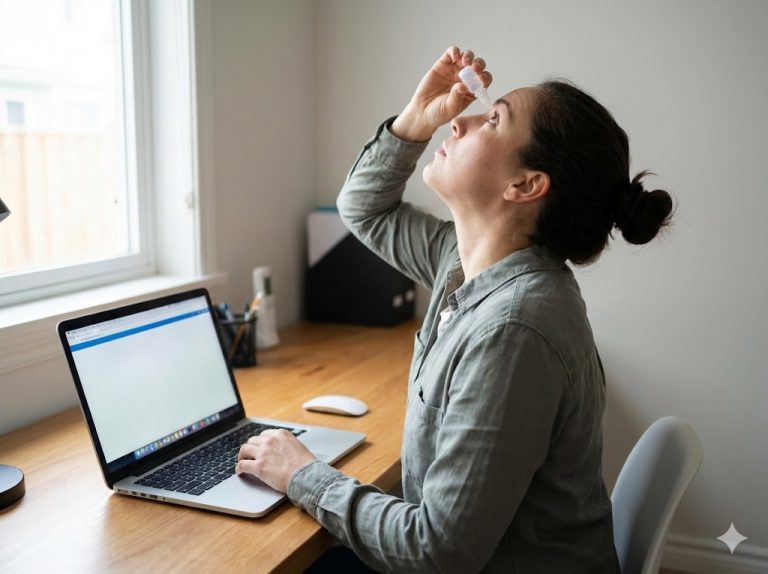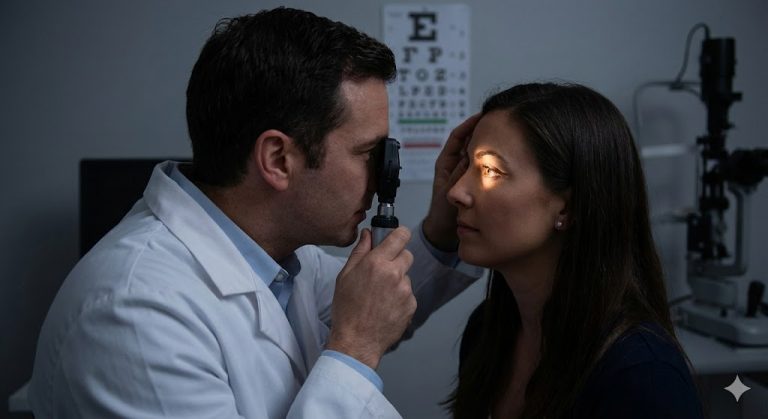
- Safety: Chronic dryness can cause corneal abrasions and vision loss. If your eyes are consistently red, painful, or sensitive to light, see an ophthalmologist. Do not rely solely on home remedies for severe symptoms.
- Effectiveness: Menopausal dry eye is caused by androgen deficiency, which regulates the oil glands in the eyelids. Replacing these lipids internally (Omega-3s) and externally (warm compresses) is the only way to fix the tear film quality.
- Key Benefit: Restoring the lipid layer prevents tears from evaporating, stopping the gritty “sand in the eye” sensation instantly.
You blink, but it feels like sandpaper. Your eyes are red, burning, and tired. You use drops, but ten minutes later, they are dry again. This is not just “dry eye.” This is hormonal dry eye.
Tears are not just water. They are a sandwich: mucus on the bottom, water in the middle, and oil on top. The oil prevents the water from evaporating. During menopause, the glands that produce this oil (Meibomian glands) shut down due to dropping hormone levels.
The answer lies in lipid restoration. I examined how estrogen and testosterone affect ocular surface health, and the evidence shows that natural remedies for menopausal dry eyes should focus on clearing blocked oil glands and replenishing the fatty acids essential for rebuilding the tear film.
Physiologically Speaking: The Evaporation Problem
It sounds contradictory, but menopausal dry eyes often water excessively. This is reflex tearing. Because your tears lack oil, they evaporate instantly. The brain senses the dryness and flushes the eye with emergency “watery” tears, which just roll down your cheek because they can’t stick.
Physiologically speaking, androgens (testosterone) are the primary drivers of oil production in the eyelids. As androgens drop in menopause, the oil turns into a thick toothpaste, clogging the glands. This is Meibomian Gland Dysfunction (MGD). Without the oil slick, your tears evaporate 10x faster.
A direct comparison reveals the fix. Water-based drops (artificial tears) just add volume that evaporates. Oil-based strategies (Omega-3s/Compresses) seal the moisture in. A study in the American Journal of Clinical Nutrition found that women with high dietary intake of Omega-3s had a 30% lower risk of dry eye syndrome.
| Feature | Water Deficiency (Sjogren’s) | Oil Deficiency (Menopause/MGD) |
|---|---|---|
| Cause | Lacrimal gland failure. | Meibomian gland clogging. |
| Tear Quality | Low volume. | Rapid evaporation. |
| The Practical Catch | Needs hydration. | Needs lipids/heat. |
5 Clinical Methods To Restore The Oil
1. The “Bruder Mask” Routine (Warm Compress)
A warm washcloth cools too fast. Use a microwaveable eye mask (like a Bruder mask) for 10 minutes daily. The sustained heat (104°F) melts the hardened oil in your eyelids, turning it back into liquid so it can coat your eye.
Pro-Tip: Immediately after heating, gently massage your eyelids downwards to express the oil.
2. Sea Buckthorn Oil
This berry is rich in Omega-7 (Palmitoleic acid), a rare fatty acid that specifically nourishes mucous membranes. Clinical trials show oral Sea Buckthorn oil improves tear film stability and reduces burning sensation significantly within 3 months.
Pro-Tip: Look for a supercritical CO2 extract for purity.
3. High-Dose Omega-3s (Re-Esterified)
You need a high dose to change the oil composition. Aim for 2000mg of EPA/DHA daily. The re-esterified triglyceride (rTG) form absorbs better than ethyl esters. This thins the oil in your glands, preventing clogs.
Pro-Tip: It takes 6-12 weeks to change the fatty acid profile of your tissues; be patient.
4. Blinking Exercises
Screens reduce blinking by 60%. Incomplete blinking (not touching lids together) stops the oil release. Practice “hard blinking”: Close eyes, squeeze tight for 2 seconds, open. Repeat 10 times every hour to pump the glands manually.
Pro-Tip: Put a sticky note on your computer screen as a reminder.
5. Humidify The Bedroom
Menopausal night sweats often lead to fans blowing on the face. This is a disaster for dry eyes. Turn the fan away and run a humidifier next to the bed to keep the ambient moisture high while you sleep.
Pro-Tip: Use sleep goggles (like Onyix) to create a moisture chamber if it’s severe.
Stacking Your Strategy For Comfort
To make this work 20% better, stack your Warm Compress with Hypochlorous Acid Spray.
The heat melts the oil. The spray cleans the bacteria. Bacteria on the eyelids produce lipase enzymes that break down your tear oil, making it soapy and irritating. Spraying Hypochlorous Acid on closed eyelids twice daily kills the bacteria without stinging, preserving the integrity of the oil you just worked so hard to release.
Safety & Precautions
1. Drop Addiction
Avoid “Redness Relief” drops (vasoconstrictors).
Safety Note: They reduce blood flow and cause rebound redness, making dry eye worse long-term.
2. Oil Cysts
If a gland blocks completely, it forms a chalazion (stye).
Caution: Do not pop it. Continue warm compresses and see a doctor if it persists.
3. Makeup Hygiene
Mascara and eyeliner block the gland openings.
Heads Up: Stop tight-lining (liner on the waterline) immediately; it destroys the glands.
4. Preservative Toxicity
Benzalkonium chloride (BAK) in bottled drops kills corneal cells.
Doctor’s Note: ONLY use preservative-free single-use vials if you use drops more than 4x a day.
5. HRT Consideration
Systemic HRT helps many symptoms but can sometimes worsen dry eye.
Warning: Discuss topical testosterone cream for eyelids with a compounding pharmacist/doctor.
5 Common Myths vs. Facts
Myth 1: Drinking water fixes it.
Fact: Hydration helps, but if the oil layer is missing, the water will just evaporate from your eye surface anyway. You need oil, not just water.
Myth 2: Baby shampoo is good for lids.
Fact: Baby shampoo contains surfactants that strip the oil you are trying to save. Use a dedicated lid wipe or Hypochlorous acid instead.
Myth 3: Crying helps.
Fact: Emotional tears are watery and salty. They do not contain the lubricating proteins and oils of basal tears. They can actually wash away the good tear film.
Myth 4: It’s just aging.
Fact: It is a specific glandular dysfunction driven by hormones. It is treatable and manageable, not inevitable suffering.
Myth 5: Visine cures it.
Fact: Visine whitens the eye by strangling blood vessels. It does nothing for dryness and often causes severe rebound redness.
The Bottom Line
Melt the oil, save the tear.
For those who value efficiency, Menopausal Dry Eye stems from a lack of lipids. Your eyes aren’t dry from thirst; they’re exposed and in need of a protective layer.
Applying heat daily is key. For strong, lasting relief from burning, switch to a 10-minute Daily Warm Compress routine. Pair it with 2000 mg of Omega-3s to help restore the natural shield your eyes have lost.
Get Your FREE Ultimate Vitamin Guide!
Join the VitaminProGuide community to receive science-backed supplement reviews, nutritional insights, and absorption tips, delivered straight to your inbox.