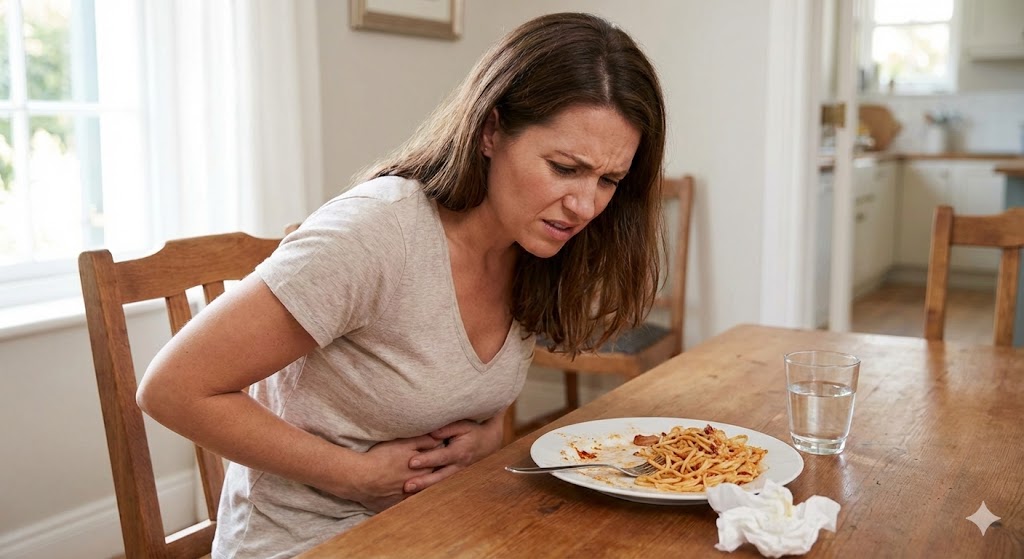
- Safety: Oily, foul-smelling stool (steatorrhea) accompanied by upper abdominal pain, weight loss, or yellowing of the eyes (jaundice) is a medical emergency. It often signals a pancreatic blockage or liver dysfunction requiring immediate imaging.
- Effectiveness: Diagnosing the root cause—whether it is a lack of bile, a lack of pancreatic enzymes, or intestinal damage—is the only way to restore nutrient absorption. Supplements like ox bile or digestive enzymes only work if matched to the specific deficit.
- Key Benefit: Fixing fat malabsorption prevents deficiency in fat-soluble vitamins (A, D, E, K), which are critical for bone health, vision, and immunity.
You flush the toilet, but nothing goes down. There’s an oily film on the water and a smell that’s worse than usual. At first, you blame it on that greasy pizza, but it keeps happening. This isn’t just an annoying bathroom issue—it’s a sign your body might not be digesting one of the three main macronutrients: fat.
Fat digestion is a complex relay race involving the liver, gallbladder, and pancreas. If any runner drops the baton, the fat passes through you unchanged. This condition, medically known as steatorrhea, means you are starving for essential fatty acids and vitamins, no matter how much you eat.
For the data-focused mind, the answer is in the mechanics. I broke down the pathophysiology of lipid digestion, and the evidence points to oily stool being almost always due to a breakdown in emulsification (bile) or enzymatic action (lipase), turning your meal into waste instead of energy.
Physiologically Speaking: The Emulsification Failure
Fat and water do not mix. To digest fat, your body must first turn it into tiny droplets (emulsification). The liver produces bile, which is stored in the gallbladder and released into the small intestine to do this job. Think of bile as the dish soap that breaks up the grease.
Physiologically speaking, once emulsified, the pancreas releases an enzyme called lipase. Lipase attacks the tiny droplets, breaking them down into fatty acids that can pass through the intestinal wall. If you lack bile, the fat stays in big globs that lipase cannot attack. If you lack lipase, the droplets are small but chemically unbroken. Both result in oil in the toilet.
A direct comparison reveals the culprit. If your stool is pale or clay-colored, it is a bile issue (liver/gallbladder). If it is normal-colored but greasy and floats, it is likely a pancreatic enzyme issue. A study in the World Journal of Gastroenterology confirms that Exocrine Pancreatic Insufficiency (EPI) is a leading, often undiagnosed, cause of steatorrhea in the elderly and diabetic populations.
| Feature | Bile Insufficiency (Gallbladder) | Enzyme Insufficiency (Pancreas) |
|---|---|---|
| Stool Color | Pale, clay, or grey. | Normal brown or yellow. |
| Primary Cause | Gallstones, liver congestion. | Pancreatitis, EPI, Cystic Fibrosis. |
| The Practical Catch | Pain in right shoulder/ribs. | Pain in middle/upper abdomen. |
5 Clinical Suspects To Investigate
1. The Gallbladder Sludge
You don’t need a stone to have a problem. Thick, viscous bile (sludge) flows poorly. If bile doesn’t squirt out fast enough during a meal, fat isn’t emulsified. This is common after rapid weight loss or low-fat dieting.
Pro-Tip: Ask for an ultrasound to check for sludge, not just stones.
2. Exocrine Pancreatic Insufficiency (EPI)
The pancreas just stops making enough enzymes. This is common in diabetics and people with SIBO (Small Intestinal Bacterial Overgrowth). Without lipase, fat goes straight through.
Pro-Tip: The test is a “Fecal Elastase” stool test; ask your doctor for it specifically.
3. Gluten Damage (Celiac Disease)
In Celiac disease, the villi (finger-like projections) in the gut are flattened. Even if you have bile and enzymes, there is no “door” for the fat to enter the bloodstream. Malabsorption is total.
Pro-Tip: Do not go gluten-free before testing, or the blood test will be a false negative.
4. Keto/Carnivore Adaptation
If you suddenly switch to a high-fat diet, your gallbladder may be “rusty.” It takes time to upregulate bile production. The excess fat ends up in the toilet until your liver catches up.
Heads Up: Use Ox Bile supplements temporarily during the transition phase.
5. Parasitic Infection
Giardia is a parasite that coats the lining of the small intestine, physically blocking fat absorption. It is famous for causing explosive, greasy diarrhea.
Warning: If you have been camping or drank untreated water, request an “O&P” (Ova and Parasite) stool test.
Stacking Your Strategy For Absorption
To make this work 20% better, stack your Digestive Enzymes with TUDCA.
Lipase supplements replace the missing pancreatic enzymes. TUDCA (Tauroursodeoxycholic acid) is a water-soluble bile acid that thins your own bile, helping it flow freely from the liver. By providing the enzyme (Lipase) and improving the flow of the emulsifier (Bile), you attack fat malabsorption from both mechanical angles.
Safety & Precautions
1. Vitamin Deficiencies
Chronic oily poop means you are not absorbing Vitamin A, D, E, or K.
Safety Note: Monitor for night blindness (A), bone pain (D), or easy bruising (K).
2. Weight Loss Warning
Unintentional weight loss with greasy stool is a red flag for cancer or severe malabsorption.
Caution: See a doctor immediately if you are losing weight without trying.
3. Ox Bile Dosing
Taking bile when you don’t need it can cause diarrhea (bile acid diarrhea).
Heads Up: Start with a low dose and only with fatty meals.
4. Alcohol Toxicity
Alcohol damages both the liver (bile) and pancreas (enzymes).
Doctor’s Note: Stop drinking completely if you have steatorrhea to allow the organs to heal.
5. “Oil Leaking”
This is the hallmark of the diet drug Orlistat (Alli), which blocks lipase intentionally.
Warning: If you take this drug, oily leakage is a known side effect, not a disease.
5 Common Myths vs. Facts
Myth 1: It’s just IBS.
Fact: IBS is a diagnosis of exclusion. Oily, floating stool is a specific sign of malabsorption, not just “irritable bowel.” It requires investigating the organs, not just the gut motility.
Myth 2: Eating fat makes you fat.
Fact: If you have steatorrhea, you aren’t absorbing the fat, so you aren’t getting the calories. You are actually malnutritioned, regardless of body size.
Myth 3: Gallbladder removal fixes it.
Fact: Removing the gallbladder often causes it initially. Without a storage tank, bile drips constantly but isn’t there in a large burst when you eat a fatty meal.
Myth 4: Floating poop always means fat.
Fact: Floating can also be caused by excess gas (methane) from fermentation. The “oil slick” and foul smell are the true signs of fat malabsorption.
Myth 5: You just need probiotics.
Fact: Probiotics help the microbiome, but they do not produce bile or lipase. They will not fix a structural organ failure.
The Bottom Line
Your toilet tells the truth.
My analysis suggests that for the efficiency-focused individual, oily stool is like a dashboard warning light. It signals that your engine—digestion—is running lean. Ignoring it can result in brittle bones and hormonal crashes caused by vitamin deficiencies.
The real challenge lies in specificity—you need to know exactly which organ is failing. For a clinical-level outcome that lets you enjoy a steak without regret, I recommend pivoting to a Broad-Spectrum Digestive Enzyme containing at least 10,000 units of Lipase. Stack it with Ox Bile if you have no gallbladder, and get your fat-soluble vitamin levels checked immediately.
Get Your FREE Ultimate Vitamin Guide!
Join the VitaminProGuide community to receive science-backed supplement reviews, nutritional insights, and absorption tips, delivered straight to your inbox.