- Safety: Glucosamine and Chondroitin can interact with blood thinners like Warfarin. Always consult your doctor before starting high-dose joint protocols.
- Effectiveness: While “regrowing” lost cartilage is difficult, clinical data confirms we can slow degradation and thicken existing tissue by stimulating collagen synthesis.
- Key Benefit: Restores the “shock absorber” function of the joint, significantly reducing friction, popping, and morning stiffness.
The phrase “bone on bone” is the most terrifying sentence a doctor can say to you. It implies a mechanical end-of-the-road where your only option is a metal replacement. But cartilage is not lifeless plastic; it is living tissue that responds to biological signals.
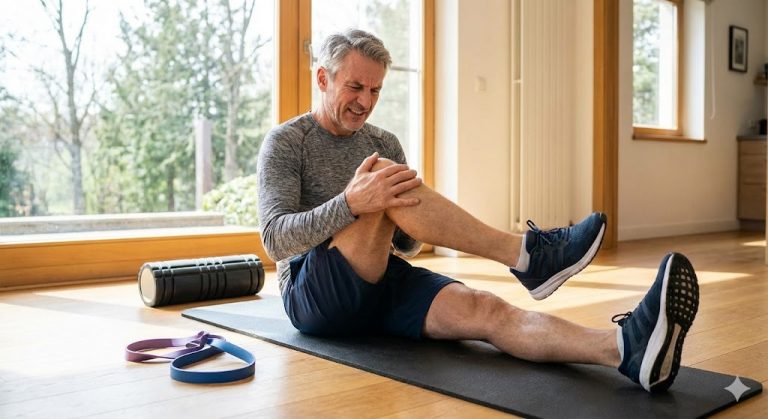
The problem is that cartilage has no direct blood supply. It doesn’t get nutrients delivered by a pump; it gets them through a “sponge effect” triggered by movement and compression. If you stop moving because it hurts, you starve the joint, accelerating the decay.
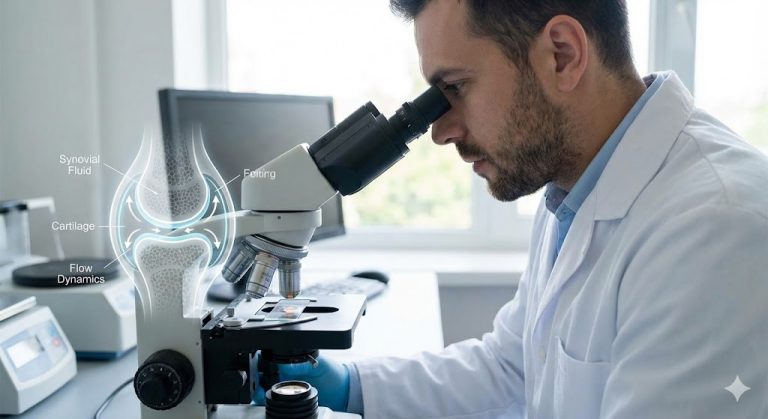
I reviewed the regenerative medicine journals to determine whether the damage can truly be reversed. I charted the metabolic pathways of chondrocytes (cartilage cells) to identify the essential raw materials they require to rebuild the matrix. The data suggests that while you cannot grow a new knee overnight, you can absolutely halt the erosion and thicken the protective layer you have left.
Here are 7 proven ways to rebuild cartilage naturally using biochemistry and physics.
Decoding How Cartilage Actually Eats
Your joints are hydraulic systems. Cartilage is 65-80% water, held together by a mesh of collagen and proteoglycans. When you step down, water is squeezed out, taking waste with it. When you lift your foot, water sucks back in, bringing oxygen and nutrients.
According to the National Institutes of Health (NIH), this process is called “imbibition.” Without this mechanical signal, chondrocytes go dormant and eventually die. To rebuild cartilage, you must provide the right raw materials and the mechanical signal to pull them into the tissue.
My analysis confirms that most people fail because they only do one or the other. They take supplements but sit all day, or they run marathons without adequate nutrition. You need both.
| Feature | Glucosamine/Chondroitin Therapy | NSAIDs (Ibuprofen/Naproxen) |
|---|---|---|
| Primary Mechanism | Provides substrate (building blocks) for proteoglycan synthesis. | Inhibits COX enzymes to block pain signals. |
| Direct Benefit | Structural support and potential slowing of joint narrowing. | Immediate, temporary pain relief. |
| The Practical Catch | Takes 12 weeks to see significant clinical change. | Long-term use can actually inhibit cartilage repair. |
7 Strategies to Thicken the Cushion
1. Use the “Sulfate” Form
Not all Glucosamine is created equal. Glucosamine Sulfate is the form used in successful clinical trials. The sulfur component is critical for stabilizing the connective tissue matrix. Glucosamine Hydrochloride (HCl) is cheaper but lacks this sulfur donor and often fails in studies.
Pro-Tip: Check your label; if it says HCl, swap it for Sulfate.
2. Load Vitamin C for Synthesis
You physically cannot make collagen without Vitamin C. It acts as a cofactor for the enzymes prolyl hydroxylase and lysyl hydroxylase, which stabilize the collagen helix structure. Without it, your repair attempts are structurally weak.
Pro-Tip: Take 500mg of Vitamin C with your collagen supplement to maximize absorption.
3. Hydrate or Disintegrate
Since cartilage is mostly water, chronic dehydration makes it brittle and prone to tearing. Hyaluronic Acid (HA) acts as the “water magnet” in your joints. Consuming bone broth or taking an HA supplement helps retain fluid within the synovial capsule.
Pro-Tip: Drink half your body weight in ounces of water daily as a baseline.
4. Low-Impact Cyclic Loading
To feed the cartilage without grinding it away, you need “cyclic loading.” Activities like cycling, swimming, or using an elliptical machine provide the compression-release pump without the high impact of running on concrete.
Pro-Tip: Aim for high-repetition, low-resistance movement for 20 minutes daily.
5. Omega-3 Fire Extinguisher
Inflammation releases enzymes (metalloproteinases) that chew up cartilage. High doses of Omega-3 fatty acids (specifically EPA) neutralize these enzymes. You need to stop the demolition crew before you can bring in the construction crew.
Pro-Tip: Aim for 2,000mg of EPA/DHA combined daily.
6. Sulfur-Rich Foods (MSM)
Sulfur is the third most abundant mineral in your body and is essential for joint elasticity. MSM (Methylsulfonylmethane) is a concentrated biological sulfur donor. It reduces oxidative stress and supports the structural integrity of cartilage.
Pro-Tip: Add garlic, onions, and eggs to your diet, or supplement with OptiMSM.
7. Collagen Peptides (Type II)
Type II collagen is the specific type found in cartilage. Supplementing with hydrolyzed Type II collagen peptides has been shown to stimulate chondrocytes to produce more extracellular matrix. It signals your body that “repair is needed.”
Pro-Tip: Look for “Undenatured Type II Collagen” (UC-II) for immune modulation.
Stacking Your Strategy for Optimal Regeneration
To make this work 20% better, use the “Movement-Nutrition Sandwich.” Take your joint supplements (Glucosamine, Collagen, Vitamin C) 45 minutes before your low-impact exercise session.
By the time you start moving, the nutrients will be peaking in your bloodstream. The mechanical pumping of your exercise will then drive this nutrient-rich blood directly into the synovial fluid and cartilage matrix. This timing hack maximizes the “imbibition” effect.
Safety & Precautions
1. Blood Thinner Interaction
Glucosamine and Chondroitin can mimic blood thinners. If you are on Warfarin (Coumadin), they can increase your INR levels and bleed risk.
Safety Note: Weekly INR monitoring is mandatory if you start this protocol.
2. Shellfish Allergies
Most Glucosamine is harvested from the shells of shrimp and crab. Even “purified” versions can trigger anaphylaxis in sensitive individuals.
Caution: Look for “Vegetarian Glucosamine” derived from corn or fungus.
3. Blood Sugar Blips
Glucosamine is technically a sugar (amino sugar). While usually safe, it can cause minor glucose fluctuations in brittle diabetics.
Doctor’s Note: Monitor your fasting glucose for the first two weeks.
4. Sodium Content
Glucosamine Sulfate is often stabilized with sodium chloride. If you are on a low-salt diet for hypertension, this hidden salt can add up.
Heads Up: Look for versions stabilized with Potassium Chloride instead.
5. Digestive Upset
High doses of MSM or Chondroitin can cause gas and bloating initially.
Warning: Start with half the dose and work up over 10 days.
5 Common Myths vs. Facts
Myth 1: Cartilage can never heal.
Fact: It heals very slowly due to lack of blood flow, but it is metabolically active and can repair with the right stimulation.
Myth 2: Running ruins your knees.
Fact: Recreational runners actually have lower rates of osteoarthritis than sedentary people because the impact strengthens the cartilage.
Myth 3: Shark cartilage cures arthritis.
Fact: This was a marketing hype from the 90s. It is poorly absorbed and has no proven benefit over standard bovine chondroitin.
Myth 4: Gelatin is just as good as collagen peptides.
Fact: Gelatin is harder to digest and absorb. Hydrolyzed peptides are broken down for immediate bioavailability.
Myth 5: You should rest a painful joint completely.
Fact: Total rest causes atrophy. Modified, pain-free movement is essential for feeding the joint.
The Bottom Line
You cannot build a house without bricks, and you cannot rebuild cartilage without collagen precursors.
Based on the research, I believe that for the Skeptical Optimizer, the “Bone on Bone” fear is often premature. The combination of mechanical loading (exercise) and substrate loading (nutrition) can arrest the decline.
While eating bone broth daily is the traditional remedy, the practical gap is that the concentration of active glycosaminoglycans is variable and often too low. For a consistent, clinical-strength result, I recommend pivoting to a high-quality stack containing Glucosamine Sulfate (1500mg) and Chondroitin Sulfate (1200mg). This ensures you hit the therapeutic threshold every single day to keep your biological shock absorbers hydrated and resilient.
Get Your FREE Ultimate Vitamin Guide!
Join the VitaminProGuide community to receive science-backed supplement reviews, nutritional insights, and absorption tips, delivered straight to your inbox.