- Safety: Supplementation is generally safe when tailored to individual blood levels, though excessive doses can lead to toxicity.
- Effectiveness: It is the most reliable method to ensure optimal serum levels when lifestyle factors limit sufficient sun exposure.
- Key Benefit: Maintaining adequate levels year-round supports crucial immune function, bone density, and mood regulation.
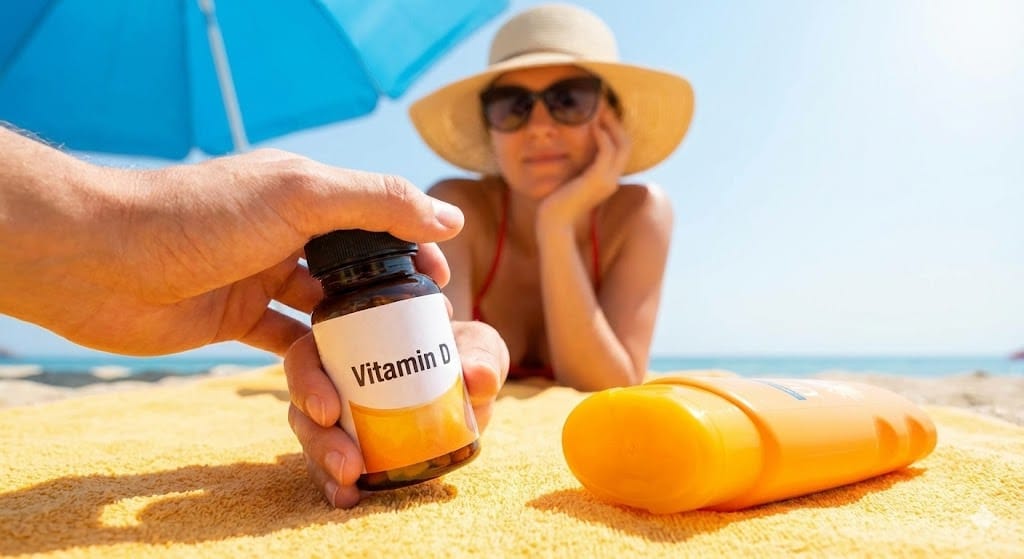
You spend hours gardening or by the pool and assume your nutrient levels are maxed out, so you wonder should you take vitamin d in the summer. It is a common assumption that strong sunlight automatically equals sufficiency for everyone. I dug into the clinical trials and found that factors like rigorous sunscreen use, skin melanin, and age significantly block cutaneous production.
Relying solely on casual summer sun exposure often leaves many people surprisingly deficient by the time autumn arrives. The angle of the sun and the time of day you are outdoors play huge roles in how much you actually synthesize. My research shows that indoor jobs and metropolitan living often mean missing the peak UV window entirely.
The biological reality is that your body’s ability to produce this “sunshine vitamin” is not guaranteed just because it is July. Understanding your personal variables is key to knowing if you need that extra boost to stay in the optimal range. It is not a one-size-fits-all answer.
Let us look at the science behind seasonal levels and how to determine your true needs. Here is the evidence-based approach to navigating supplementation during warmer months.
What the Research Says About Seasonal Serum Levels
My investigation into the physiology reveals that UV-B rays trigger a reaction in your skin that turns cholesterol into vitamin D. However, the National Institutes of Health notes that complete cloud cover can reduce UV energy by 50%, and severe pollution can reduce it by 60%. Furthermore, glass windows block virtually all UV-B radiation, meaning your sunny office window does not count.
I found that the body is efficient at regulating sun-induced production, making it unlikely to cause toxicity from sun alone, as heat destroys excess amounts. Supplements, however, bypass this regulatory mechanism, directly increasing blood levels. This makes them a powerful, but potentially risky, tool if managed poorly.
The consensus is that while the potential for natural synthesis is highest in summer, modern behaviors often negate this benefit. We tend to cover up, slather on high-SPF sunscreen, or stay inside during the crucial midday hours to avoid heat and skin damage. This creates a significant gap between potential and actual levels.
| Feature | Oral Supplements | Summer Sun Exposure |
|---|---|---|
| Dosage Control | Precise and consistent | Highly variable and unreliable |
| Skin Health Risk | None | Increased risk of premature aging and burns |
| Accessibility | Available 24/7 year-round | Dependent on weather, time of day, and season |
7 Effective Ways to Determine Your Summer Needs
1. Get a 25-Hydroxy Blood Test
This is the gold standard and the only definitive way to know your status. I always recommend establishing a baseline before starting or stopping any regimen. Guessing based on season is often inaccurate.
2. Evaluate Your Sunscreen Habits
Sunscreens with SPF 8 or higher appear to significantly block UV-B rays. If you diligently apply high SPF whenever you are outside, you are likely blocking vitamin production along with the burn. You might still need supplemental support.
3. Consider Your Skin Tone
Melanin acts as a natural sunscreen, meaning people with darker skin need significantly more sun exposure to produce the same amount of the vitamin as those with lighter skin. This is a crucial biological factor that season does not change.
4. Factor in Your Age
As we get older, our skin becomes less efficient at converting sunlight into the active nutrient. My research shows that seniors often require supplementation even in sunny climates to maintain healthy bones.
5. Track Your Indoor Hours
If you work in an office from 9 to 5, you miss the strongest UV rays of the day. Catching a few minutes of morning or late afternoon sun is often insufficient to build and maintain adequate stores.
6. Assess Your Geographical Location
Even in summer, people living at latitudes further from the equator receive less intense UV radiation. The “vitamin D winter” is shorter, but the summer sun might still be weaker than you think depending on where you live.
7. Note Your Body Weight
Vitamin D is fat-soluble and can get sequestered in body fat tissue. Individuals with a higher body mass index (BMI) may need larger inputs, whether from sun or supplements, to achieve the same blood levels as someone with a lower BMI.
Best Time & Dosage for Maximum Results
Since vitamin D is fat-soluble, the best time to take it is with your largest meal of the day that contains some healthy fats, like avocado or olive oil. This significantly enhances absorption compared to taking it on an empty stomach. I found that consistency matters more than the exact time of day.
Regarding dosage, there is no universal summer recommendation because it depends entirely on your blood levels. A maintenance dose for someone with healthy levels might be 600-1000 IU daily. However, if a test reveals you are deficient, a doctor may temporarily prescribe much higher therapeutic doses to replenish your stores.
Never assume that because it is summer you can drop to zero without testing. Conversely, do not continue a high winter dosage without verifying you still need it, as levels can creep up over time.
Safety & Precautions
1. Test, Don’t Guess
The most critical safety step is knowing your actual blood level. Supplementing blindly, especially with high doses, can lead to hypercalcemia, a dangerous condition where too much calcium builds up in the blood.
Safety Note: Hypercalcemia can weaken bones and damage kidneys and the heart.
2. Watch for Signs of Toxicity
While rare, toxicity is possible with chronic megadosing. Symptoms include nausea, vomiting, weakness, and frequent urination. If you experience these while supplementing, stop immediately and consult your doctor.
Safety Note: Extremely high serum levels can cause irreversible tissue damage.
3. Check for Drug Interactions
Certain medications, such as steroids, weight-loss drugs like Orlistat, and some cholesterol-lowering statins, can interfere with metabolism or absorption. Always disclose your supplement regimen to your healthcare provider.
Safety Note: Interactions can either reduce efficacy or increase toxicity risks.
4. Choose Third-Party Tested Brands
The supplement industry is not strictly regulated. Look for products that have been independently tested by organizations like USP or NSF to ensure purity and accurate dosage labeling.
Safety Note: Poor quality supplements may contain contaminants or incorrect dosages.
5. Do Not Burn for Health
Never attempt to get your nutrients by sunburning. Sunburns significantly increase your risk of skin cancer and do not result in higher vitamin levels due to the body’s shut-off mechanism.
Safety Note: Intense, intermittent sun exposure leading to burns is highly damaging.
5 Common Myths vs Facts
Myth 1: You cannot be deficient in the summer.
Fact: Indoor lifestyles, sunscreen use, and other biological factors mean millions remain deficient even during the sunniest months.
Myth 2: Ten minutes of sun is enough for everyone.
Fact: The time needed varies wildly based on skin tone, time of day, latitude, and how much skin is exposed. Darker skin may need hours for the same effect.
Myth 3: You should stop all supplements in June.
Fact: Many people require a year-round maintenance dose to keep their levels stable, as summer sun exposure is often not consistent enough.
Myth 4: Vitamin D toxicity is a myth.
Fact: While difficult to achieve with normal doses, consistent ingestion of extremely high amounts over months can absolutely cause toxic reactions.
Myth 5: A healthy diet provides enough.
Fact: Very few foods naturally contain significant amounts. You would need to eat fatty fish almost daily to meet requirements through diet alone.
The Bottom Line
While the summer sun offers a potential natural pathway to production, modern lifestyle factors often mean supplementation remains necessary for optimal health.
Based on the research, I believe that relying on assumptions about season and sun exposure is a gamble with your long-term bone and immune health. My take is that it is far safer to know your numbers through testing and supplement accordingly, rather than just guessing that the calendar provides all you need. Personal biology trumps the season.
The best next step is to ask your doctor for a 25-hydroxy vitamin D test at your next check-up to get a definitive answer on your status.
Get Your FREE Ultimate Vitamin Guide!
Join the VitaminProGuide community to receive science-backed supplement reviews, nutritional insights, and absorption tips, delivered straight to your inbox.