- Safety: These methods are generally safe and low-impact, focusing on functional movement rather than isolated strain.
- Effectiveness: Highly effective for long-term functional strength because they integrate the pelvic floor with the rest of the core and body.
- Key Benefit: Addresses the root cause of pelvic floor dysfunction (lack of coordination and whole-body integration) rather than just symptom management.
Most people are looking at this problem upside down. You have likely been told that the only way to fix a weak pelvic floor is to do endless, boring Kegels. You squeeze, you hold, you hope for the best, and often, nothing changes. It’s frustrating.
The standard advice ignores a fundamental truth about human anatomy: no muscle works in isolation. Your pelvic floor is part of a dynamic system, not a lone hammock that just needs tightening. Treating it that way is like trying to fix a car’s engine by only polishing the spark plugs.
I spent the weekend going over the latest clinical data on biomechanics and functional movement.The research is clear: real, lasting pelvic health comes from integrating these muscles with your breathing, your core, and your everyday movements. You don’t need to spend your life doing secret squeezes in the elevator. You need a better strategy.
Let’s cut through the noise. It is time to learn how to strengthen pelvic floor without kegels by using whole-body techniques that actually work in the real world. Forget the outdated drills; we are going for functional strength.
The Science Behind Pelvic Floor Function
To understand why Kegels often fail, you need to understand what the pelvic floor actually does. It’s not just a shelf holding up your organs. It’s a complex web of muscles, ligaments, and fascia that works in a coordinated dance with your diaphragm (your primary breathing muscle) and your deep abdominal muscles.
Think of your torso as a pressure canister. The diaphragm is the lid, abdominal muscles are the sides, and the pelvic floor is the base. According to the Eunice Kennedy Shriver National Institute of Child Health and Human Development (NICHD), pelvic floor disorders often stem from a weakening or damage to these muscles and connective tissues. When you inhale, your diaphragm descends, increasing intra-abdominal pressure. A healthy pelvic floor naturally relaxes and lengthens to manage this pressure. When you exhale, the diaphragm rises, and the pelvic floor naturally contracts and lifts.
My deep dive into the research highlights one key factor: coordination is more important than raw strength. Many people with pelvic floor issues actually have muscles that are too tight, not too weak. Doing Kegels on an already chronically tight muscle is like trying to clench a fist that’s already clenched—it doesn’t work and can make things worse. Functional strengthening focuses on restoring this natural piston-like relationship with breath and movement.
| Feature | Functional Pelvic Floor Training | Traditional Kegels |
|---|---|---|
| Primary Focus | Integration with breath and full-body movement. | Isolated contraction of pelvic floor muscles. |
| Mechanism | Uses intra-abdominal pressure and co-contraction with core muscles to engage the pelvic floor reflexively. | Relies on conscious, voluntary squeezing of the muscles. |
| Best For | Long-term functional health, addressing hypertonicity (too tight), real-world movement. | Initial awareness, specific cases of severe weakness (under guidance). |
Strategies That Actually Work
1. Master Diaphragmatic Breathing (The Piston Breath)
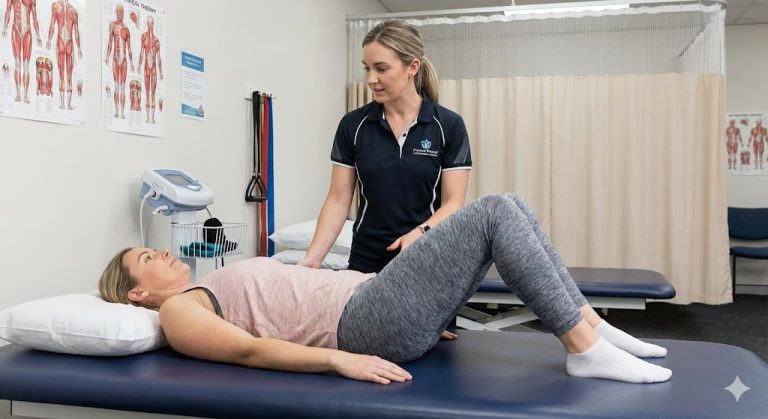
This is the foundation. Lie on your back with knees bent. Place one hand on your chest and one on your belly. Inhale slowly through your nose, focusing on expanding your belly and ribcage 360 degrees, keeping your chest relatively still. Feel your pelvic floor gently relax and descend. Exhale slowly through pursed lips, imagining you are blowing out a candle, and feel your belly flatten and your pelvic floor gently lift on its own. Do not force a squeeze; just feel the natural recoil. Practice this for 5-10 minutes daily.
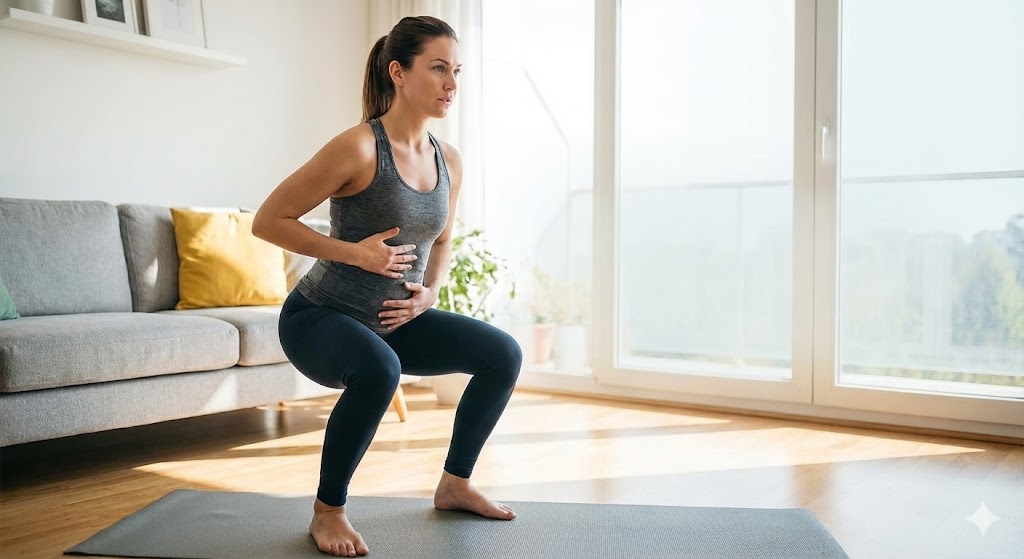
2. The Squat with Exhalation
Squatting is a primal movement that naturally engages the pelvic floor. Stand with feet shoulder-width apart. As you lower into a squat, inhale and allow your pelvic floor to lengthen. As you stand back up, exhale powerfully through pursed lips. This exhalation recruits your deep abs and pelvic floor together to support you. Start with shallow squats and work your way deeper as your strength improves. Do 3 sets of 10 reps.
3. Pelvic Tilts (Bridging Connection)
Lie on your back with knees bent and feet flat on the floor. Inhale to prepare. On the exhale, gently gently tilt your pelvis so your lower back flattens against the floor, engaging your low abs. You should feel a subtle, natural engagement of the pelvic floor. Inhale to return to a neutral spine. This isn’t a glute bridge; it’s a small, controlled movement to connect abs to the pelvic floor. Perform 2 sets of 15 reps.
4. The “Zipper” Visual for Core Engagement
During daily activities like lifting groceries or climbing stairs, use the “zipper” cue. Before the exertion, exhale and imagine pulling a zipper up from your pubic bone to your belly button. This visual helps engage the deep transverse abdominis muscle, which co-contracts with the pelvic floor, providing automatic support without a conscious Kegel squeeze.
5. Glute Strengthening (Clamshells & Bridges)
Your glutes (butt muscles) are powerful supporters of your pelvis. Weak glutes force the pelvic floor to overwork. Lie on your side with knees bent and open your top knee like a clamshell, keeping your feet together and hips stacked. Do 2 sets of 15 reps per side. Also, add glute bridges: lie on your back, lift hips, squeeze glutes at the top, and lower slowly. Do 2 sets of 15 reps.
Tips for Getting the Best Results
Consistency is absolutely key here. You are retraining a neuromuscular pattern, which takes time and repetition. You won’t fix years of dysfunction in one session. Aim to incorporate these breathing and movement patterns into your daily life, not just during a dedicated workout time.
Pay attention to your posture. Chronic slouching or hyper-extending your lower back throws off the alignment of the canister, making it impossible for your diaphragm and pelvic floor to work together efficiently. Stand tall with your ribs stacked over your hips.
Never hold your breath during exertion. Breath-holding increases intra-abdominal pressure, forcing it downwards onto the pelvic floor like a plunger. Always exhale on the hardest part of any movement—when you lift, push, or pull. This exhalation lifts the pelvic floor to meet the pressure.
Finally, be patient. It can take weeks to start feeling a real difference in coordination and strength. If you have pain or severe symptoms, always consult a pelvic floor physical therapist for personalized guidance. They are the true experts in this field.
Safety & Precautions
1. Don’t Over-Grip
Many people carry tension in their pelvic floor, just like in their neck or shoulders. Constantly walking around with your abs sucked in or your pelvic floor gripped is counterproductive and can lead to a hypertonic (too tight) pelvic floor.
Caution: Focus on the relaxation phase of the breath as much as the contraction.
2. Avoid High-Impact Exercises Initially
Running, jumping jacks, and heavy lifting can put excessive downward pressure on a weak pelvic floor. Build a solid foundation of functional strength with low-impact exercises first.
Safety Note: Listen to your body. If you feel heaviness or leaking, scale back the intensity.
3. Watch for “Doming” of the Abs
When doing core exercises, if you see a ridge pop up down the center of your belly, it means you are not managing intra-abdominal pressure correctly. This can strain the pelvic floor.
Heads Up: Stop the exercise, reset, and focus on a flatter, deeper exhalation connection.
4. Don’t Push to Pee or Poop
Chronic straining on the toilet is a major contributor to pelvic floor weakness and prolapse. Use a stool to elevate your feet into a squatting position, which straightens the rectum and makes elimination easier without straining.
Doctor’s Note: Breathe and relax; let gravity do the work.
5. Seek Professional Help if Needed
If you have persistent pain, heaviness, significant leakage, or suspect a prolapse, these exercises are not a substitute for medical care.
Warning: See a pelvic floor physical therapist for a hands-on assessment and verify your technique.
5 Common Myths vs. Facts
Myth 1: Kegels are the only way to strengthen the pelvic floor.
Fact: Kegels are just one tool, and often an ineffective one for functional, real-world strength. Whole-body movement and breathing are far more transferable to daily life.
Myth 2: A tight pelvic floor is a strong pelvic floor.
Fact: A muscle that is constantly contracted is weak, fatigued, and lacks a full range of motion. True strength requires the ability to both fully contract and fully relax.
Myth 3: Pelvic floor issues are just a “woman thing” after childbirth.
Fact: Men get pelvic floor issues too, leading to incontinence, erectile dysfunction, and pelvic pain. And many women who have never given birth experience dysfunction.
Myth 4: It’s normal to leak a little when you sneeze or jump as you age.
Fact: It is common, but it is not “normal.” It is a sign of dysfunction that can and should be addressed. You do not have to live with it.
Myth 5: Doing hundreds of Kegels a day will fix the problem faster.
Fact: Quality beats quantity every time. Doing hundreds of poorly executed Kegels will just lead to muscle fatigue and frustration. Focus on perfect technique with fewer repetitions.
The Bottom Line
Strengthening your pelvic floor requires a functional, whole-body approach that integrates breathing and movement, not just isolated squeezing.
Based on the research, I believe mastering Diaphragmatic Breathing combined with the “Squat with Exhalation” provides the most effective, real-world foundation for the Skeptical Optimizer looking to build lasting pelvic health without relying on Kegels. This approach addresses the root cause of dysfunction by restoring coordination.
While these natural movement strategies are powerful, the practical gap is that retraining neuromuscular patterns takes significant time and mental focus. For a more convenient and targeted “clinical-strength” boost to support connective tissue health, consider adding a high-quality collagen peptide supplement to your routine, which provides the building blocks for fascia and ligaments.
Get Your FREE Ultimate Vitamin Guide!
Join the VitaminProGuide community to receive science-backed supplement reviews, nutritional insights, and absorption tips, delivered straight to your inbox.