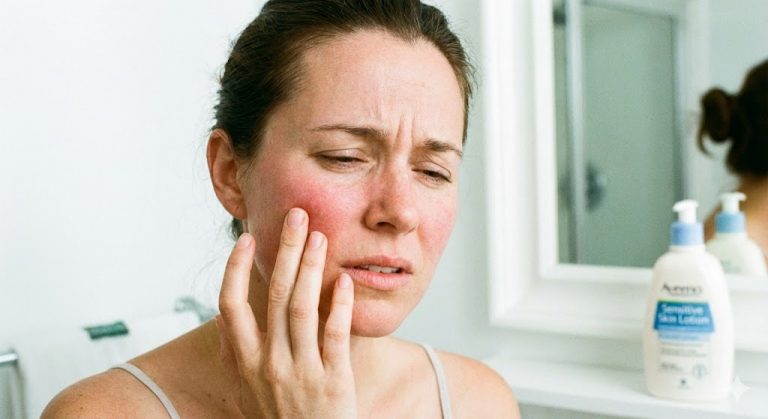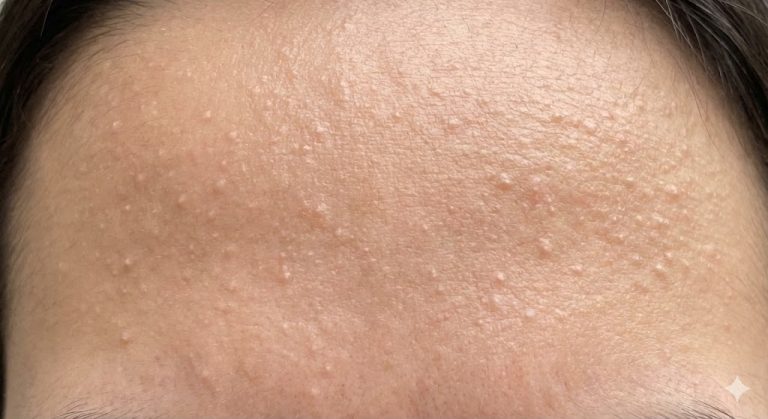
- Safety: Topical collagen is generally safe but can be comedogenic (pore-clogging) if the formulation includes heavy occlusives like mineral oil or dimethicone to fake a “plumping” effect. Acne-prone skin should proceed with caution.
- Effectiveness: The “500 Dalton Rule” dictates that molecules larger than 500 Daltons cannot penetrate the stratum corneum. Native collagen is 300,000 Daltons. It physically cannot enter the dermis to replace lost structure.
- Key Benefit: Standard collagen creams act as excellent surface humectants (moisturizers). To actually stimulate repair, you must use “Signal Peptides” (Micro-Collagen) that fit under the molecular weight limit.
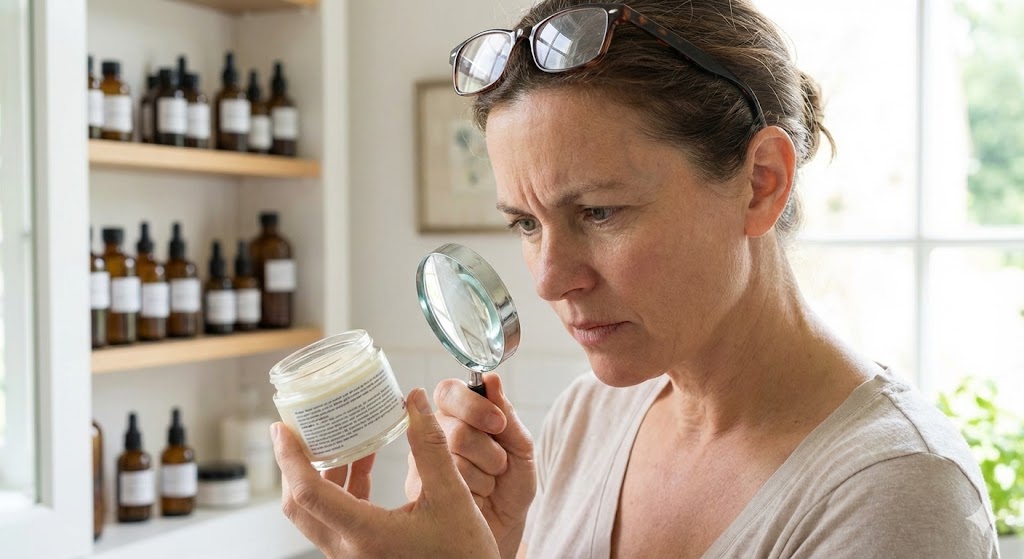
You treat yourself to the expensive jar, tempted by claims it will “restore bounce” and “smooth out wrinkles.” You apply it faithfully, and though your skin feels softer, the wrinkles remain just as pronounced. This is not a failure of your routine; it is a failure of physics. The skin is an immunological barrier designed to keep foreign proteins out.
If topical collagen could easily penetrate the dermis, your body would treat it as an alien invader, triggering a massive allergic reaction. To protect you, the skin has a strict size limit for absorption. This is known as the “500 Dalton Rule.”
Biochemically speaking, about 90% of collagen creams are basically just pricey moisturizers. They sit on top of the skin, trapping water, but never reaching the fibroblast cells that actually build new tissue. The data indicates that understanding topical collagen absorption and the Dalton rule is the only way to stop wasting money on heavy creams that do nothing but sit on the surface.
Decoding The Molecular Gatekeeper
A Dalton (Da) is a unit of atomic mass. The stratum corneum (the skin’s outer layer) is like a brick wall. The space between the bricks allows molecules smaller than 500 Daltons to pass through. Anything larger bounces off.
According to a seminal paper published in Experimental Dermatology, the molecular weight of native (whole) collagen is approximately 300,000 Daltons. It is massive. Trying to push native collagen into the skin is like trying to push a sofa through a keyhole. Even “Hydrolyzed” collagen usually clocks in at 2,000 to 6,000 Daltons—still too big to pass freely.
Comparing the different options makes the best choice clear. You don’t need the whole sofa; you need the wood and the fabric. Signal Peptides (like Palmitoyl Pentapeptide-4) are engineered to be tiny fragments of collagen. These fit under the 500 Dalton limit, tricking the skin into thinking collagen has broken down, which signals the body to make more.
| Feature | Native Collagen (Standard Cream) | Signal Peptides (Matrixyl/Copper) |
|---|---|---|
| Molecular Weight | ~300,000 Daltons (Huge). | < 500 Daltons (Microscopic). |
| Primary Action | Surface hydration & film forming. | Cellular signaling & stimulation. |
| The Practical Catch | Washes off with water. | Requires consistent use (8+ weeks). |
5 Clinical Methods To Bypass The Barrier
1. The “Tripeptide” Mandate
Scan the ingredient list. If it just says “Soluble Collagen,” put it back. You are looking for “Tripeptides” or “Oligopeptides.” Specifically, Palmitoyl Tripeptide-1 or Tripeptide-29. These synthetic chains are engineered to be small enough to slip between the skin cells and dock with fibroblast receptors.
Pro-Tip: The prefix “Palmitoyl” means a fatty acid was attached to help it slide through the lipid barrier.
2. Micro-Needling (The Physical Bypass)
If you want to use larger collagen molecules, you must open the door. Micro-needling creates temporary physical channels in the stratum corneum. Applying serum immediately after rolling allows molecules up to 10,000 Daltons to penetrate deep enough to hydrate the dermis.
Pro-Tip: Use a 0.25mm or 0.5mm roller for home absorption enhancement.
3. The Liposomal Trojan Horse
Some advanced formulations encapsulate collagen peptides in “Liposomes.” These are lipid bubbles that mimic the skin’s own oil. The skin recognizes the lipid and lets it pass, carrying the peptide payload with it. This technology significantly increases bioavailability.
Pro-Tip: Look for “Encapsulated” or “Liposomal” on the label.
4. pH Lowering Strategy
The skin barrier is tighter at a neutral pH. Slightly acidic products can momentarily relax the lipid matrix, allowing for better penetration of actives. Using a toner with mild Alpha Hydroxy Acids (AHA) before your peptide serum can improve uptake.
Pro-Tip: Glycolic acid is the smallest AHA and works best for this “pathway clearing.”
5. Copper Peptide GHK-Cu
This naturally occurring copper complex is extremely small. It doesn’t just add collagen; it removes damaged collagen (scar tissue) and stimulates the production of healthy new fibers. It is one of the few topicals with wound-healing data supporting its ability to remodel skin.
Pro-Tip: Do not mix Copper Peptides with Vitamin C; they can neutralize each other.
Stacking Your Strategy For Dermal Density
To make this work 20% better, stack your Signal Peptides with Retinol. Do not apply them at the exact same moment if your skin is sensitive.
Peptides provide the “building blocks” or the “message” to build. Retinol increases the “workforce” (cell turnover rate). By using Peptides in the morning and Retinol at night, you attack the aging process from both supply and demand. The Retinol thins the dead outer layer (stratum corneum) over time, which makes the Peptides absorb even easier.
Safety & Precautions
1. The “Film” Effect
Standard collagen dries into a tight film. This feels like “firming,” but it is temporary. Do not mistake this sensation for structural repair.
Safety Note: If it pills or flakes off, it is sitting on the surface.
2. Allergic Reactions
Fish-derived (marine) collagen is common. If you have a shellfish allergy, topical application can still trigger a reaction.
Caution: Patch test behind the ear for 24 hours.
To make collagen “creamy,” brands add myristates and algae extracts. These are highly comedogenic.
Heads Up: If you break out, switch to a clear, water-based peptide serum.
4. Needle Hygiene
If using micro-needling to force absorption, sterility is paramount. You can drive bacteria deep into the dermis.
Doctor’s Note: Sanitize your roller in 70% alcohol before and after every use.
5. Active Clashing
Peptides are fragile proteins. Mixing them with strong acids (high % Vitamin C or AHAs) can hydrolyze them, breaking them down before they work.
Warning: Wait 15 minutes between acidic steps and peptide steps.
5 Common Myths vs. Facts
Myth 1: Collagen cream replaces your collagen.
Fact: It physically cannot. It acts as a humectant (water magnet). Your body must synthesize its own collagen from the inside out.
Myth 2: “Micro-Collagen” is small enough.
Fact: Marketing terms are unregulated. Unless the Dalton weight is listed (e.g., <500 Da), assume it is too big.
Myth 3: You feel it absorbing.
Fact: You feel the water evaporating and the product drying. True dermal absorption is sensationless.
Myth 4: Plant collagen works the same.
Fact: Plants do not make collagen. “Vegan Collagen” is usually genetically modified bacteria or yeast. It can be effective, but it is not a plant extract.
Myth 5: Expensive means better absorption.
Fact: A $300 jar of 300,000 Dalton collagen absorbs 0%. A $20 bottle of 500 Dalton peptides absorbs significantly. Physics does not care about branding.
The Bottom Line
Size dictates destiny in skincare.
Based on the research, I believe that for the Skeptical Optimizer, generic Topical Collagen is a waste of capital. It is a moisturizer, nothing more. To actually affect the dermis, you must pivot to Signal Peptides (like Matrixyl or Copper GHK-Cu) that respect the 500 Dalton Rule.
The practical catch is reading the label. You must ignore the word “Collagen” on the front and look for “Palmitoyl” or “Peptide” on the back. For a clinical-strength result that actually triggers repair, I recommend using a Copper Peptide Serum combined with weekly Micro-Needling to bypass the barrier entirely.
Get Your FREE Ultimate Vitamin Guide!
Join the VitaminProGuide community to receive science-backed supplement reviews, nutritional insights, and absorption tips, delivered straight to your inbox.