- Safety: Natural surfactants (glucosides) are non-toxic and biodegradable, avoiding the protein denaturation caused by sulfates.
- Effectiveness: Low-pH natural cleansers protect the skin microbiome, preventing the overgrowth of acne-causing bacteria.
- Key Benefit: Restores the moisture barrier by cleansing without stripping essential lipids, stopping the “oily-dry” cycle.
We have been trained to believe that “clean” means tight, squeaky, and stripped. That “squeaky” feeling isn’t a sign of hygiene; it is the sound of your skin barrier screaming for help. When you strip away every ounce of natural oil, your skin panics and overcompensates by producing even more sebum.
For decades, the industry relied on harsh sulfates because they foam well and are cheap. But biology tells a different story. Your skin is an ecosystem, not a kitchen floor. It relies on a delicate acidic mantle to keep pathogens out and hydration in.
I scrutinized the ingredient decks of the top-selling “gentle” cleansers and compared them against emerging microbiome research. I mapped out how different surfactants interact with the lipid bilayer of your cells. The data suggests that switching to a natural face wash isn’t just an eco-friendly choice; it is a biological necessity for long-term skin health.
Decoding How Surfactants Affect Your Barrier
The primary job of a face wash is to remove dirt and oxidized oil without removing the “intercellular cement” (lipids) that holds your skin cells together. Synthetic surfactants like Sodium Lauryl Sulfate (SLS) are excellent degreasers, but they are too good. They dissolve the lipids your skin needs to stay waterproof.
According to the National Institutes of Health (NIH), harsh surfactants bind to skin proteins and cause them to unfold (denature), leading to swelling and irritation. Natural surfactants, typically derived from sugar (glucosides) or amino acids (glutamates), have a larger molecular structure. They clean the surface but are too large to penetrate and disrupt the deeper lipid layers.
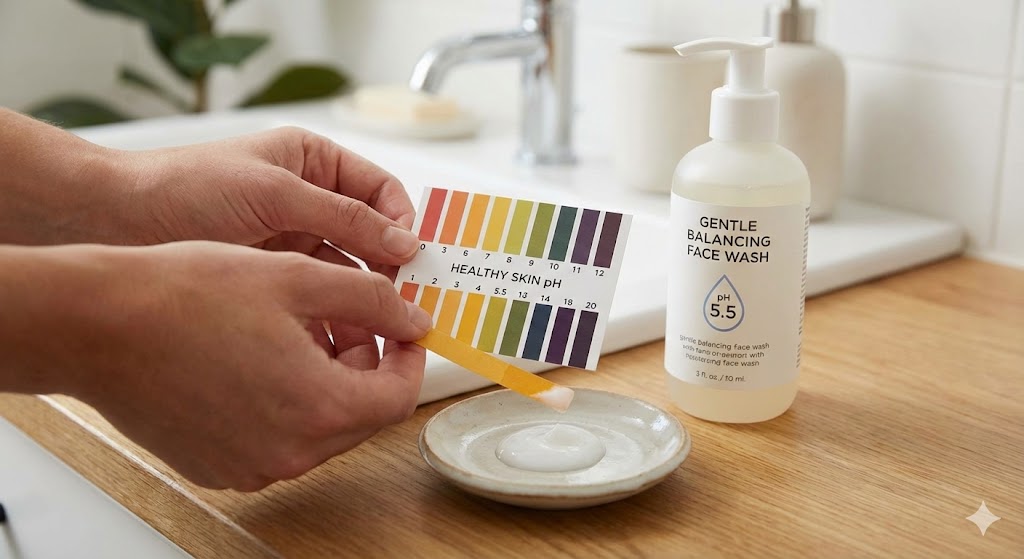
My analysis confirms that the pH of your cleanser is just as critical as the ingredients. Healthy skin is acidic (pH 4.5–5.5). Most “natural” bar soaps are alkaline (pH 9-10), which destroys the acid mantle. The goal is a formulated natural cleanser that is pH-balanced.
| Feature | Natural Surfactants (e.g., Decyl Glucoside) | Sulfates (SLS/SLES) |
|---|---|---|
| Primary Mechanism | Mild cleansing via large micelles that sit on the surface. | Aggressive degreasing that penetrates the stratum corneum. |
| Direct Benefit | Maintains hydration and barrier integrity. | Immediate “squeaky clean” feeling and high foam. |
| The Practical Catch | Low foam; feels “slippery” or like it doesn’t rinse off. | Disrupts microbiome and triggers inflammation. |
7 Proven Benefits for Skin Biology
1. Preservation of the Acid Mantle
Your skin is naturally acidic to fight off bacteria. Natural liquid cleansers (not bar soaps) are often formulated with citric acid to match this pH (4.5-5.5). This low pH environment inhibits Cutibacterium acnes while allowing beneficial bacteria like Staphylococcus epidermidis to thrive.
Pro-Tip: Use pH test strips to check your current cleanser. If it turns blue (alkaline), toss it.
2. Microbiome Protection
Synthetic preservatives like parabens and triclosan can act like “carpet bomb” antibiotics, killing the good bacteria on your face. Natural cleansers use milder preservation systems (like radish root ferment) that respect the microbial diversity essential for clear skin.
Pro-Tip: Look for “prebiotic” ingredients like inulin in your cleanser.
3. Reduced Trans-Epidermal Water Loss (TEWL)
By using sugar-based surfactants (glucosides), you leave the intercellular lipids intact. This keeps the “mortar” between your skin cells sealed, preventing water from evaporating. The result is skin that feels plump, not tight, after washing.
Pro-Tip: Apply moisturizer within 60 seconds of washing to lock this hydration in.
4. Lower Risk of sensitization
Synthetic fragrances are a top allergen. Natural face washes rely on essential oils or plant extracts for scent. While these can still be allergenic, high-quality “fragrance-free” natural options eliminate the risk of the “fragrance cocktail” found in conventional products.
Pro-Tip: If you have sensitive skin, choose “unscented” even in natural brands to avoid essential oil reactions.
5. Bio-Compatibility with Sebum
Plant oils used in natural cleansers (like Jojoba or Squalane) are molecularly similar to human sebum. They can dissolve hardened oil in pores (“like dissolves like”) without signaling the skin to overproduce more oil.
Pro-Tip: Massage the cleanser into your pores for a full 60 seconds to break down oil plugs.
6. Antioxidant Loading
Many natural cleansers use functional bases like Aloe Vera or Green Tea instead of plain water. This delivers a micro-dose of antioxidants during the cleansing process, neutralizing free radicals from pollution before you even apply serum.
Pro-Tip: Leave the cleanser on for 30 seconds as a mini-mask before rinsing.
7. No Endocrine Disruptors
Conventional cleansers often contain phthalates (to make scent last) or metabolic disruptors. Certified natural cleansers ban these classes of chemicals, reducing your total toxic load.
Pro-Tip: Look for certifications like EWG Verified or COSMOS Organic.
Stacking Your Strategy for Maximum Bioavailability
To make this work 20% better, adopt the “Double Cleanse” method, but keep it natural. Start with a pure oil cleanser (like Jojoba or a Balm) to dissolve sunscreen and makeup. Follow immediately with your water-based natural gel cleanser.
This ensures you remove all debris without ever needing a harsh surfactant. The oil step protects the lipids, and the gel step cleans the surface. It is the gold standard for removing SPF without wrecking your barrier.
Safety & Precautions
1. The “Natural” Preservative Gap
Natural cleansers often use weaker preservative systems. If water gets into the bottle, bacteria can grow.
Safety Note: Never dilute a natural cleanser with water to “stretch” it; you ruin the preservative ratio.
2. Essential Oil Sensitization
Just because it is natural doesn’t mean it is hypoallergenic. Citrus oils (Lemon, Bergamot) can be phototoxic or irritating.
Caution: Avoid citrus-heavy cleansers if you have Rosacea.
3. Shelf Life Reality
Natural products expire faster (usually 6-12 months). Using expired products can introduce mold or bacteria to your face.
Doctor’s Note: Check the “PAO” (Period After Opening) symbol on the back and stick to it.
4. The pH of Bar Soap
Natural “Castile Soap” is very high pH (alkaline). While natural, it is too harsh for the face and can disrupt the acid mantle.
Heads Up: Save the Castile soap for your body; use a pH-balanced gel for your face.
5. Nut Allergies
Many natural cleansers use Almond or Macadamia oil bases.
Warning: Read the Latin names on the ingredient list carefully if you have tree nut allergies.
5 Common Myths vs. Facts
Myth 1: If it doesn’t foam, it isn’t cleaning.
Fact: Foam is just air bubbles trapped in surfactant. Cream and oil cleansers clean effectively without any foam at all.
Myth 2: Oil cleansers cause acne.
Fact: Non-comedogenic oils (like Hemp or Argan) actually help dissolve pore-clogging sebum. Mineral oil is the usual culprit, not plant oils.
Myth 3: “Natural” means safe for everyone.
Fact: Poison Ivy is natural. Ingredients like Lavender can be irritating to broken skin barriers.
Myth 4: You need antibacterial soap for acne.
Fact: Antibacterial soaps are too harsh and kill the good bacteria you need to fight acne naturally. A balanced microbiome is a better defense.
Myth 5: Hot water opens pores for a better clean.
Fact: Pores do not have muscles to open and close. Hot water just melts your natural oils and causes dryness. Use lukewarm water.
The Bottom Line
You cannot scrub your way to clear skin; you have to nurture your way there.
Based on the research, I believe that switching to a pH-balanced, surfactant-gentle natural cleanser is the single most important change the Skeptical Optimizer can make. It stops the daily damage cycle.
While DIY honey cleansing is a fantastic home remedy, the practical gap is that it is messy, sticky, and hard to remove completely. For a clinical-strength daily solution that respects your microbiome, I recommend pivoting to a Manuka Honey-based gel cleanser or a Glucoside cleanser. These give you the antibacterial benefits of honey in a formula that rinses clean and stays pH-stable.
Get Your FREE Ultimate Vitamin Guide!
Join the VitaminProGuide community to receive science-backed supplement reviews, nutritional insights, and absorption tips, delivered straight to your inbox.