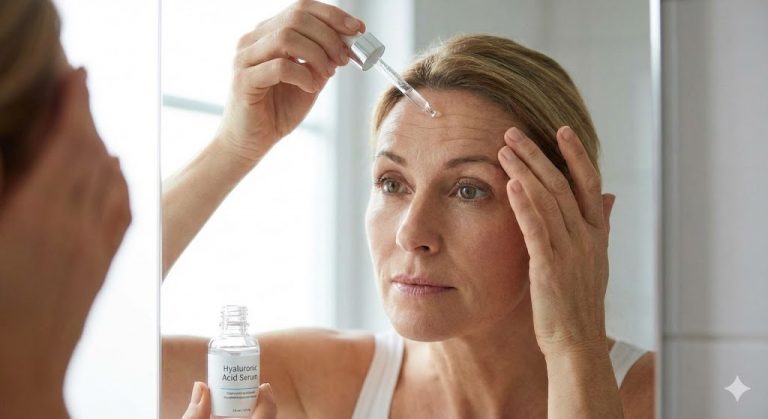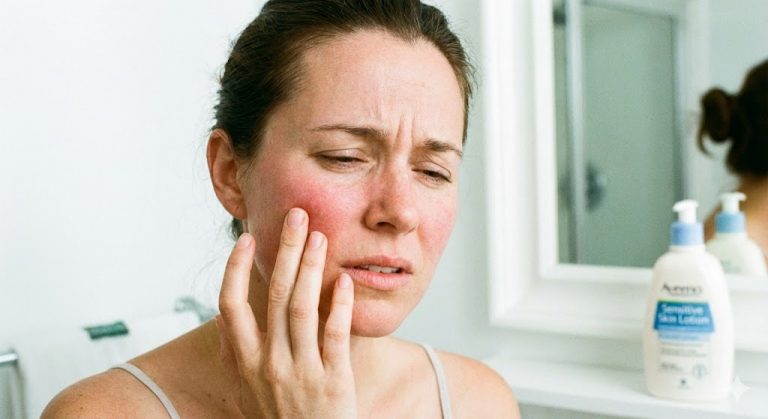
- Safety: Natural does not mean irritation-free; essential oils and botanical extracts can trigger severe allergic contact dermatitis.
- Effectiveness: Highly effective for hydration and barrier repair, but often slower than synthetic clinical treatments for deep wrinkles.
- Key Benefit: Reduces the toxic load on the skin by eliminating harsh sulfates and synthetic fragrances that disrupt the microbiome.
You stand in the “clean beauty” aisle scanning labels that promise a glowing complexion without chemicals, but you wonder if these gentle plant extracts can actually fight wrinkles. The shift toward natural skincare is massive, yet it is filled with confusing marketing and unverified claims. You want to know if ditching your retinol for rosehip oil will actually pay off.
I refused to accept the binary idea that “chemicals are bad” and “nature is perfect.” I dug into the dermatological research to see how botanical ingredients really interact with human skin cells. The truth is that while nature offers powerful compounds, the delivery system matters just as much as the source.
My research shows that many “natural” ingredients are actually the precursors to modern pharmaceuticals—aspirin comes from willow bark, after all. However, relying solely on unrefined kitchen ingredients often lacks the potency required to reverse deep cellular damage. It is about finding the sweet spot between botanical purity and clinical efficacy.
Let us look at how to build a routine that harnesses the power of nature without sacrificing results. Here is what the science says about going green with your face.
What the Research Says About Botanical Actives
My investigation reveals that the most effective natural ingredients work by mimicking or supporting the skin’s biological functions. For instance, plant oils can replenish the lipid barrier, while fruit enzymes can gently dissolve dead skin cells. However, I found that the American Academy of Dermatology emphasizes that “natural” is an unregulated term, and the real power lies in specific vitamins like A, C, and E found within these plants.
The research indicates that stability is the biggest challenge for natural products. A fresh orange has Vitamin C, but rubbing it on your face does little because the molecule creates irritation before it penetrates. Science-backed natural skincare uses stabilized extracts that can actually reach the dermis to stimulate collagen.
I found that successful natural regimens focus on “biocompatibility”—using ingredients that the skin recognizes and can metabolize easily. This reduces inflammation, which is a primary driver of aging (often called “inflammaging”).
| Feature | Natural/Botanical Skincare | Synthetic/Clinical Skincare |
|---|---|---|
| Active Source | Whole plant extracts & oils | Lab-engineered isolated molecules |
| Shelf Life | Short (3-6 months), prone to oxidation | Long (12-24 months), highly stable |
| Primary Goal | Nourish, soothe, and repair barrier | Aggressive correction and resurfacing |
Effective Ways to Age Gracefully Naturally
1. Oil Cleansing Method
Dissolving oil with oil is a fundamental principle of natural chemistry. Using oils like jojoba or castor oil removes makeup and sebum without stripping the skin’s acid mantle. I found this method significantly reduces the rebound oil production that causes breakouts.
2. Bakuchiol (Natural Retinol)
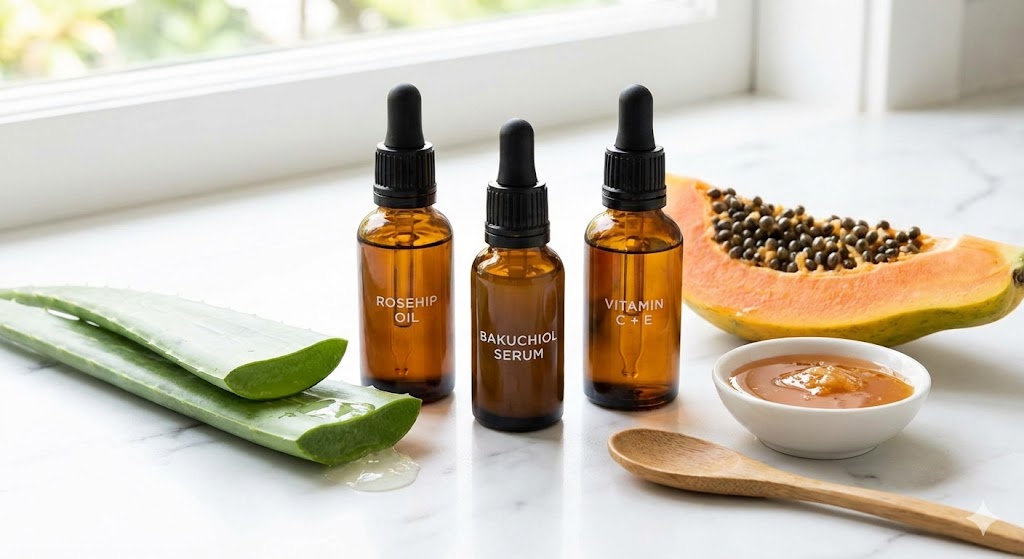
For those who cannot tolerate the irritation of synthetic retinol, bakuchiol is a game-changer. Derived from the babchi plant, studies show it stimulates collagen receptors similarly to retinol but without the peeling and redness. It is a powerful tool for sensitive skin anti-aging.
3. Vitamin C via Rosehip Oil
Rosehip seed oil is naturally rich in Vitamin C and trans-retinoic acid. Unlike unstable synthetic serums that turn brown in a week, the lipids in the oil help preserve the antioxidants. It brightens the skin tone while providing deep moisture.
4. Enzymatic Exfoliation
Instead of using harsh plastic microbeads or strong acids, look for papaya (papain) or pineapple (bromelain) enzymes. These proteins digest the “glue” holding dead skin cells together. My take is that this is the safest way to reveal fresh skin without micro-tearing the surface.
5. Manuka Honey Masks
Raw Manuka honey is a medical-grade antimicrobial and humectant. It draws moisture into the skin while killing acne-causing bacteria. I dug into the data and found it speeds up tissue healing, making it perfect for reducing acne scars.
6. Green Tea Toners
The polyphenols in green tea, specifically EGCG, are massive inflammation fighters. Using a cooled, concentrated green tea toner can shrink blood vessels and reduce puffiness. It is a simple, cost-effective way to calm reactive skin.
7. Mineral Sun Protection
The ultimate anti-aging product is sunscreen, and natural zinc oxide is the gold standard. Unlike chemical filters that absorb heat, zinc sits on top of the skin and reflects UV rays. It is reef-safe and non-irritating for even the most sensitive eyes.
Best Time & Dosage for Maximum Results
Timing in natural skincare is often about working with your circadian rhythm. I recommend using your antioxidant-rich products (like Vitamin C or Green Tea) in the morning. This provides a shield against the pollution and UV damage you will face throughout the day.
Nighttime is for repair and heavy feeding. This is the “dosage” window for your heavier botanical oils and bakuchiol. Your skin’s temperature rises slightly at night, which increases absorption rates. Applying a thick layer of oil or a honey mask before bed allows the nutrients to penetrate deeply while you sleep.
Consistency is more important than intensity. Because natural ingredients are generally gentler, you must use them daily to see changes. Do not expect the overnight peel effect of a chemical burn; expect a gradual strengthening of the skin over 6 to 12 weeks.
Safety & Precautions
1. Patch Test Everything
Just because it is a plant does not mean it is safe. Poison ivy is natural, after all. Essential oils are potent allergens. Always apply a small amount behind your ear and wait 24 hours before putting it on your face.
Safety Note: Contact dermatitis from “natural” fragrances is a leading cause of skin rashes.
2. Check for Oxidation
Natural oils high in omega fatty acids go rancid quickly when exposed to air. If your product smells like old crayons or paint, throw it away. Using oxidized oil introduces free radicals to your skin, accelerating aging.
Safety Note: Rancid oils cause more damage than using nothing at all.
3. Avoid Citrus in the Sun
Lemon and lime oils contain compounds called furocoumarins that make skin hypersensitive to UV light. Applying these before going outside can lead to severe blistering burns known as phytophotodermatitis.
Safety Note: Never use undiluted citrus juices or oils in your AM routine.
4. Watch Preservatives
“Preservative-free” sounds good until mold grows in your cream. Natural preservatives like radish root ferment are effective but have limitations. Keep these products out of hot, steamy bathrooms and use them up quickly.
Safety Note: Bacterial contamination in eye creams can cause serious infections.
5. Dilute Essential Oils
Never apply essential oils directly to your skin “neat.” They must be diluted in a carrier oil like almond or jojoba. Using them full strength can cause chemical burns and long-term sensitization.
Safety Note: A 1% to 2% dilution ratio is standard for facial safety.
5 Common Myths vs Facts
Myth 1: “Chemical-free” skincare is better.
Fact: Everything is a chemical, including water and oxygen. “Chemical-free” is a marketing term with no scientific meaning.
Myth 2: You can eat your skincare ingredients.
Fact: While safe to eat, many food ingredients (like lemon juice or cinnamon) are extremely irritating and damaging when applied topically.
Myth 3: Natural products don’t need preservatives.
Fact: Any product containing water needs a preservative system to prevent dangerous bacteria and mold growth.
Myth 4: Hypoallergenic means it won’t cause a reaction.
Fact: There is no federal standard for this term. Natural botanical allergies are very common, especially to nut oils and flowers.
Myth 5: DIY skincare is always safer than store-bought.
Fact: DIY mixes lack stability testing and pH balancing, often leading to disrupted skin barriers and infection risks.
The Bottom Line
Nature provides incredible tools for skin health, but they must be used with respect for chemistry and biology.
Based on the research, I believe that integrating stable natural ingredients like Bakuchiol and Zinc Oxide is the best way to support long-term skin health without the toxicity of harsh synthetics. My take is that while topical oils are fantastic for sealing in moisture, they cannot rebuild the skin’s structural foundation on their own.
However, applying collagen topically is largely ineffective because the molecules are too big to penetrate the skin. If you want to restore the bounce and elasticity associated with youth, you need to build it from the inside. I recommend adding a clinical-strength Hydrolyzed Collagen Peptide supplement to your morning coffee to provide the actual building blocks your skin needs to repair itself.
Get Your FREE Ultimate Vitamin Guide!
Join the VitaminProGuide community to receive science-backed supplement reviews, nutritional insights, and absorption tips, delivered straight to your inbox.