Physical Address
304 North Cardinal St.
Dorchester Center, MA 02124
Physical Address
304 North Cardinal St.
Dorchester Center, MA 02124
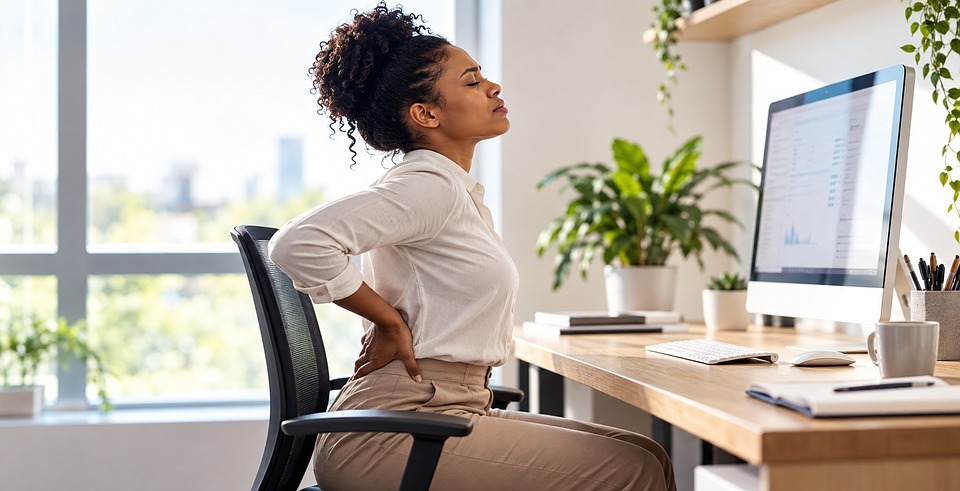
When assessing structural alignment, I look at how the kinetic chain responds to daily habits. The way a body holds itself against gravity dictates how forces distribute across the lower extremities. How does poor posture cause hip pain? It functions by shifting the center of gravity, which forces the hip joints to manage uneven mechanical stress.
My analysis of human movement patterns reveals that the hip joint acts as a primary pivot for the torso. When spinal alignment deviates from a neutral, upright position, the pelvis must tilt or rotate to compensate. This misalignment places the hip musculature into a chronic state of either over-stretching or tightening, leading to eventual joint discomfort.
Structural displacement at the lumbar spine leads to pelvic tilting, which alters the socket orientation for the femoral head. When the pelvis shifts, the surrounding soft tissues experience uneven pull, resulting in localized inflammation and reduced range of motion. This process effectively converts habitual slouching into physical hip stress that limits daily comfort.
The pelvis serves as the foundation for the spine and the gateway for the legs. When an individual adopts a posterior or anterior pelvic tilt, the acetabulum, or hip socket, changes its angle relative to the femur. This change restricts the natural, fluid motion of the ball-and-socket joint, causing friction that the body translates into pain signals.
Persistent tension within the iliopsoas muscle group is a frequent byproduct of forward-leaning posture. As the torso leans forward, the hip flexors remain in a shortened state for extended periods. The muscle fibers adapt by becoming rigid, which restricts full extension and pulls on the hip joint capsule with every step taken.
Mechanical energy that should be absorbed by the gluteal muscles is instead shunted toward the hip joint itself. Weakness in the posterior chain, often caused by sedentary office habits, prevents the glutes from firing correctly during gait. This failure to stabilize the hip forces the surrounding connective tissues to compensate, leading to chronic mechanical fatigue.
The role of Thorne Magnesium Bisglycinate is often considered by those managing muscular tension, as magnesium is essential for proper neuromuscular contraction and relaxation cycles. By supporting muscle health, one may find that the physical symptoms of postural strain become more manageable over time. Muscle readiness is a clear benefit of adequate mineral intake.
The spine functions as a flexible column that should naturally dissipate vertical forces from the ground. When curvature patterns become excessive, such as in kyphosis or lordosis, the spine loses its shock-absorbing capacity. This energy is transmitted downward directly into the pelvic girdle and the hip joints.
Clinical observations suggest that walking with a misaligned spine forces the legs to adopt compensatory patterns. One side of the body may over-work to balance the instability caused by an asymmetric gait. This creates a cycle where the hips bear the brunt of an uneven load, eventually manifesting as unilateral or bilateral hip pain.
Maintaining core stability is essential for counteracting these imbalances. The transverse abdominis, when engaged properly, protects the lower spine and prevents excessive pelvic rotation. Without this stabilization, the skeletal structure leans on the hip ligaments for support, which they are not designed to provide over long durations.
Research published by the National Institutes of Health highlights the complex interaction between trunk stability and lower limb kinematics. Strengthening the core and maintaining a neutral spine allows for a more efficient transfer of load. This results in easier movement and reduced daily hip fatigue.
Joint surfaces require specific precursors to maintain the integrity of cartilage and synovial fluid. When posture puts added stress on the hip, the turnover rate of these tissues can fluctuate. Providing the body with essential micronutrients ensures that the repair mechanisms remain functional despite the external mechanical demand.
Collagen synthesis is a process that relies heavily on specific amino acids and cofactors. For example, using Vital Proteins Collagen Peptides provides the building blocks necessary for maintaining the connective tissue density around the hip. When the body has the resources to reinforce its own structures, it becomes more resilient against the micro-traumas caused by poor posture.
Omega-3 fatty acids also play a role in managing the body’s systemic response to physical stress. A product like Nordic Naturals Ultimate Omega provides EPA and DHA, which are crucial for cellular membrane health and supporting a balanced inflammatory response. Enhanced cellular fluidity is a result of consistent lipid intake, which helps joints move through their full range of motion without excessive friction.
| Nutrient | Role in Joint Health | Mechanical Impact |
|---|---|---|
| Magnesium | Supports muscular relaxation | Reduces tension-related joint pulling |
| Omega-3 Fatty Acids | Supports inflammatory pathways | Promotes synovial fluid viscosity |
The environment in which an individual sits or stands for the majority of the day is a primary factor in postural degradation. Office chairs without adequate lumbar support or standing desks that are set to the wrong height force the body into compromised shapes. These shapes become the default, leading to the internal hip issues discussed throughout this guide.
Adjusting the chair height so that the knees sit slightly lower than the hips encourages an open hip angle. This prevents the hip flexors from shortening significantly, which is a major factor in preventing the “tight hip” sensation at the end of a workday. Ergonomic adjustments provide a simple, physical fix to the mechanical problem of postural loading.
Incorporate frequent movement breaks to reset the kinetic chain. Every hour, standing up and engaging the glutes helps to flush the tissues with fresh blood and reset the neutral alignment of the pelvis. This habit prevents the “locking” sensation that often occurs in the hip capsule after hours of static posture.
Tools like the TriggerPoint GRID Foam Roller can be used to release tension in the fascia surrounding the hip and quadriceps. Using this device allows for deep tissue pressure that encourages the muscles to return to their resting length. You achieve better mobility as the tension is mechanically dissipated through consistent, targeted application.
Slouching does not usually cause an acute injury, but it creates a chronic loading pattern that can lead to bursitis, tendinitis, or joint wear over time. It effectively changes the wear pattern of the cartilage by misdirecting load.
Many individuals find significant relief through corrective exercise, physical therapy, and ergonomic adjustments that address the underlying mechanical cause. Improving postural habits is the first line of effort for managing these specific types of joint discomfort.
While some feel immediate relief when adjusting their seating position, lasting structural adaptation of the muscles and connective tissues often occurs over several months of consistent practice. Patience is required to undo years of ingrained postural patterns.
Poor posture impacts the hips by shifting the pelvic angle, which fundamentally changes how the body distributes weight during movement. By addressing the root mechanical causes through ergonomic change and targeted support, you can mitigate these forces and improve your joint longevity.
This information is for educational purposes only and does not constitute medical advice or clinical diagnosis. Always consult with a qualified professional before beginning any new exercise or supplement regimen, especially if you have existing structural conditions or chronic pain.
Start by auditing your workstation today to ensure your hips remain open and supported, and consider incorporating daily movement breaks to prevent the buildup of static postural tension.
Get Your FREE Ultimate Vitamin Guide!
Join the VitaminProGuide community to receive science-backed supplement reviews, nutritional insights, and absorption tips, delivered straight to your inbox.
Vitaminproguide.com is reader-supported. When you buy through links on our site, we may earn an affiliate commission at no extra cost to you. As an Amazon Associate, we earn from qualifying purchases. Read our full disclosure.